

Megafin JournalGift Guide
Gifts That Get Fished: How to Choose Flies for Someone's Next Trip
The angler who already owns the rod, the reel and the line still runs out of one thing: the right flies for the water they’re about to fish. Here is how to find out what that water asks for, and how to give something they’ll actually tie on.
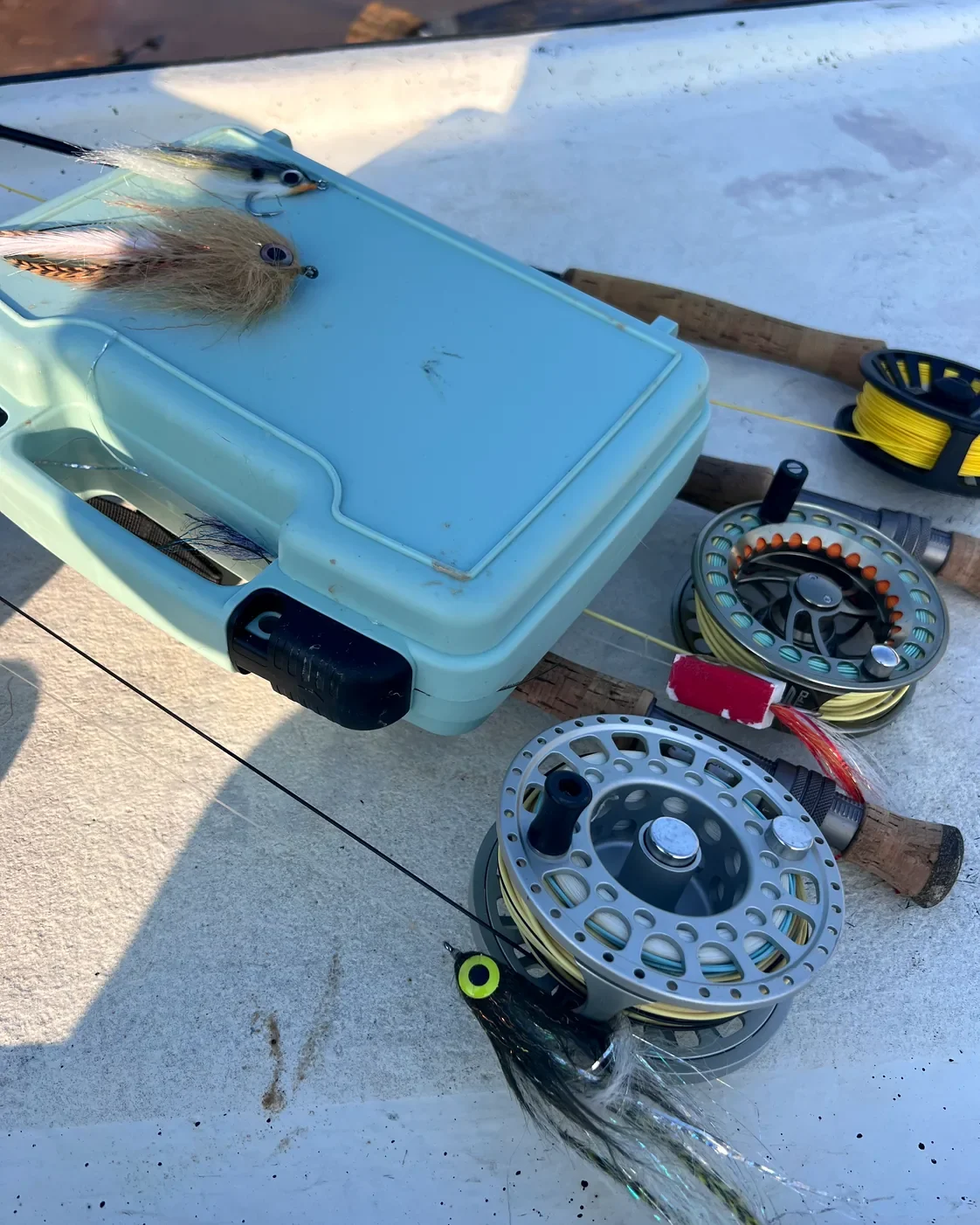
Buying for an experienced fly angler is harder than it looks. The rod in the corner was chosen over months. The reel was a decision. Clothing and sunglasses are personal, sized or fitted, and easy to get wrong. Flies look like the easy answer, and they can be the worst one: a box picked at random for “fishing” is likely to stay in a drawer.
But flies are also the one piece of gear a traveling angler uses up. They get chewed by fish, lost on coral and mangrove roots, and left in the jaw of the one that broke off. And for a specific trip, the right flies aren’t a matter of taste. They’re a matter of where, what and when. Know those three things, and a fly gift stops being a guess.
Four Questions Before You Buy
You don’t need to understand fly fishing to ask good questions. You need four answers, and most of them can come from the angler’s own trip details, a travel companion, or the outfitter who booked the trip.

What fish are they going for?
“Bonefish” and “tarpon” are different problems. A box built for one does little for the other. Many trips have a main target and a few side chances, so ask which fish the trip is really about.
Where, exactly?
A country or a region isn’t enough. The same species can need different flies in different water. At Andros South, on the largest island in the Bahamas, the lodge’s own blog recommends its top bonefish patterns in sizes #2 and #4, with lead eyes for deeper channels. At Turneffe Flats in Belize, the lodge’s recommendations for its oceanside flats run smaller, #6 and #8 with some #10, and it calls unweighted flies “an absolute necessity.” Same fish, different water, different flies. (Hook sizes run backward: a #8 is smaller than a #2.)
When is the trip?
Season changes the target and the water. In the Florida Keys, a trip in late spring or early summer is often built around the tarpon migration; a winter trip is more often about bonefish and permit, and about the weather between cold fronts. In Colombia, the peacock bass trips that outfitters host run in the dry months, roughly January into early March.
What does the lodge or guide recommend, and what do they already have?
This is the question that matters most. Many lodges and booking agents send guests a fly list with specific patterns, sizes and quantities. Some lodges also sell flies on site. Blue Safari, which runs the fishing at Alphonse Island in the Seychelles, says all its destinations have fully kitted tackle shops with flies tied for its fisheries, and it asks anglers to pre-book tackle. If the lodge list already covers the basics, your gift can fill the gaps instead of duplicating the shop.
A quiet way to get the answers: ask the travel companion, or ask the angler what the guide told them to bring. Anglers with a trip coming up tend to talk about it at length without suspecting a thing.
What Changes From One Destination to the Next
Below are six trips Megafin builds assortments for. They differ in ways that change what goes in the box.
| Trip | Main fish | What changes the flies | Confirm before buying |
|---|---|---|---|
| Florida Keys | Tarpon, permit, bonefish | Season; crabs and shrimp for flats fish, larger flies for tarpon | Tarpon season or winter flats trip |
| Bahamas | Bonefish | Island and depth: weight and size change from flat to flat | Which island, and the lodge list |
| Belize and Yucatán | Permit, bonefish, tarpon | Permit crabs; small, light bonefish flies on shallow flats | Whether permit is the main target |
| Gulf Coast | Redfish, snook, tarpon | Water clarity, grass and season | Which marsh, and the time of year |
| Christmas Island and the Seychelles | Bonefish, trevally, triggerfish, milkfish | Two oceans, two lists; very large flies for giant trevally | The lodge's list and shop |
| South American jungle | Peacock bass, payara | Big baitfish flies that hold up; flash invites piranhas | Lodge list and fly size |
01 / 06
The Florida Keys
The Keys offer three famous fish in one place, and the season decides which one the trip is really about. Tarpon flies are large and built for big hooks; bonefish and permit flies are small crab and shrimp imitations meant to land quietly on a shallow flat. A gift that covers all three species works best for an angler going in a mixed season or without a fixed plan.
02 / 06
The Bahamas

For most visitors, the Bahamas means bonefish, and bonefish flies look simple: small shrimp-like patterns. The detail that matters is weight and size. Andros South’s list pairs bead-chain eyes for shallow flats with heavier lead eyes for deeper channels, and the lodge suggests about 40 flies for a week. That is one lodge on one island. Treat “the Bahamas” as many fisheries, and ask which island and what that lodge recommends.
03 / 06
Belize and the Yucatán
The Caribbean coasts of Belize and Mexico are permit country, and permit are the fish many anglers travel for and lose sleep over. Turneffe Flats’ recommendations show how much one destination asks for: crab patterns in #4 to 1/0 for permit, small and unweighted flies for bonefish on the oceanside flats with weighted flies kept for the inner flats, and much larger flies, 3/0 to 4/0, for tarpon.
04 / 06
The Gulf Coast
Redfish trips from Texas to Florida are often closer to home and easier to plan around a holiday. What changes the box is the water. Tailing fish on a flooded grass flat want a crab or shrimp that lands softly. Fish in a muddy marsh pond, or in deeper water in winter, call for a different approach. Ask where they’re going and when, and the box follows.
05 / 06
Christmas Island and the Seychelles

These are the long-haul trips, and they are not the same trip. Christmas Island, in the central Pacific, is known for bonefish, trevally and triggerfish. Red’s Fly Shop, which hosts trips there, recommends at least 24 bonefish flies, at least six dedicated triggerfish crabs and at least eight flies for giant trevally, with two of every pattern. The outer islands of the Seychelles, in the Indian Ocean, add permit and milkfish. Blue Safari’s milkfish flies imitate the algae the fish graze on, and its giant trevally picks are brush flies and poppers.
Two cautions apply to both. Giant trevally flies are large, and they get destroyed. And because some of these lodges run their own tackle shops, it is worth asking what the angler has already ordered.
06 / 06
The South American Jungle

Peacock bass trips to Colombia, Brazil and the wider Amazon basin are about aggressive fish in heavy cover. The flies are mostly baitfish imitations, and they take a beating. After Golden Fly Shop’s 2026 hosted trip to Colombia, the host wrote that flashy flies got cut in half by piranhas, and that the colors that worked seemed specific to that water and season. Payara, the other big target in Colombia, are fished with heavy sinking lines and big flies.
When You Don't Know Enough
Sometimes the trip isn’t booked, the destination is a secret, or the angler plans to buy flies from the lodge. Then a technical gift is a bet, and there are better options.
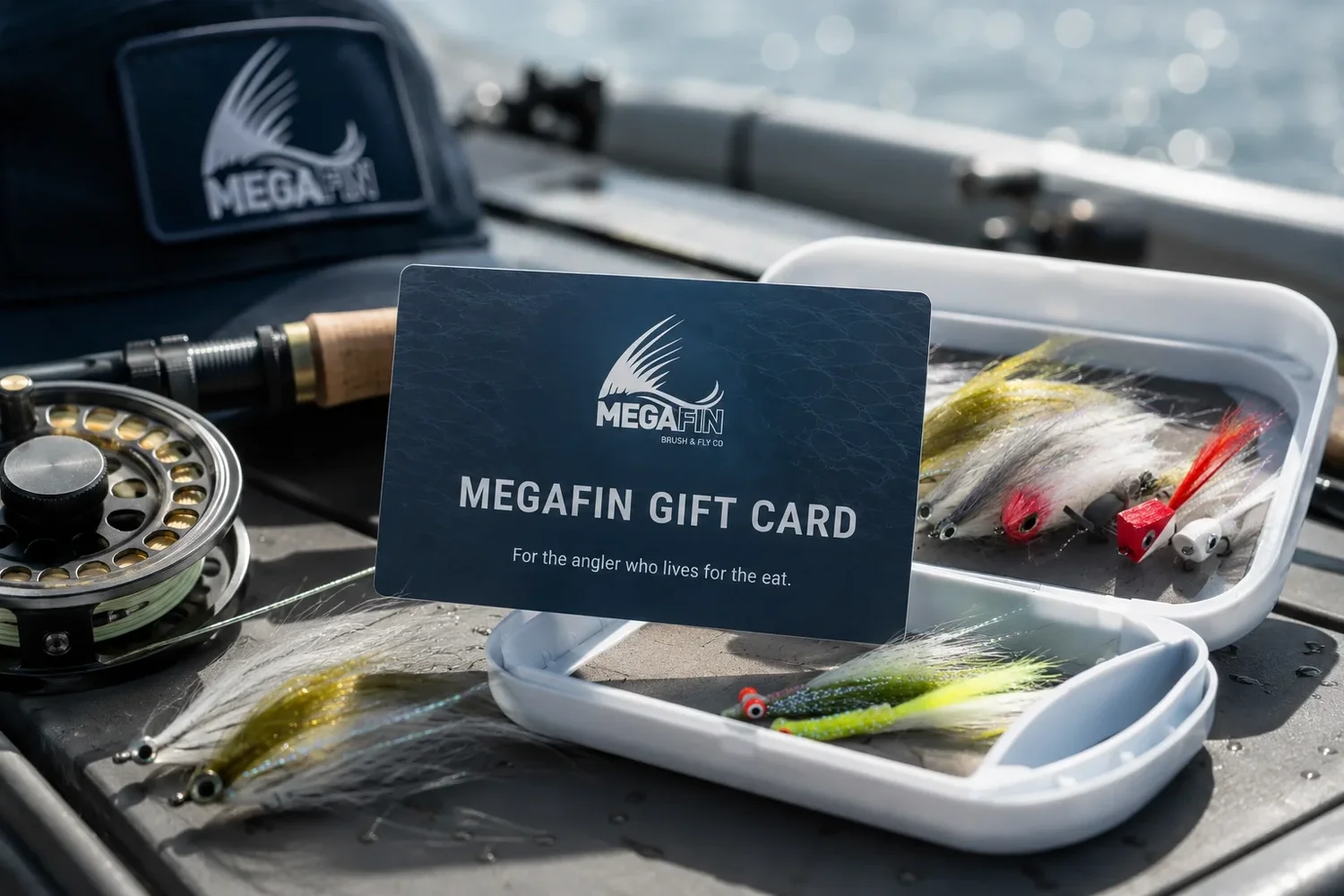
Gift card
A Megafin gift card, in $25, $50, $75 or $100, lets the angler choose once the details are clear. That isn’t a lesser gift. It hands the decision to the person who will make it best.
Choose a gift card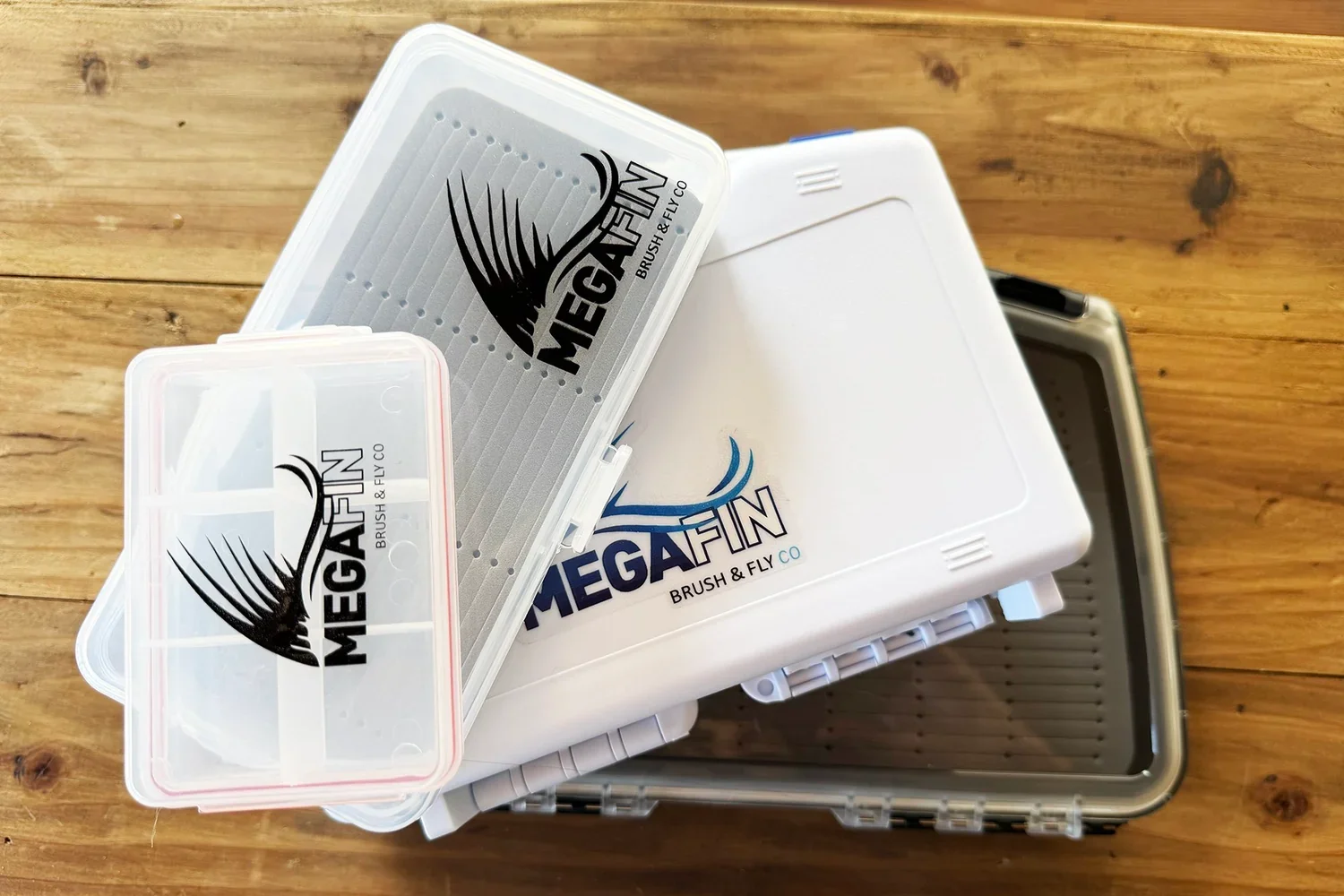
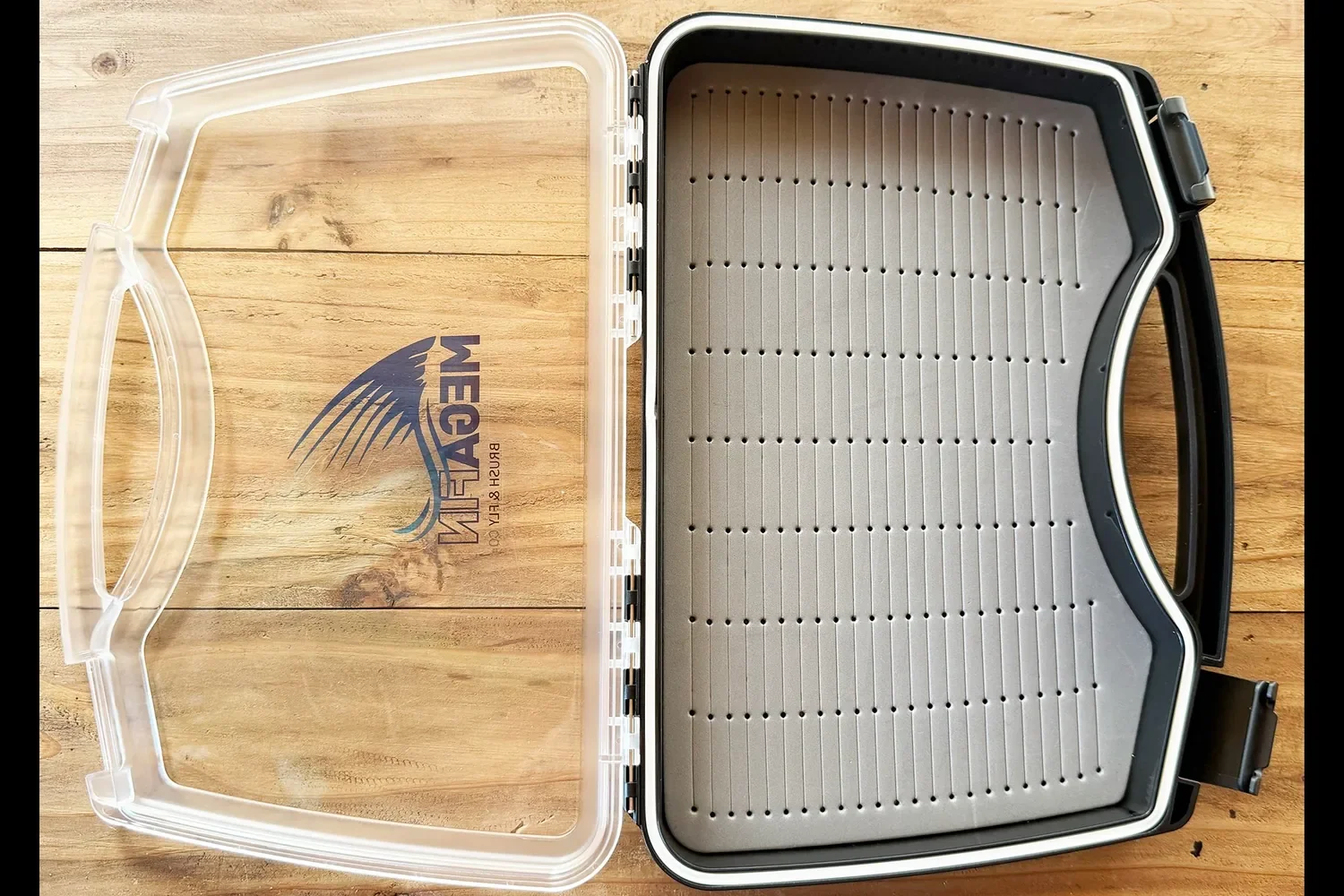
Fly boxes
A good fly box is the other safe choice, because a trip often calls for its own box. Megafin’s fly boxes come in four sizes, from $8 to $30. The Medium is a clear slit-foam box typically used for streamers, poppers, bonefish flies and crabs. The Large has 2.75 inches of clearance for the biggest flies. The X-Large is waterproof and clear-fronted, with room for a large mix of streamers, poppers, crabs and bonefish flies. Ask yourself only one thing: small flats flies, or big predator flies?
See the fly boxesTwo Mistakes Worth Avoiding
The first is buying for the species instead of the place. A “bonefish box” can be the right fly in the wrong size and weight for the flats they’ll actually fish. The second is duplicating what the lodge provides or sells. A short conversation, or a look at the lodge’s gear list, prevents both.
Neither a gift nor a fly box guarantees a fish. Guides adjust from day to day, and local knowledge will always outrank any list. But a box chosen for the right water gives the angler the right tools for the shots that do come.

The Gift They'll Open on the Boat
The best fly gift isn’t the biggest box or the most expensive flies. It’s the one that matches the water they’re heading to. Ask where they’re going, what they’re chasing, when they leave and what the lodge has told them to bring. With those answers, choosing gets simple. Without them, let them choose.
Find the assortment for their tripSources
Product details, prices and links were checked on megafinfishing.com before publication. Lodge and outfitter recommendations change; confirm the current list with the lodge before buying.
- Deneki Outdoors, Top flies to bring to Andros South Lodge, 2024–2025
- Turneffe Flats, Fishing Info & Recommendations (2021, PDF)
- Blue Safari Fly Fishing, The experience, Milkfish and Giant trevally
- Red’s Fly Shop, Christmas Island complete fly list
- Golden Fly Shop, Lessons learned: flies and gear for peacock bass (March 2026)
- The Fly Shop, Afloat: Akuani River Lodge, 2026
- Hosted trip calendars for Colombia: Golden Fly Shop, Red’s Fly Shop, Fly Water Travel
