

What a Cold Front Does to a Bonefish Flat
Megafin JournalBonefish · Winter flats
What a Cold Front Does to a Bonefish Flat
When the wind swings north and the sky goes hard blue, the shallowest water loses heat first, and the fish rearrange themselves around it. What actually changes on a winter flat, what guides have learned to do about it, and when the fish have to come first.
· 9 min read

Yesterday the flat was working. Wakes pushed up on the flood, a few fish tailed along the edge of the turtle grass, and a warm south breeze kept the glare broken up. Overnight a band of cloud came through. The wind swung hard to the north, and this morning the sky has the flat, polished blue that so often follows a front. The water is the same water. The fish that were on it are not where they were.
It is tempting to call the day lost. Experienced guides rarely do. A cold front doesn’t erase bonefish. It changes the wind, the light and the temperature of the shallowest water, and the fish respond. Some of that response is documented by fisheries research. Some of it is known only from long seasons on the platform. A useful winter angler learns to tell the two apart.
What the front brings
The weather itself is simple. Ahead of a cold front the wind blows from the south or southwest and the barometer falls. As the front passes, the wind shifts to the northwest and the pressure bottoms out, then starts to rise. Behind it comes colder, drier air.
In the Florida Keys, the National Weather Service puts the dry season between December and April and notes that dry-season rain usually arrives ahead of cold fronts. It also notes that fronts coming down from the north are tempered by the warm water around the islands. That tempering is why a front in Islamorada rarely feels like one in Atlanta. It is also why the air temperature is a poor number to watch. On a flat, what matters is what the night did to the water.
Why the shallowest water goes first
A few inches of water over sand hold far less heat than the same surface area of channel. When cold, dry air and wind pull heat out through the surface, a thin layer loses it quickly. When the sun comes back, that same thin layer gains it back quickly. Deeper water and open ocean change more slowly in both directions.

Bahamian field data show how wide the swing can be. Temperature loggers placed by researchers in tidal creeks on Eleuthera recorded 105°F (40.6 °C) in creek backwaters in June and 48°F (9 °C) in the same backwaters one January. Daily swings reached about 20°F (11.4 °C). Offshore, the same study found temperatures much more stable.
The 2026 Florida cold snap was consistent with that pattern at a larger scale. When Bonefish & Tarpon Trust and Florida International University teams surveyed the Keys afterward, they measured central and upper Florida Bay, a broad and shallow basin, 11°F colder than the Lower Keys and Key West.
Depth is not the only variable. Tide decides where the water on a flat came from: off a cold, shallow bay or in from deeper ocean water. Bottom matters too. Research in Florida’s Indian River Lagoon found that the sediment itself stores heat during the day and gives some of it back at night. Two nearby flats can sit at different temperatures on the same morning.
The practical consequence is unglamorous. Carry a thermometer and use it. After a front, the temperature of the water you are about to fish tells you more than the forecast does.
Where the fish go
Here the evidence comes in layers, and they should not be blended.
What research shows. Bonefish are tropical fish with real thermal limits. In laboratory trials on adult bonefish from Eleuthera, researchers measured a lower critical temperature of about 58°F (14.5 °C) in standardized tests. When the same team tracked wild fish with implanted temperature loggers, the fish almost never reached their critical limits and spent most of their time near the temperature where they swim best, about 82°F (28 °C). The sample was small, but it suggests an animal that manages its exposure by moving. On Eleuthera, tagged bonefish also moved with the tide every day: onto the flats and into the creeks on the flood, off them on the ebb.
What research suggests. A telemetry study in the northern Florida Keys found bonefish used shallow habitat most, and its authors suggested that deep channels may give fish refuge from the rapid temperature changes on the flats. That is a reasonable hypothesis. It has not been tested front by front.
What guides report. Capt. Alex Zapata, who guides around Miami and the Keys, writes that bonefish leave the shallows when the water falls below about 65°F. After a multi-day front with strong north wind, he says, fish retreat to deeper water and turn sluggish. After a brief, weak front, he writes, they often stay fairly shallow, especially once the wind moves east or south. East End Lodge on Grand Bahama describes fronts pushing fish into slightly deeper, more stable water. In Biscayne Bay, Bonefish & Tarpon Trust reports bonefish using warm canal water as winter refuges.
What nobody has shown is a universal map. Tagged bonefish on Eleuthera kept using flats and creeks through the year, and the researchers there contrasted that with Florida reports of fish avoiding shallow flats in the warmest and coldest periods. A Keys flat and a Bahamian creek system do not have to behave the same, and the available evidence suggests they don’t.
The rule most guides work by: after a hard front, the first places to look are the nearest deeper, steadier water next to the flats you would normally fish. Channel edges, basins, creek mouths and drop-offs fit that description. Expect the fish to be slower and harder to see.
Flat, edge, channel
What depth changes after a hard front, and where guides look first. Schematic, not to scale.
The shallow flat
A few inches of water over sand hold far less heat than the channel. The thin layer loses heat quickly overnight and gains it back quickly in sun. It is generally coldest around dawn.
The edge
Guide observation: After a hard front, guides look first at the nearest deeper, steadier water: channel edges, basins, creek mouths and drop-offs. Expect slower fish that are harder to see. When the water warms and holds, the flat returns to its normal tide-driven rhythm.
The channel
Deeper water changes temperature more slowly. A Florida telemetry study suggested deep channels may give refuge from rapid temperature changes on the flats. That is a hypothesis, not yet tested front by front.
Field observation from guidesUnmarked: measured data or published researchDashed fish: before the front · solid: after a hard front · faint: possible refuge, not demonstrated
Reading the recovery
There is no reliable Day 1, Day 2, Day 3. No study we found tracks bonefish through individual fronts, and fronts differ in strength, wind and duration. What anglers can read instead is the sequence the water goes through.
The hard post-front water. Water on a shallow flat is generally at its coldest around dawn, after a night of losing heat with no sun to offset it. This is the time to fish the deeper edges and channels slowly, or to accept that the flat may simply not hold fish yet.
Early recovery. Sunshine on shallow water starts the climb back. One 72-hour January record from a Bahamian creek varied by about 5°F (3 °C), so even winter water moves. Midday and afternoon water is generally warmer than morning water, and a flood tide that brings in deeper, warmer water can help. In the Keys, guide Bill Horn has written that warm days with a southeast breeze bring bonefish back onto oceanside flats first, while bay and Gulf-side flats stay cool longer. That is broadly consistent with the colder Florida Bay water BTT measured in 2026.
Return to the flat. Zapata’s line for fish leaving the shallows is about 65°F. Horn writes that things change “when we see 70 for a couple of days.” Those are field rules from working guides, not laboratory values. When the water holds, the flat returns to its normal tide-driven rhythm.
The decision is the same at every stage. Follow the water temperature and the tide, not the number of days since the front.
Reading the front
Weather changes first, then the water, then where the fish are, then the angler’s choices. There is no fixed schedule: fronts differ in strength, wind and duration.
01Ahead of the front
- Weather
- South or southwest wind, barometer falling. In the Keys, dry-season rain usually comes ahead of the front.
- Shallow water
- The flat on its normal, tide-driven rhythm.
- Where to look first
- On the flat: fish move on with the flood and off with the ebb.
- The angler
- Fish the flat on the tide.
02The front passes
- Weather
- Wind shifts to the northwest. Pressure bottoms out, then starts to rise.
- Shallow water
- Cold, dry air and wind pull heat out of the thin water first.
- Where to look first
- Not covered in this story
- The angler
- Not covered in this story
03Hard post-front
- Weather
- Colder, drier air. North wind. A hard blue sky.
- Shallow water
- Coldest around dawn. Deeper water changes more slowly than the flat.
- Where to look first
- Guide observation: The nearest deeper, steadier water: channel edges, basins, creek mouths. Fish slower and harder to see.
- The angler
- Fish the edges slowly, with a fly that reaches the fish, or accept that the flat may not hold fish yet.
04Early recovery
- Weather
- Sun returns. Guide observation: Warm days, with the wind moving east or southeast.
- Shallow water
- Sun starts the climb back. Afternoon water is warmer than morning; a flood from deeper water can help.
- Where to look first
- Guide observation: In the Keys, oceanside flats first. Bay and Gulf-side flats stay cool longer.
- The angler
- Measure the water. Be willing to fish the afternoon.
05Return to the flat
- Weather
- Not covered in this story
- Shallow water
- Guide observation: Warmth that holds for a couple of days.
- Where to look first
- Back on the flat, on its normal tide-driven rhythm.
- The angler
- Bright, shallow water: a quieter fly, a longer lead, a softer presentation.
Guide observationUnmarked: meteorology or measured data
Bluebird light
The sky behind a front is the angler’s best friend and worst enemy. With no cloud and low humidity, fish that would disappear under broken light show up from a long way off. The same light shows them you.

East End Lodge puts it practically: bright sun makes bonefish cautious, and they react quickly to sudden movement, shadows and sloppy presentations. The lodge’s advice is to slow down, lead the fish farther and present more softly. Low winter sun stretches shadows across the water, so the angle of your approach matters more than it does at midsummer noon. Make sure your shadow and the rod’s flash are not the first things to reach the fish.
The north wind adds its own problem. It may blow from a direction the flat is not usually fished in, and it can push fish toward protected, leeward shorelines, as the same lodge notes about strong wind in general. Expect to cast at unfamiliar angles. The extra time spent repositioning the skiff before the shot pays off.
Put the fly where they are feeding
It would be easy to turn all of this into a rule: cold water, heavy fly. The more accurate rule is that the fly has to reach the depth where the fish are feeding, within the lead you can give them.
When post-front fish are working a channel edge or a deeper basin, a fly with heavier lead or dumbbell eyes gets down faster. That matters most in moving water, where a light fly drifts past fish before it ever reaches them. When fish come back onto warming, shallow, bright flats, the problem reverses. Bead-chain eyes or an unweighted fly land more quietly and sink more slowly, which suits a longer lead and a spooky fish. Bottom matters as well: a fly that digs in over soft mud or snags in grass is fishing badly regardless of its weight.
One pattern, two sink rates
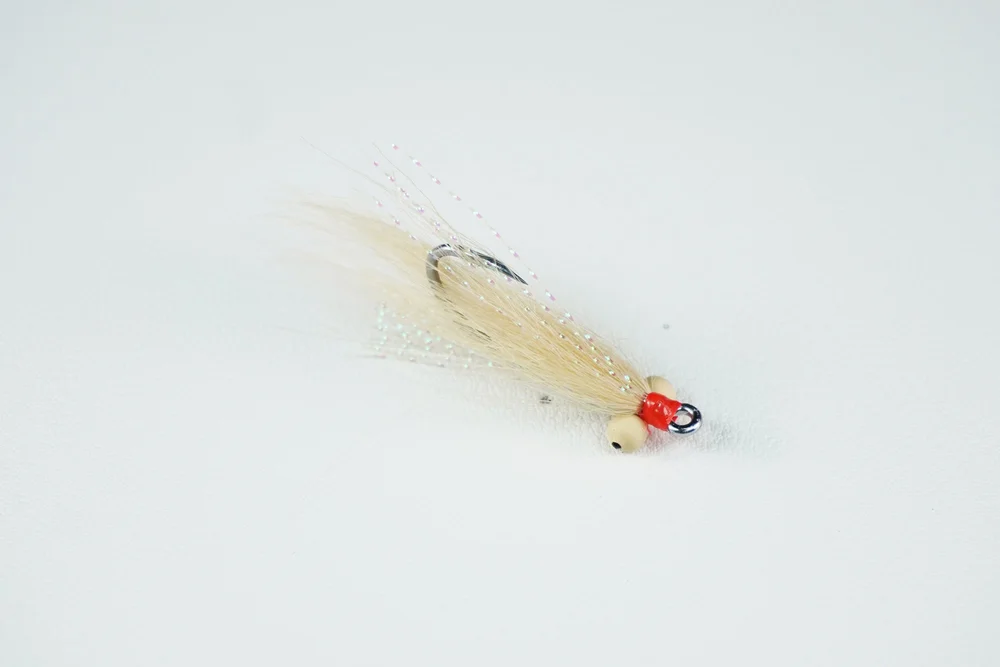
ShallowBead-chain eyesSlower sink 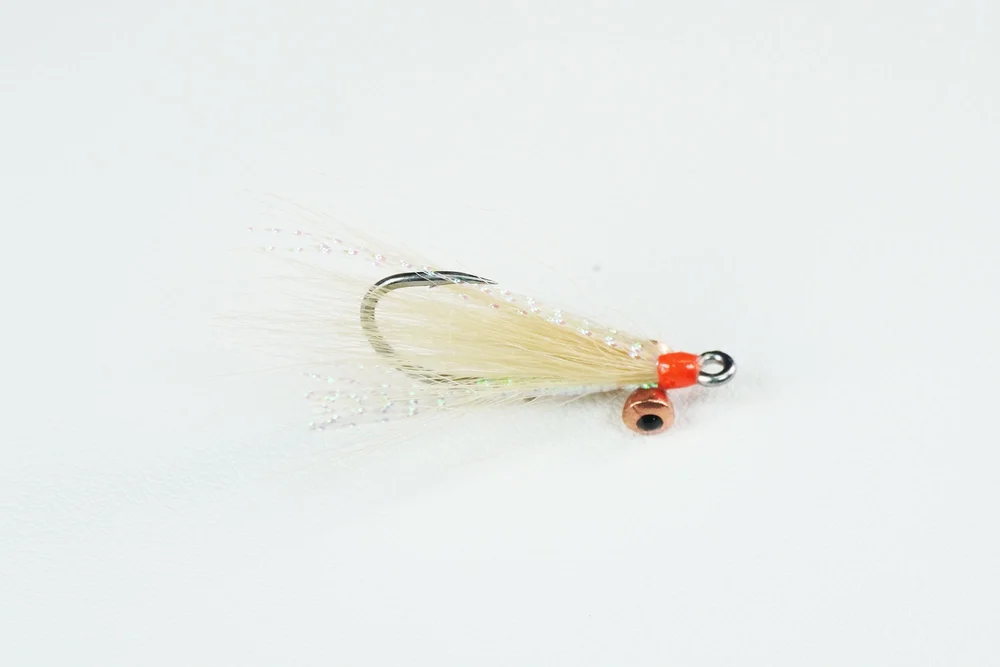
DeepDumbbell eyesFaster sink
The Megafin Gotcha in two weights. The Gotcha Shallow carries bead-chain eyes for a slow sink over shallow flats; the Gotcha Deep carries metal dumbbell eyes and gets down faster on deeper flats and channels.
Some guides describe post-front fish as sluggish, and slowing the retrieve is a reasonable response. No study we found establishes a cold-water retrieve speed for bonefish, though. Watch what the fish does when the fly moves, and adjust to that.
When cold becomes a conservation problem
Most winter fronts are fishing problems. A few become survival problems.
The January 2010 freeze sent arctic air into the Keys from January 7 to 13, according to the National Weather Service. BTT records that water stayed below 60°F for 12 days, and that the Marathon bayside station reached 52°F, which BTT describes as lethal for many tropical species, for four days. More than 100 dead bonefish were collected at a single Keys beach. BTT has written that the event effectively ended the Keys’ historic bonefish fishery. Afterward, Florida temporarily banned harvest of bonefish and tarpon.
The early-2026 cold snap was far milder. Teams of scientists and guides recovered ten dead bonefish, and guides reported six more. All were juveniles or subadults. BTT found mortality highest in shallow Florida Bay and around Islamorada.

BTT’s guidance is direct: fish seeking refuge in cold weather should not be disturbed. In Biscayne Bay, where bonefish gather in warm canals, state and national park law enforcement added officers to watch them for illegal fishing during the 2026 event. If you find fish stacked into a canal, basin or other warm pocket during a hard cold event, leave them alone. That is not lost fishing. It is part of the reason there will be fish on the flat in March.
Planning a winter trip around weather
Fronts are part of the season, not a defect in it. December through April is the dry season in the Keys. A few practical points follow from everything above:
- More days mean more weather windows. A multi-day trip is less dependent on any single front. No number of days guarantees good conditions.
- Ask the lodge or guide how they fish a north wind. You want to hear about leeward shorelines, deeper flats and channel edges, oceanside options, and how far the skiff can run to reach protected water.
- Bring the full range of fly weights. Pack flies for deep edges as well as skinny water, plus a thermometer.
- Be willing to fish the afternoon, when the water has had the day to warm.
A front changes the questions an angler has to answer, and once you know what changed, the day is still a fishing day.
