
Fishing the Eastern Llanos of Colombia: Peacock Bass, Payara, and Water That Doesn't Forgive.
Megafin JournalColombia · Orinoco Basin
Fishing the Eastern Llanos of Colombia: Peacock Bass, Payara, and Water That Doesn’t Forgive
The rising and falling river that decides when you will see either fish. A field primer for the angler headed to Colombia’s Orinoco country this dry season.
Words by Alejandro Carvajal Rico

I still remember the first time I went into one of those lagoons in the Llanos. We had been running the river, then turned up a narrow caño, and without warning the water opened in front of us. Everything was still. There were birds, and now and then a fish moving somewhere in the vegetation, and nothing else.
One of my first casts went to a piece of structure along the bank. The fly had barely started to move when a peacock bass came up from underneath it and hit with a violence I was not ready for.
That was when I understood why you come back to the Llanos. It is not only about catching a fish. It is everything that happens before the strike.
This piece is about that part: the rivers, the season, the fish, and what it takes to put a fly in front of them in the far east of Colombia, where the savanna of Vichada runs out against the Orinoco and the Venezuelan border, and where Guainía begins to the south.
Two towns, many rivers
The eastern Llanos fishery has two front doors, and which one you need depends on the camp.
Puerto Carreño, the capital of Vichada, sits where the Meta meets the Orinoco, across the water from Puerto Páez in Venezuela. It is the gateway to the northern rivers: the Bita, the Tomo and caños such as the Terecay that feed it, the lower Meta, and the Orinoco’s broken water. Some camps lie several hours from town by truck on savanna tracks.
Puerto Inírida, the capital of Guainía, is the other door. The Vichada River reaches the Orinoco south of the Maipures and Atures rapids, so camps on the Vichada and on the Matavén are generally reached by flying from Bogotá to Inírida and continuing by boat. Near Inírida, the Inírida, Guaviare, and Atabapo rivers come together on their way to the Orinoco in the Estrella Fluvial de Inírida, a Ramsar wetland since 2014, where researchers have recorded 476 fish species, roughly a third of Colombia’s freshwater fish.
Between the two lies El Tuparro National Natural Park, about 548,000 hectares between the Tomo and Tuparro rivers, bounded on the east by the Orinoco, with the Maipures rapids inside it. It is the landscape this fishery belongs to: savanna, gallery forest, clear sandy rivers, and granite where the big river breaks.
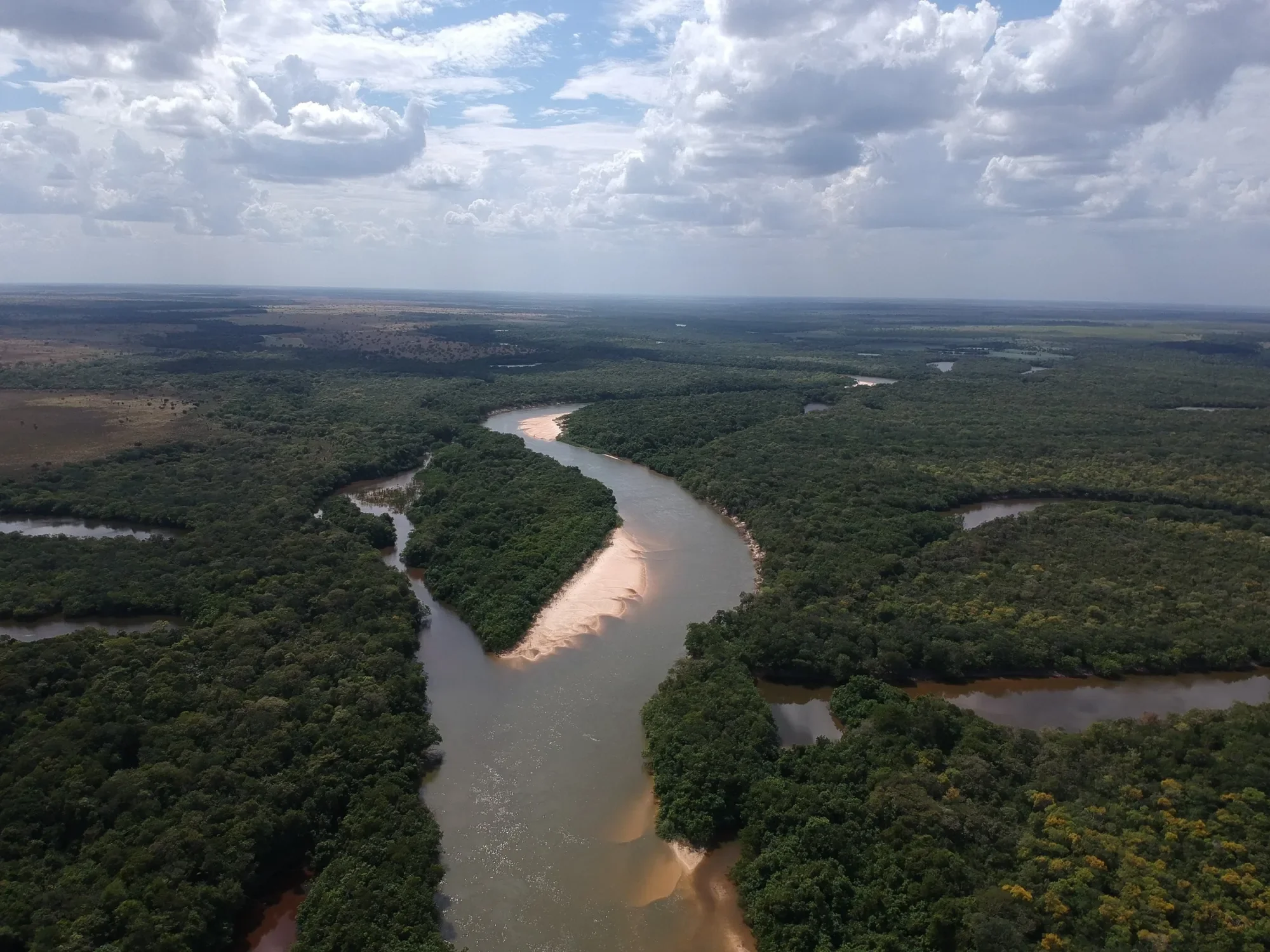
The Bita deserves a paragraph to itself. In 2018 Colombia designated the river and its basin a Ramsar wetland of international importance: 824,535 hectares, at the time the largest Ramsar site in the country. The designating decree records 254 fish species and a basin that keeps about 95 percent of its natural cover. For an angler, that figure says more than any superlative. The forest, the morichales, and the lagoons that feed the food chain are still largely in place.
The river decides
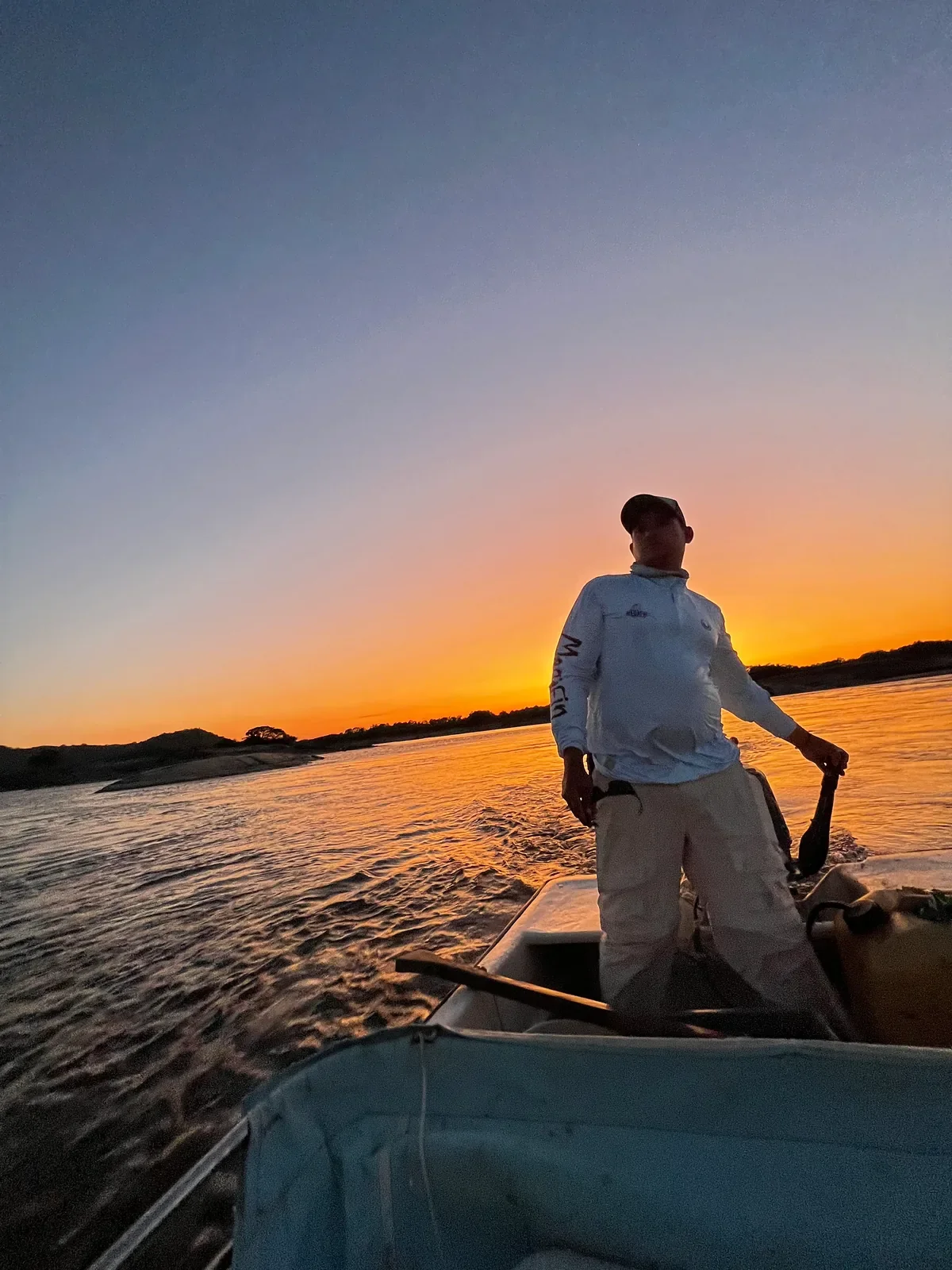
Gustavo Novoa, a fishing guide in the Colombian Llanos, puts it plainly: “You can teach an angler where to cast, but it’s the river that decides when to show him the fish. Here you have to learn to look at the water before you start fishing.”
Looking at the water starts with knowing where it is in its year. The Orinoco runs on a strong flood pulse. Researchers who study the basin describe discharge rising from about April through August, then falling to a low plateau around February and March. Puerto Carreño’s calendar lines up with it: dry from December through March, wet from April through November.
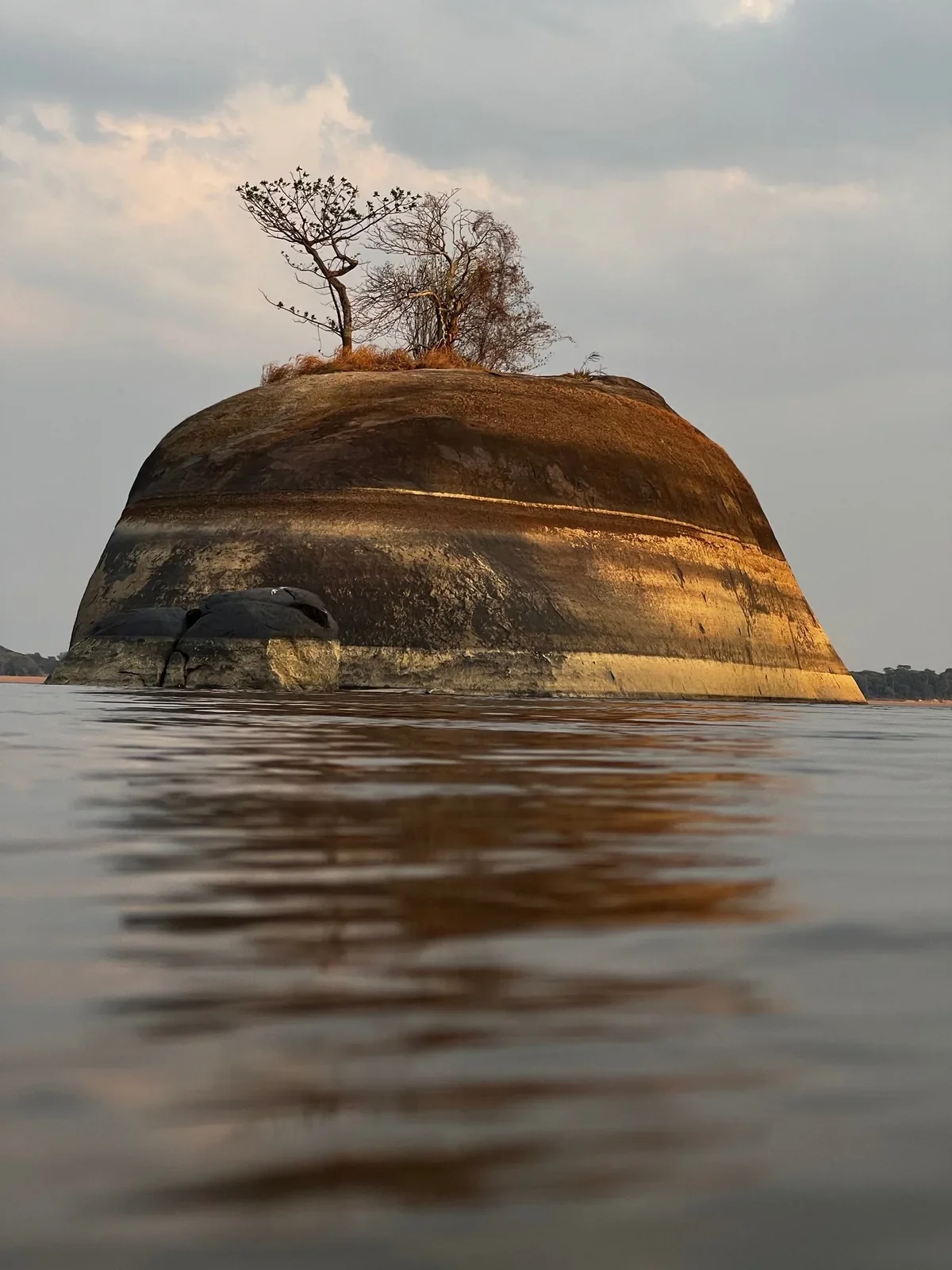
In high water the river pushes into the gallery forest, the floodplain lagoons, and the backwaters, and predators and baitfish spread out with it. As the water falls, that habitat drains. Baitfish are pushed back toward channels, lagoon mouths, and deeper holes, and peacock bass and payara follow them. Fish that were scattered across the floodplain end up concentrated where a fly can reach them.
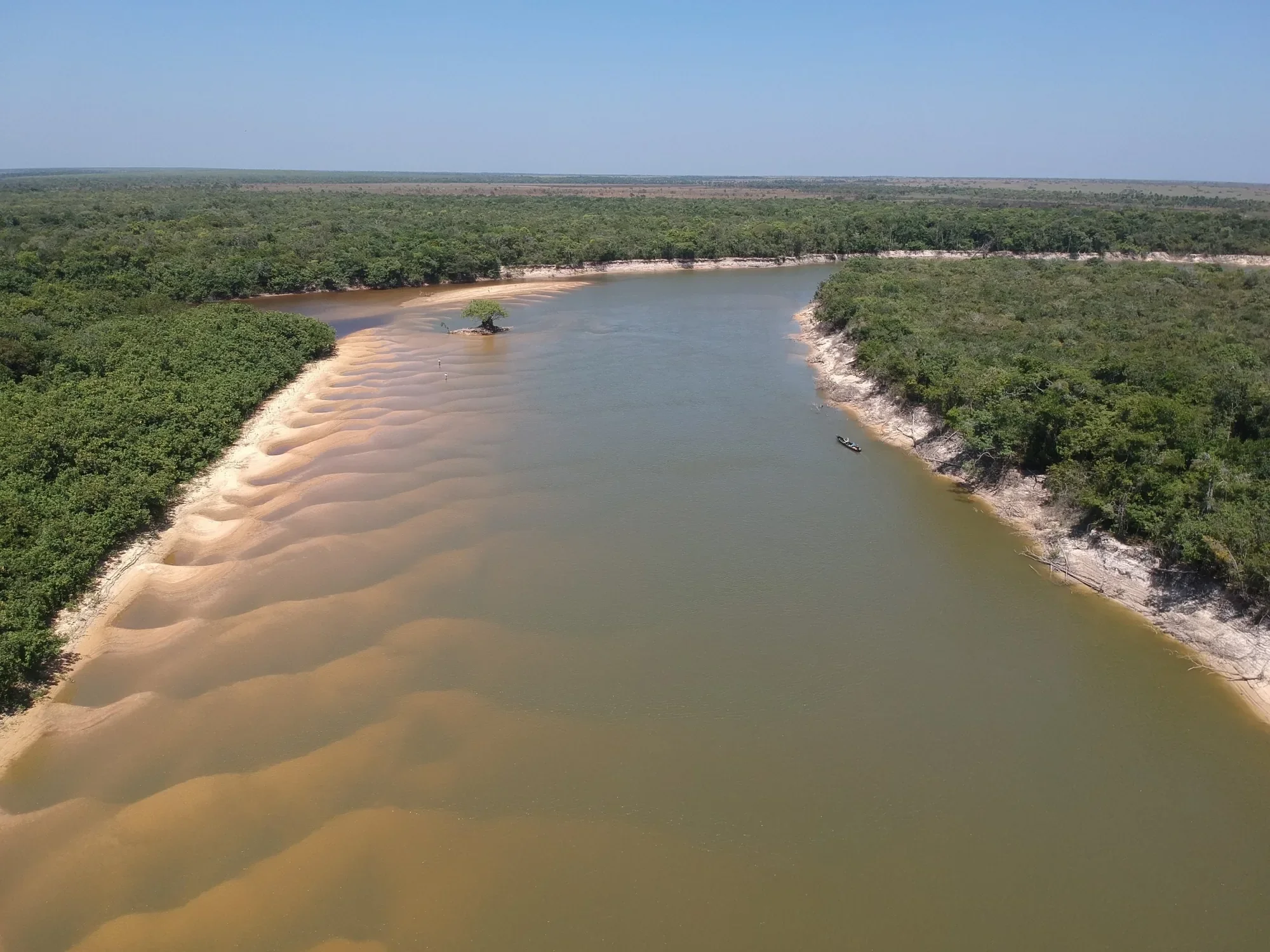
This is why camps across the region fish a short window. Published programs run from December or January into March or early April, and some Guaviare operations open in early December. A late rain can set everything back, so ask your outfitter how a high-water week is handled before you book, not after. Put simply: book the water level, not the calendar.
Three peacocks, three addresses
Locals call them pavón. The Orinoco basin holds three species worth telling apart, and they do not live in the same places.
Speckled peacock bass, Cichla temensis, is the largest and the one people cross hemispheres for. It is native to the Orinoco and Rio Negro basins and most at home in blackwater. In the best-known habitat study of the three species, on Venezuela’s Cinaruco River, temensis used the widest range of water, spread about evenly between channels and lagoons. It also changes clothes. Outside the spawn it wears the dark, pale-speckled pattern Brazilians call paca; in breeding condition it turns golden-olive with heavy dark bars, the açu phase. Same fish. Camps on the Colombian side report fish from the low teens into the twenties of pounds, and world-record fish in the high twenties have come from Brazil’s Rio Negro system.
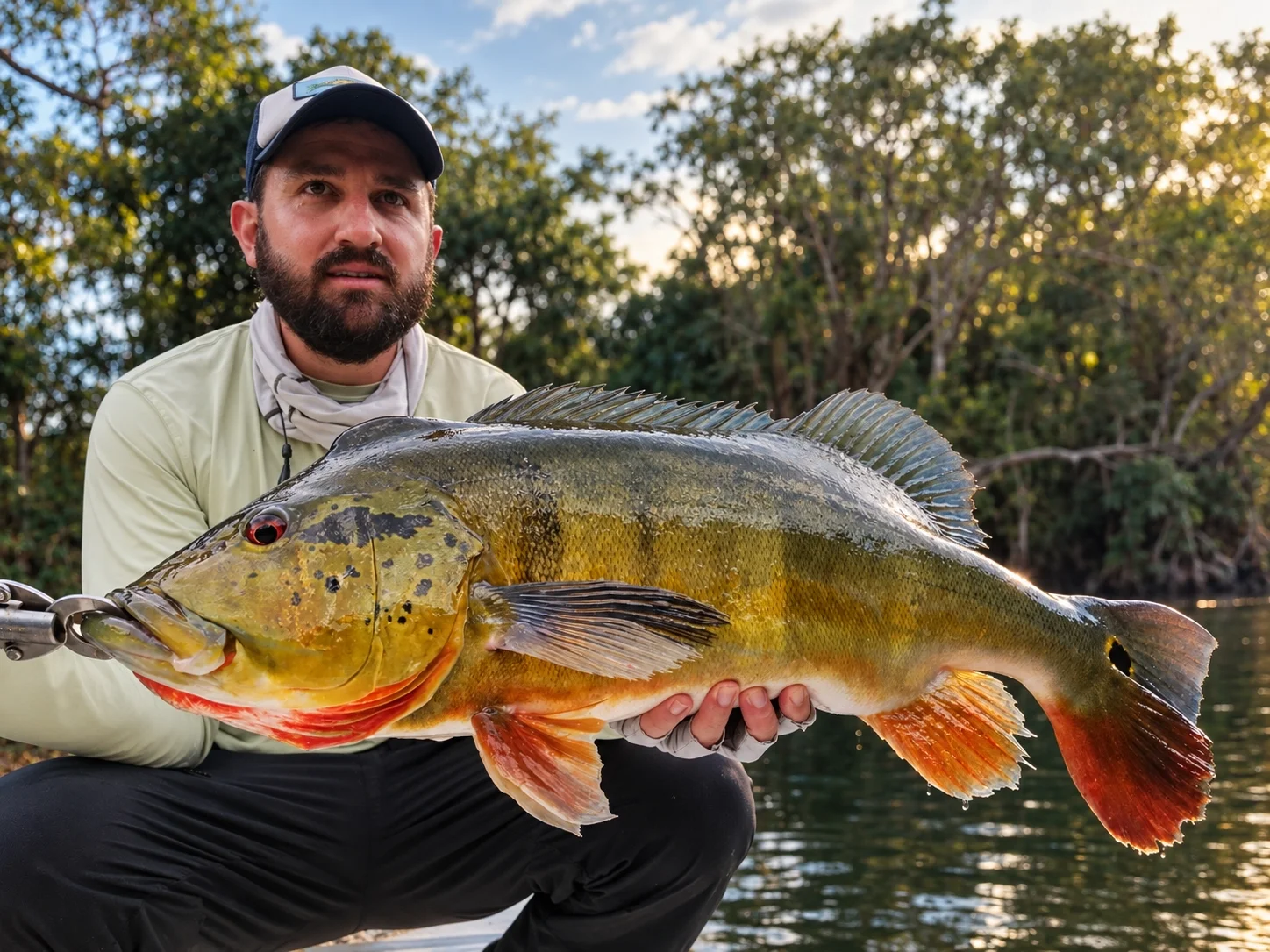
Orinoco peacock bass, C. orinocensis, is smaller and marked by three large, gold-ringed dark spots along the flank. On the Cinaruco it was caught near the edges of channels and lagoons, around submerged structure where the current was slow or absent, and it tolerates murkier water than its relatives. Along a quiet shoreline, this is often the fish that answers a popper.
Royal peacock bass, C. intermedia, is the smallest of the three, with a row of eight or nine spots along the lateral line, and it lives somewhere else. The Cinaruco researchers found it essentially restricted to the main channel, especially where current runs over submerged timber or rocky shoals. It tends to swim near the bottom and is much more hesitant than the other two to rise for a bait or lure. If you want one, fish deep in moving water, and do not count on finding it in a lagoon or under a popper.
What they share is a way of hunting: from structure, and often in groups. When one fish is hooked, the others in the school often turn more aggressive, and a second fly dropped beside the hooked fish can produce a double.
They also share the slow arithmetic of age. A tagging project on Brazil’s Rio Marié, run with local Indigenous communities, guides, an outfitter, and Brazil’s federal environmental agency, and reported by the IGFA, has tagged more than 3,000 temensis since 2019. Its researchers estimate growth of roughly one to one and a half kilograms a year and put fish of 88 to 90 centimeters at ten to twelve years old. The Marié is a different river in a different country, and nobody should assume Orinoco fish grow at the same rate. The lesson still applies: a big speckled peacock has been surviving for a long time.
The lagoons no boat can reach
Some of the best peacock water in the Llanos has no way in.
When the river falls, it strands lagoons behind the gallery forest: old oxbows, backwaters, savanna ponds that lose their connection to the main channel until the rains return. Speckled and Orinoco peacocks both use lagoons and slack water, and as the floodplain drains, some of them are left behind in these pockets with whatever baitfish were trapped alongside them. No outboard is getting in there. So you carry something in.
For the anglers who go looking, that something is a paddle board.
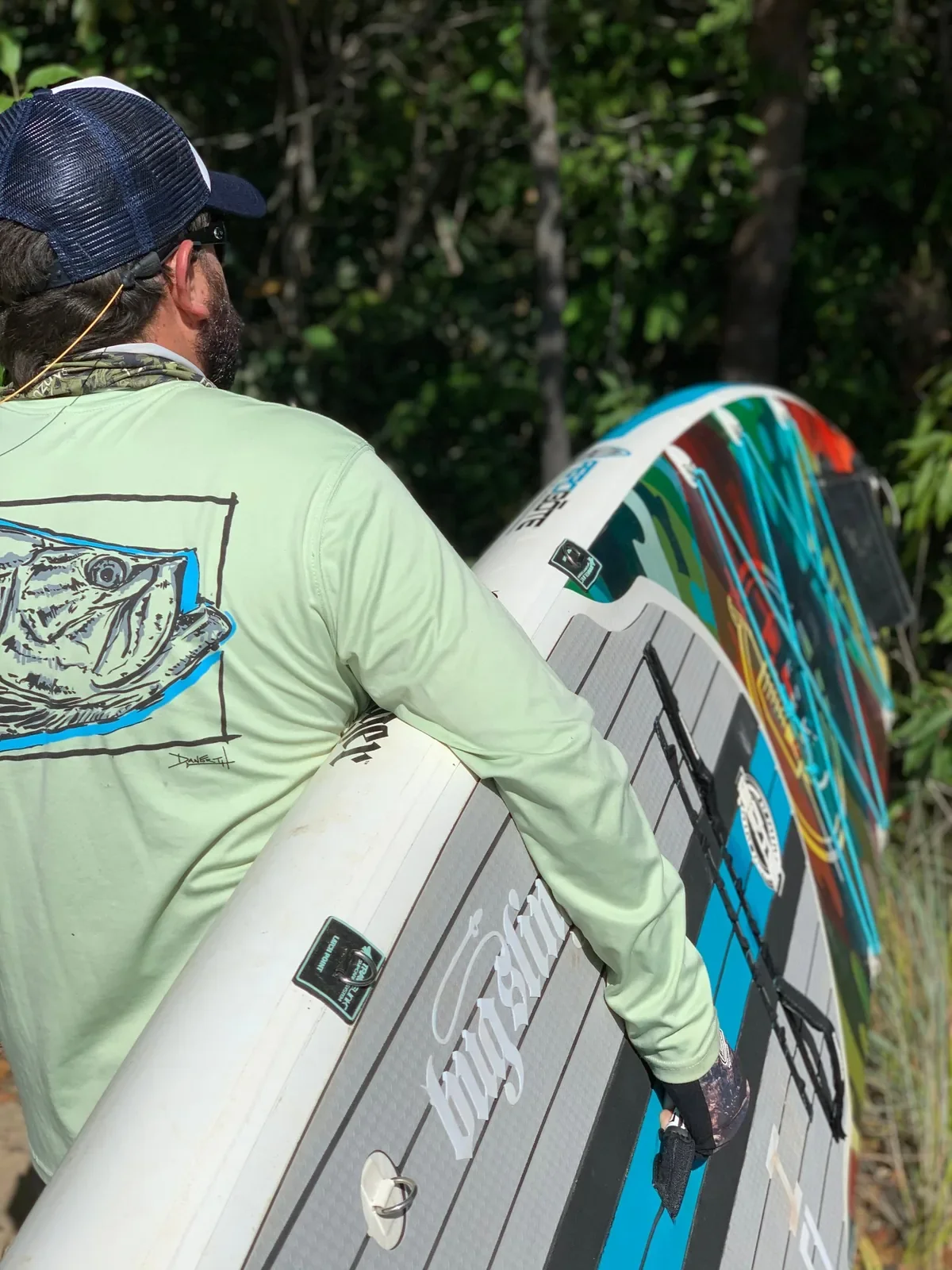
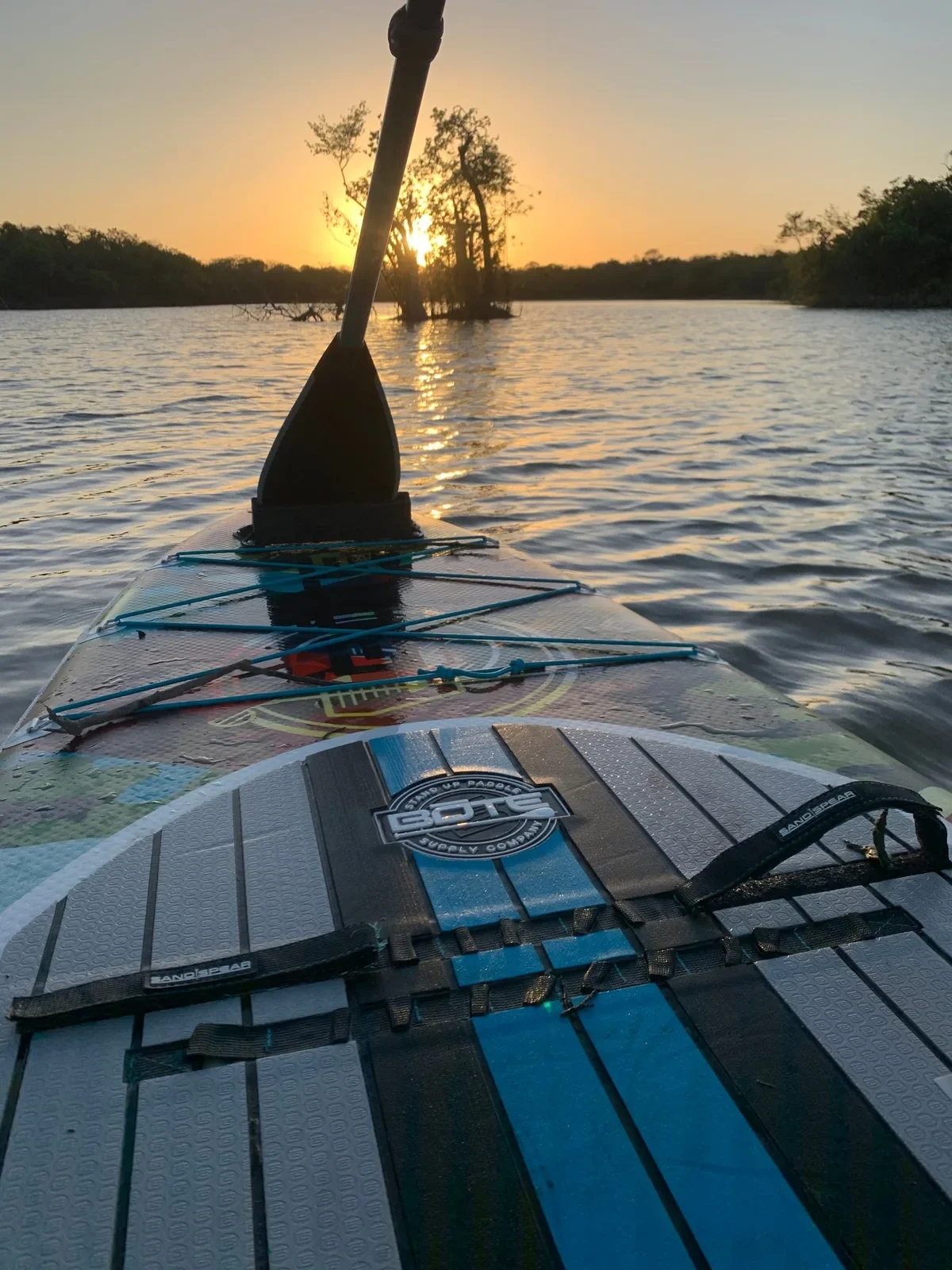
It changes the day. There is no motor and no hull slap, only the drip off the blade and the birds going quiet as you slide out from the trees. Standing gives you height, enough to see a wake turn behind a baitfish or a dark shape holding tight to sunken timber. And you understand, in a way you never quite do from a boat, how little separates you from the water: a few inches of board, and nothing else.
Then you remember what lives in it.
Along the grass edge, a pair of eyes and a ridge of back sit on the surface without moving. A babilla, the spectacled caiman. The green anaconda, the heaviest snake alive, ranges through the Orinoco basin and the flooded Llanos and hunts from the water, and a submerged anaconda is close to invisible. Freshwater stingrays lie buried in the sandy shallows with a venomous barb on the tail, one more reason your feet belong on the board. Caribe piranhas, found only in the Orinoco lowlands and the Llanos, move under all of it. Somewhere past the tree line, jaguars still walk this country.
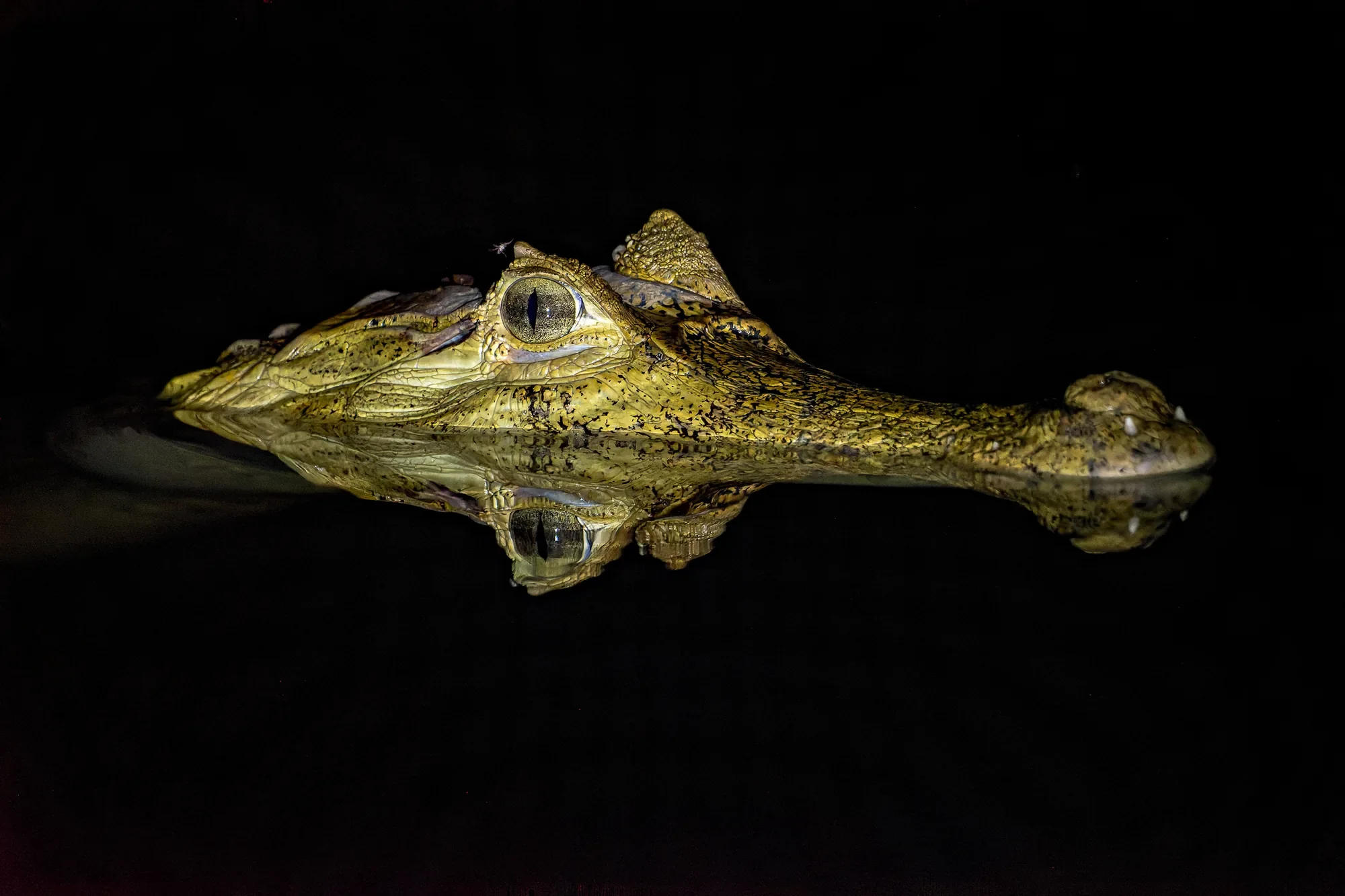
In all likelihood none of it is interested in you. Almost all of it is hunting something.
No photograph fully carries that feeling. You are standing on a few inches of foam above a whole community of predators, and one of them is the fish you came for.
You cast to the edge of the timber. The popper lands, sits, and you give it one hard strip. The water under it caves in. On a board you feel the fight in your legs before your arms: the fish pulls, the nose swings toward the wood, and for a few seconds it is not entirely clear who is towing whom.
Then it is over. The lagoon goes still again, and you are kneeling on the board with a peacock bass across your hands, a fish that may never have seen a fly, held low over the water it came from.
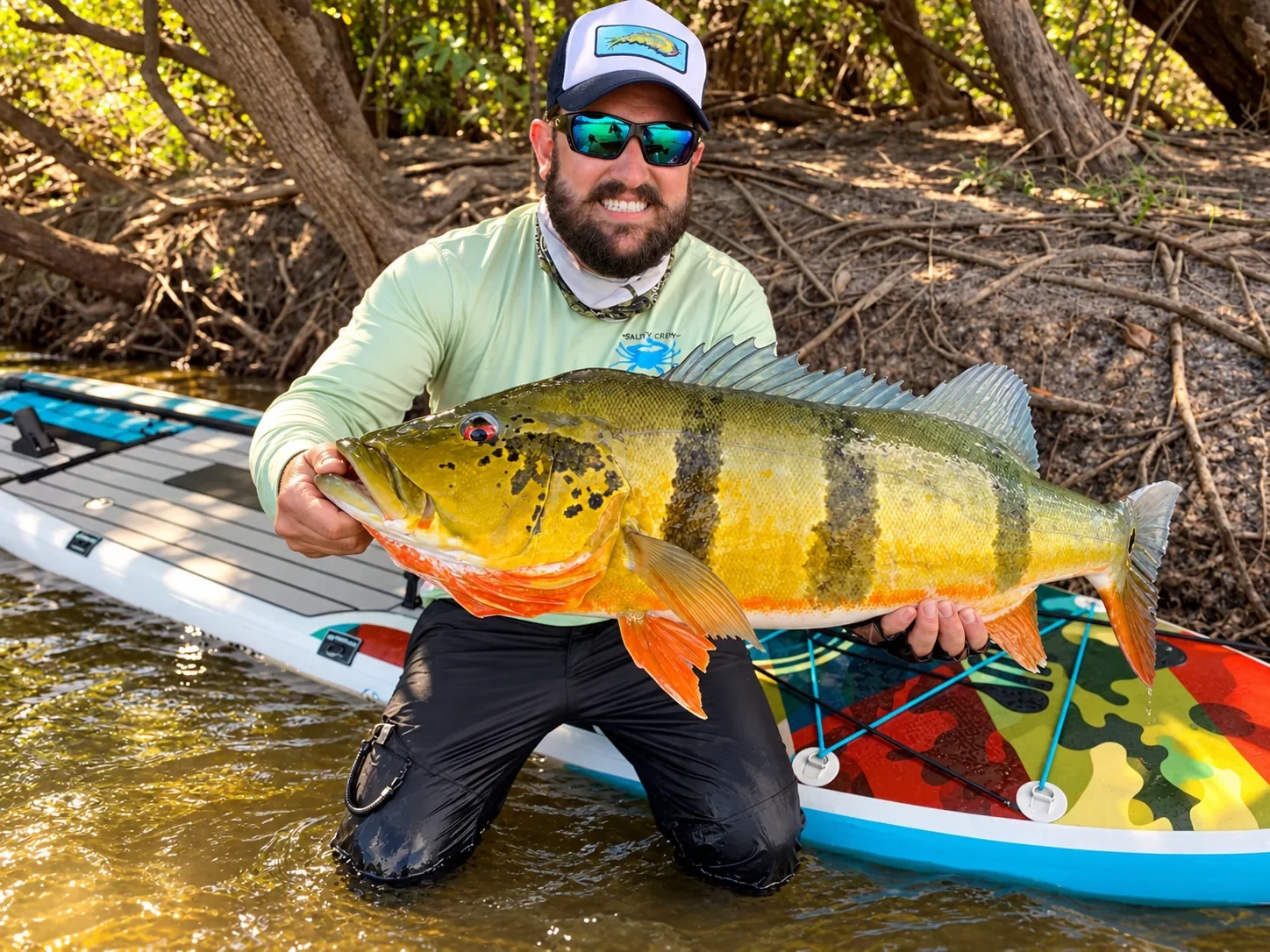
A word of restraint, because this water earns it. Fishing lagoons from a board is guided work, never a solo outing. Which lagoons can be reached, where a board can safely go, and how to read the caimans along the edge are local knowledge. Wear a PFD, keep your feet on the board, and go with people who have spent their lives on this water.
Payara: the other war
If peacock bass are the reason most people come, payara are the reason a certain kind of angler comes back.
Hydrolycus armatus, the black-tailed payara, ranges through the Amazon, Orinoco, and Essequibo basins. It eats fish, lives in fast water, and carries two lower canine teeth that can pass ten centimeters in a large fish, which it uses to impale prey. Most run up to about eight and a half kilograms, roughly nineteen pounds, and the species can approach eighteen.
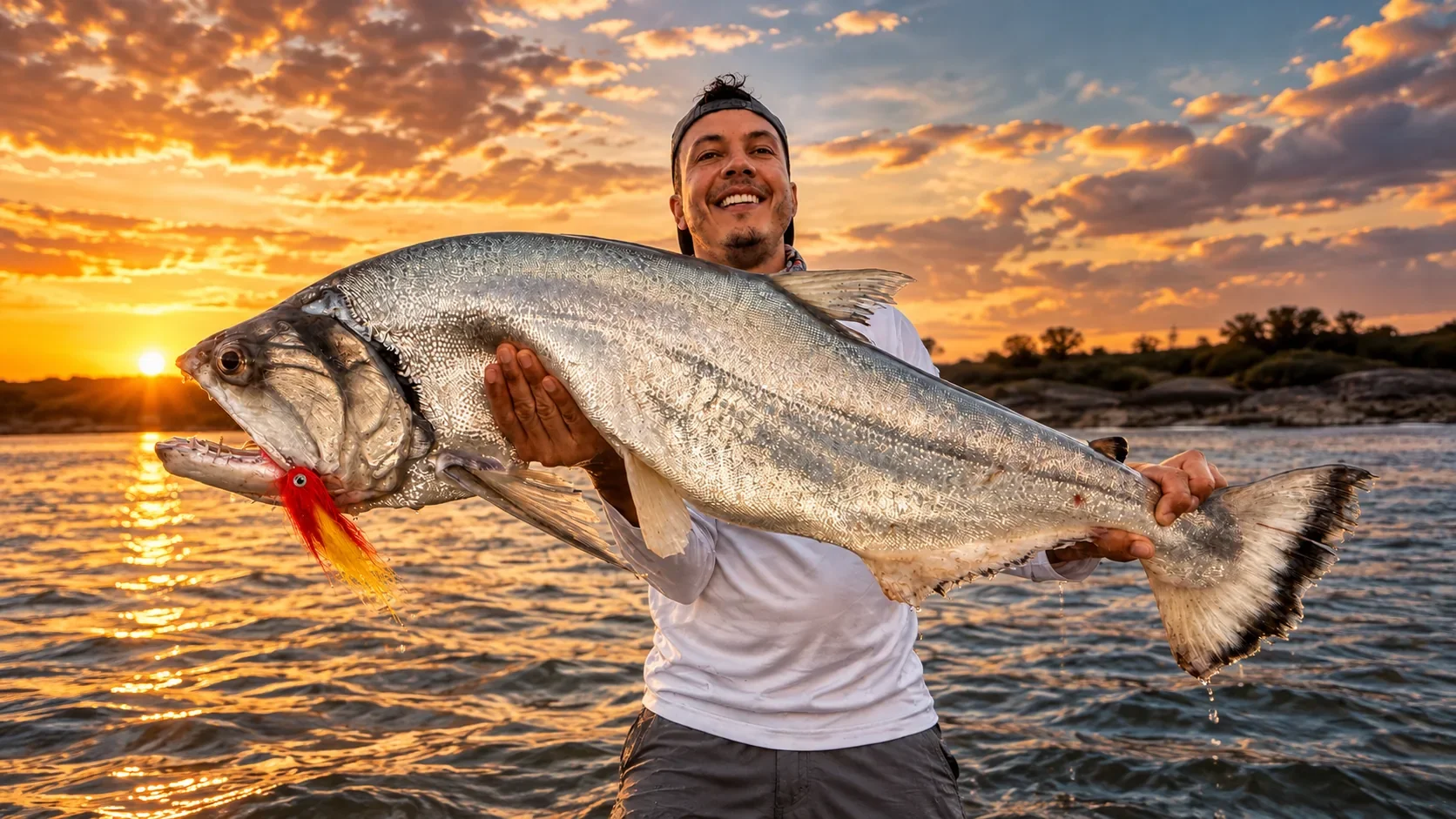
Payara hold in and below rapids, in the eddies and seams beside heavy current, and often sit deep through the brightest part of the day. In Colombia that means the Orinoco’s broken water, described by anglers who have fished it as Class IV and V, worked from the rocks. An IGFA account from Brazil’s Xingu found them most active in the morning and again from late afternoon into dark.
How they feed explains why they are so hard to land. One angler writing for Fishwest about the Colombian Orinoco described payara slashing at the fly from the side, probably to stun or cripple it before coming back to eat, and counted roughly one solid hookup for every five hits. It is one angler’s season on one river, not a rule of biology. Plan to lose more fish than you land.
Rigging for teeth, timber, and current
What follows comes from published outfitter lists and the experience of anglers who fish this water. Treat it as a starting point and confirm the details with your camp.
For peacock bass, a fast 9-weight is the standard tool: enough to throw big flies all day and turn a fish away from wood. Some lodge lists call for an 8 for Orinoco peacocks, and some anglers step up to a 10 for big temensis. Bring tropical lines in three densities: a floater for poppers, an intermediate for the upper water column, and a fast sinker, around S6, for channel edges and for royal peacocks holding near the bottom.
Leaders are short and stout, commonly 40- to 60-pound fluorocarbon a few feet long. Retie after any fish that drags you through timber. The box should span a range, from two-to-four-inch streamers up to large baitfish patterns and poppers on 2/0 to 6/0 hooks for trophy temensis, in combinations like green and white or black and yellow.
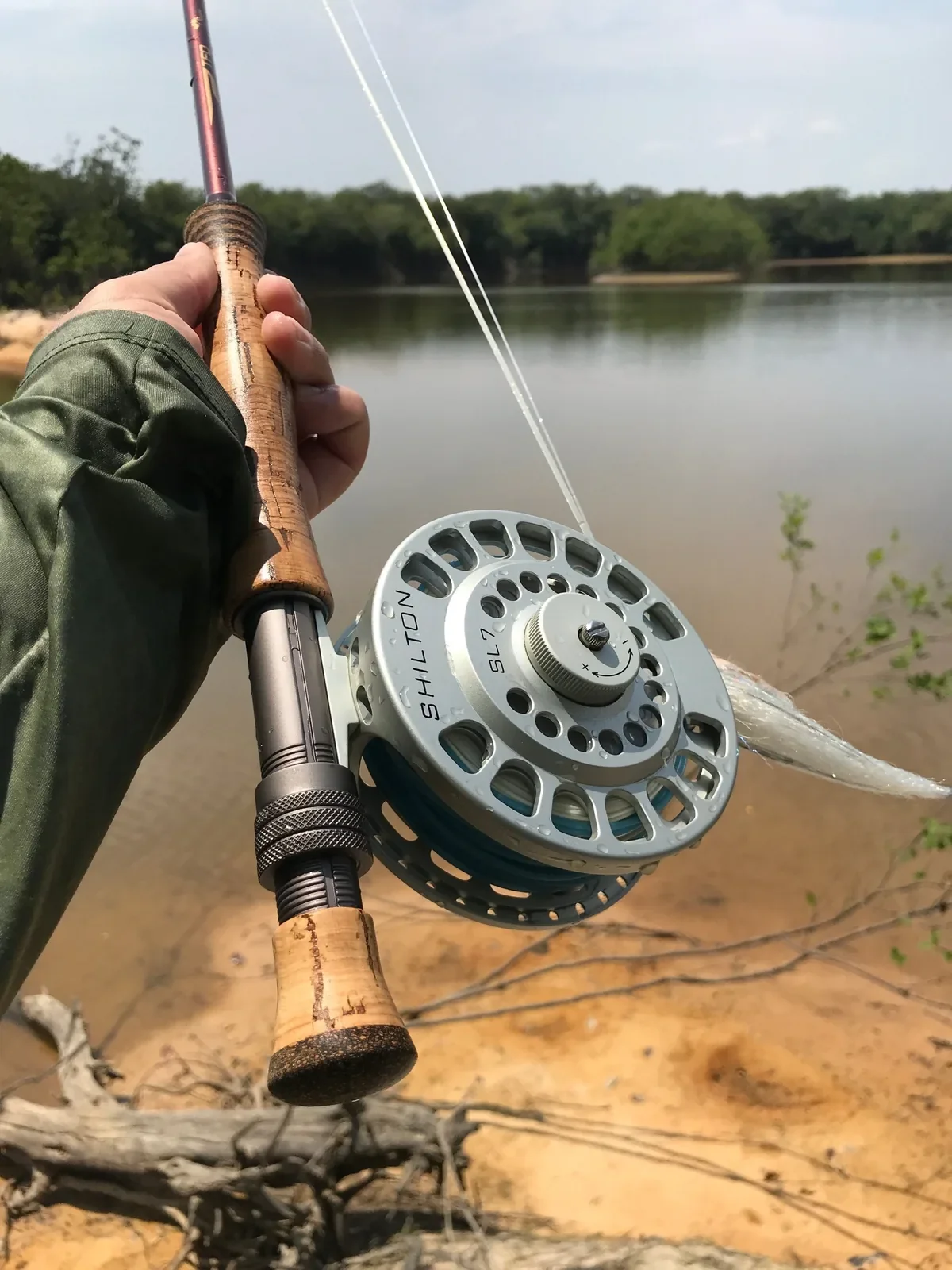
For payara, a 10-weight is the common baseline, and anglers use everything from a 9 to a 12. The fly has to get down in heavy current, so fast-sinking tips and shooting heads, roughly 300 to 500 grains and sometimes heavier, do the work. The part that is not optional is wire: a short bite tippet, around 40 pounds, because payara teeth cut monofilament. Flies run long, commonly five to ten inches on 3/0 to 6/0 hooks, and some anglers fish bigger.
Because payara tend to strike to cripple rather than inhale, experienced anglers often want a second hook partway down the fly, and the Fishwest writer found that a stinger rigged on the bite wire raised his hookup rate. Dark patterns, such as black with orange or red, lead many lists, but carry something white too. Strip fast and strip-set hard. A trout-style lift will not bury a hook in that jaw.
Then there is the smallest item in your bag: a hook file. Rock, teeth, and every fish dull a point. Here a sharp hook decides whether you get a photograph or a story about the one that came off.
Building the box before the water drops
Rods flex, lines age, guides change from one season to the next. The fly is the piece you can get right before you leave home: the profile, the hook, the durability, and enough spares to replace what the river keeps.
Megafin began in these Llanos ten years ago as a guiding operation, and the idea for the brand came out of those seasons on the water. The flies are still tied in the Llanos, by local anglers.
Two patterns answer the problems described above. For payara and big temensis, the MF Big Hammer Baitfish is a big-game streamer with a robust baitfish profile and a high-visibility build, nine inches long on a 6/0 hook, in Red/Yellow/Gold, Perch, Green/Yellow/Gold, and White-Barred. Megafin lists both payara and peacock bass among the species it is meant for. Its size sits inside the range outfitters publish for payara flies, but size is only part of the job. In the rapids it still has to be carried down on a sinking head and fished on wire, and whether to add a stinger is a rigging decision to make with your guide.
For the surface, the MF Mega NYAP Popper, short for Not Your Average Popper, pairs a pre-shaped foam head with a heavy-duty hook to throw a loud pop and splash, and peacock bass are among its listed targets. It comes in Red/White, Grey/White, and Purple/Black on 2/0, 6/0, and 8/0 hooks. The 2/0 and 6/0 fall inside the hook range peacock outfitters list; the 8/0 is a big-fish size. It belongs to the lagoon game: a fly sitting at the edge of structure while you wait for a peacock to come up from below.
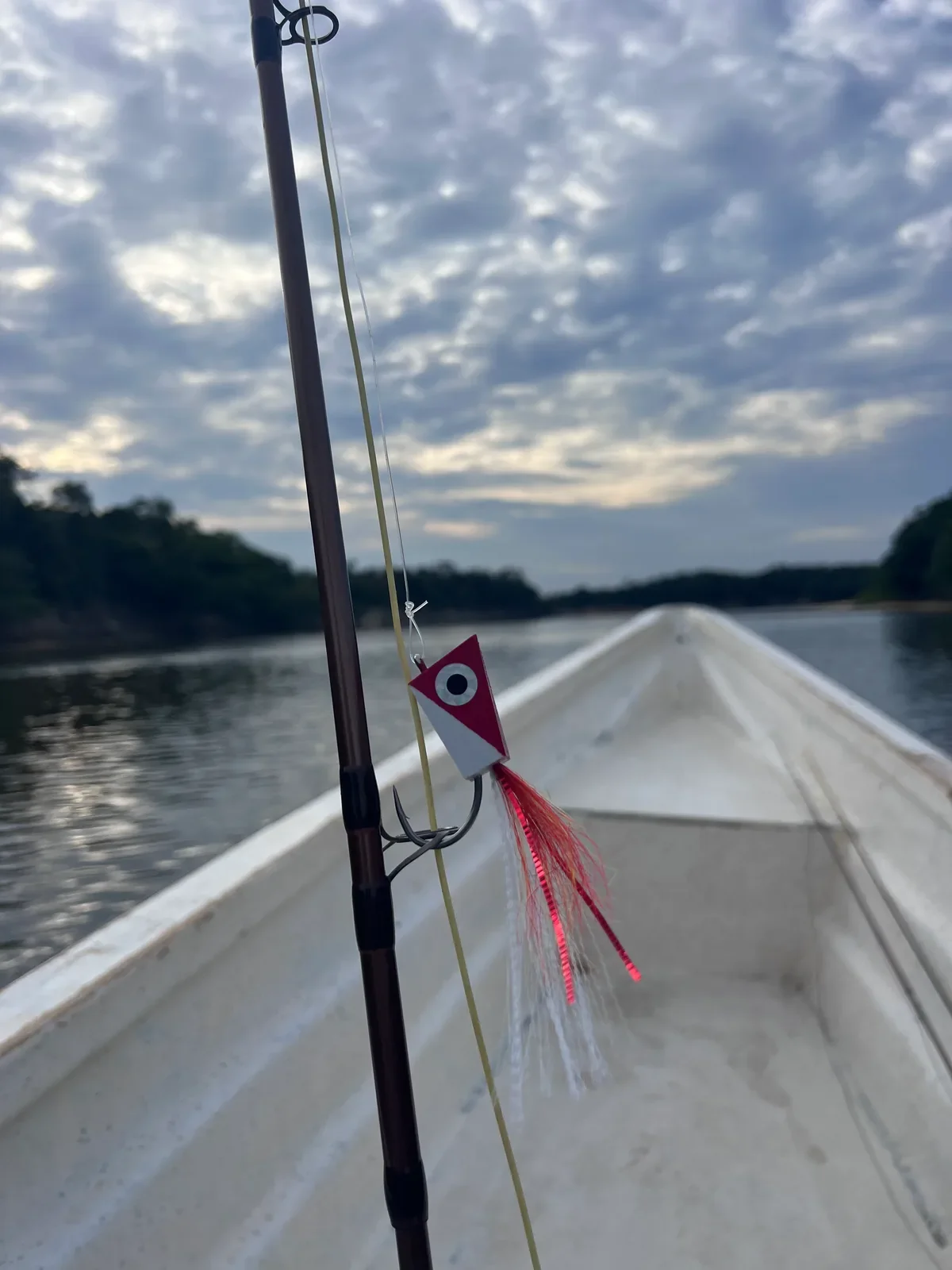
If you are building a jungle box from scratch, the South America Jungle fly assortment is a starter set built for South America’s remote predator waters: eight flies in a large slit-foam fly box. The selection includes the Big Hammer Baitfish in 6/0 and the Mega NYAP Popper in 8/0, and Megafin notes that the mix can shift slightly with the season and with what is working. Treat it as a foundation. You will still want the line densities, wire, and spares described above.
Fish it like a guest
The AUNAP permit from Colombia’s national fisheries authority, required of Colombian and foreign anglers alike, is the legal part. The rest is how you behave once you are there.
This is lived-in country, not empty wilderness. Indigenous communities live along these rivers, and several camps operate on their land and pay community fees, built into the rate or added on top. Many serious operations run peacock bass as strict catch-and-release, some with single barbless hooks only.
The ethic has science behind it. In a 2007 review of the basin’s fisheries, Rodríguez and colleagues described peacock bass as highly sensitive to overharvest: top predators that nest and guard their young in rivers of relatively low productivity. The same researchers noted that by then the patrols that once protected Venezuela’s Cinaruco had all but stopped. A great fishery is not a permanent condition.
Release works when it is done well. On the Rio Marié, one tagged peacock was recaptured four times in 31 days. Use barbless or crimped hooks and tackle heavy enough to end the fight quickly, wet your hands, and take photos with the fish over the water.
The season starts when the water drops
By the time the water starts to fall, most anglers headed here this season have had their dates for months. What is left is the part only you control. The window is short, the domestic flight is tight on weight, and the box has to be built at home, because there is nowhere to restock once you reach the Orinoco.
So build it now. Rig the wire, sharpen every hook, and when you finally get there, spend the first minutes looking at the water. That first lagoon taught me that the strike is the last thing that happens.
Build your South America Jungle box
Some images in this story have been digitally enhanced.
