
What to Put in Your Florida Keys Fly Box: A Species-by-Species Guide
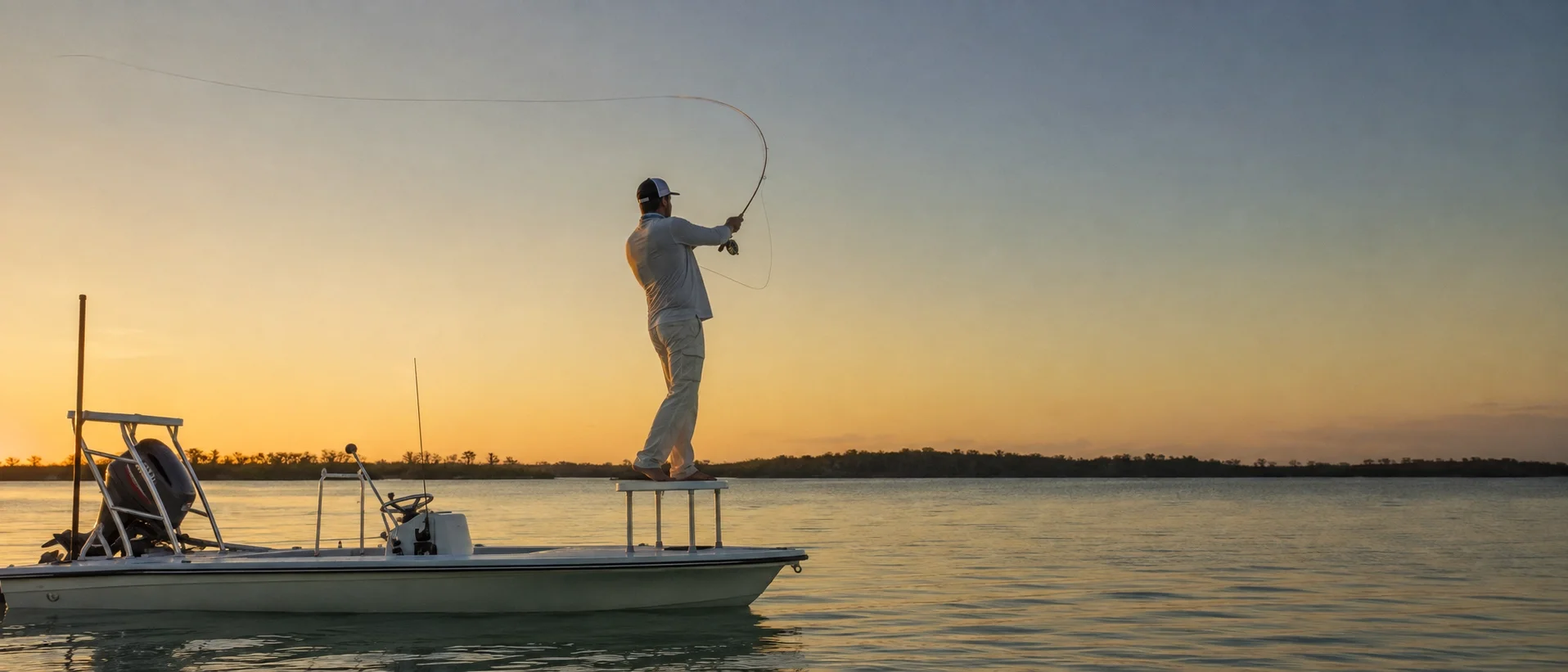
What to Put in Your Florida Keys Fly Box
A species-by-species breakdown of what to carry, what weight, and how to organize it before the skiff leaves the dock.
You have a trip booked. The guide boat leaves at 5:30. The tides are right, the moon is right, and the flat will be exactly what you came for. What you haven't done is think hard enough about what's in your box.
The Florida Keys are not a single fishery. They're four species with entirely different feeding behaviors, different strike windows, and different technical demands — stacked into the same zip code. Tarpon want a large fly worked with authority. Permit will refuse a fly that lands two feet off the mark. Bonefish on a skinny flat need a presentation quiet enough not to spook them before they even see it. Snook in mangrove cover require something weedless and patient.
Pack one generic box and you'll spend the trip reaching for the wrong pattern at the wrong moment. This guide breaks the Keys fly box down by species — what to carry, what weight, how many, and how to set the box up so you can access the right fly before the fish turns.
The Keys Box Is Really Three Boxes
The first decision is to stop thinking of this as one fly box and start thinking of it as three distinct selections that happen to travel together. Tarpon flies are large — 2/0 to 3/0 hooks, dense rabbit strip or synthetic wing, built to push water and profile like a baitfish or a crab moving through current. They have nothing in common, functionally, with a #6 bonefish shrimp pattern weighted for a two-foot sink on a calm shallow flat.
What your guide will ask the moment you step on the boat is: what are we seeing out there? If the water is high and pushing through channels, tarpon flies dominate the morning. If the flat has dropped and tailing permit are working the rim, the crab selection is the conversation. If you're crossing to the backcountry for bones, the front section of your box becomes everything. You need to be able to reach any of those zones in ten seconds — not improvise in the heat of the moment while a fish is sixty feet away and closing.
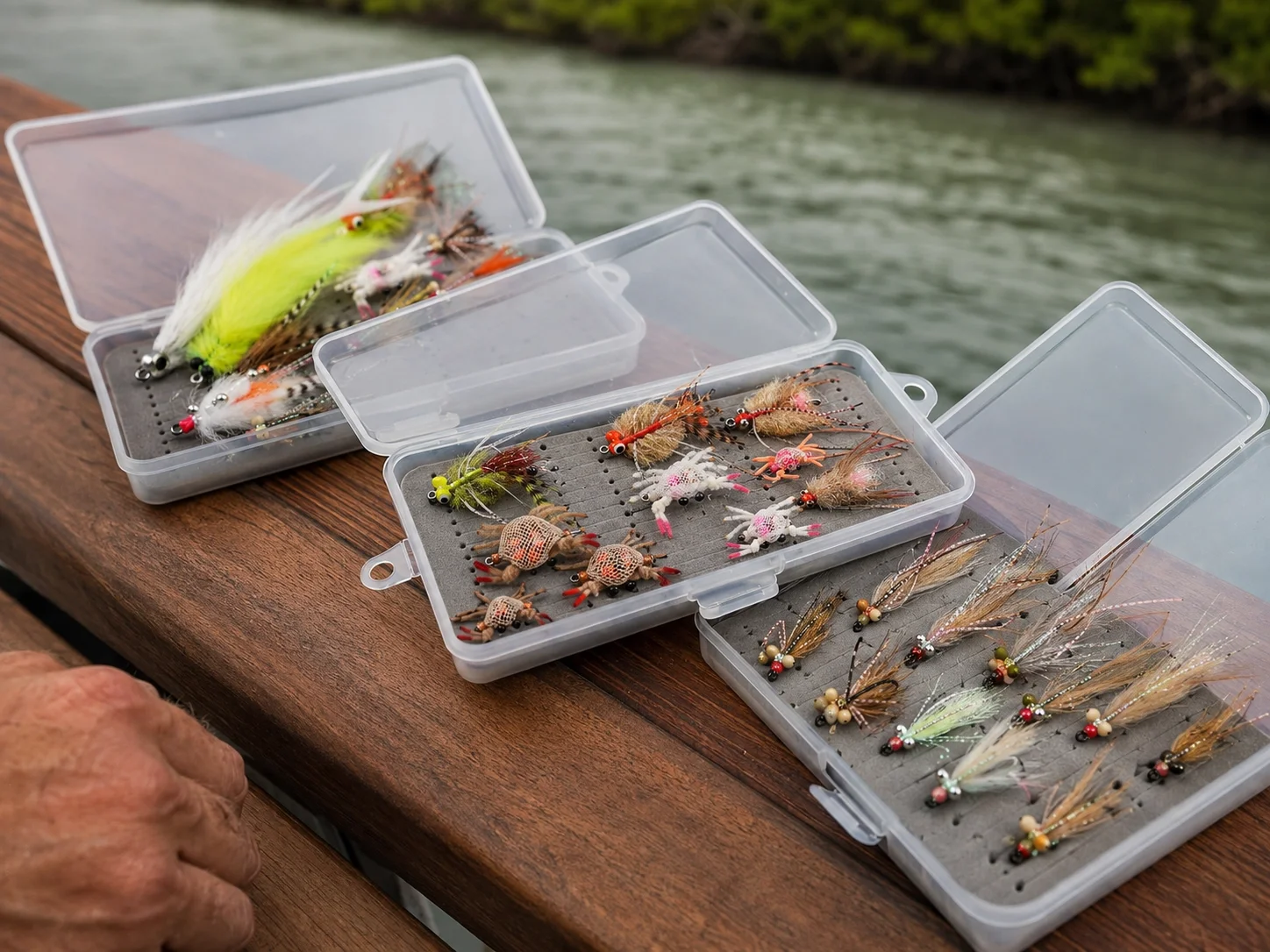
Three species, three selections — and they all need to be reachable in ten seconds. The layout of the box is part of the system.
Build the box so the top section holds tarpon flies — large, dark on one side, light on the other. The bottom section divides by species: bonefish shrimp and permit crab patterns on the left, snook baitfish patterns on the right. The middle slots can hold overflow and backup patterns. In the field you'll be reaching for flies under pressure, sometimes in low light. The organization of the box is part of your preparation, not an afterthought.
Two Fish, Two Approaches
Tarpon in the Keys are a two-season fish, and the flies you need depend heavily on which tarpon you're chasing. Migratory fish — the ones moving through in schools during the spring run from roughly March into July — are different animals from the laid-up fish you find in the backcountry on a dead-calm tide. Bring flies for both.
For migrating fish, the presentation is an intercept cast into a moving school. The guides call it a timed shot: you're presenting to where the fish will be, not where they are. The flies that work here are large baitfish and crab profiles on 2/0 to 3/0 hooks. Dark variations — Cockroach and Black Death-style patterns in black and brown — are the standard for low-light conditions and cloudy water. Lighter versions in tan and chartreuse earn their place when the sun is high and the water is clear. Carry four of each.
"The fish are moving. Your fly needs to be in the zone the moment they arrive — not retrieved into position after they've already passed."
Laid-up fish require a completely different approach. A 120-pound tarpon sitting motionless on a flat in two feet of water is resting, not feeding. The wrong fly, the wrong entry, the wrong angle, and the fish is gone before you know what happened. Size down: Tarpon Toads in black, dark olive, and purple on a 1/0 hook are the workhorses in this scenario. The fly doesn't need to be large. It needs to not spook the fish — and then it needs to move like something the fish would eat without urgency. Carry four.
For a deeper read on how to read a tarpon's posture and position on the flat before the cast, that piece covers the behavioral distinction in detail.
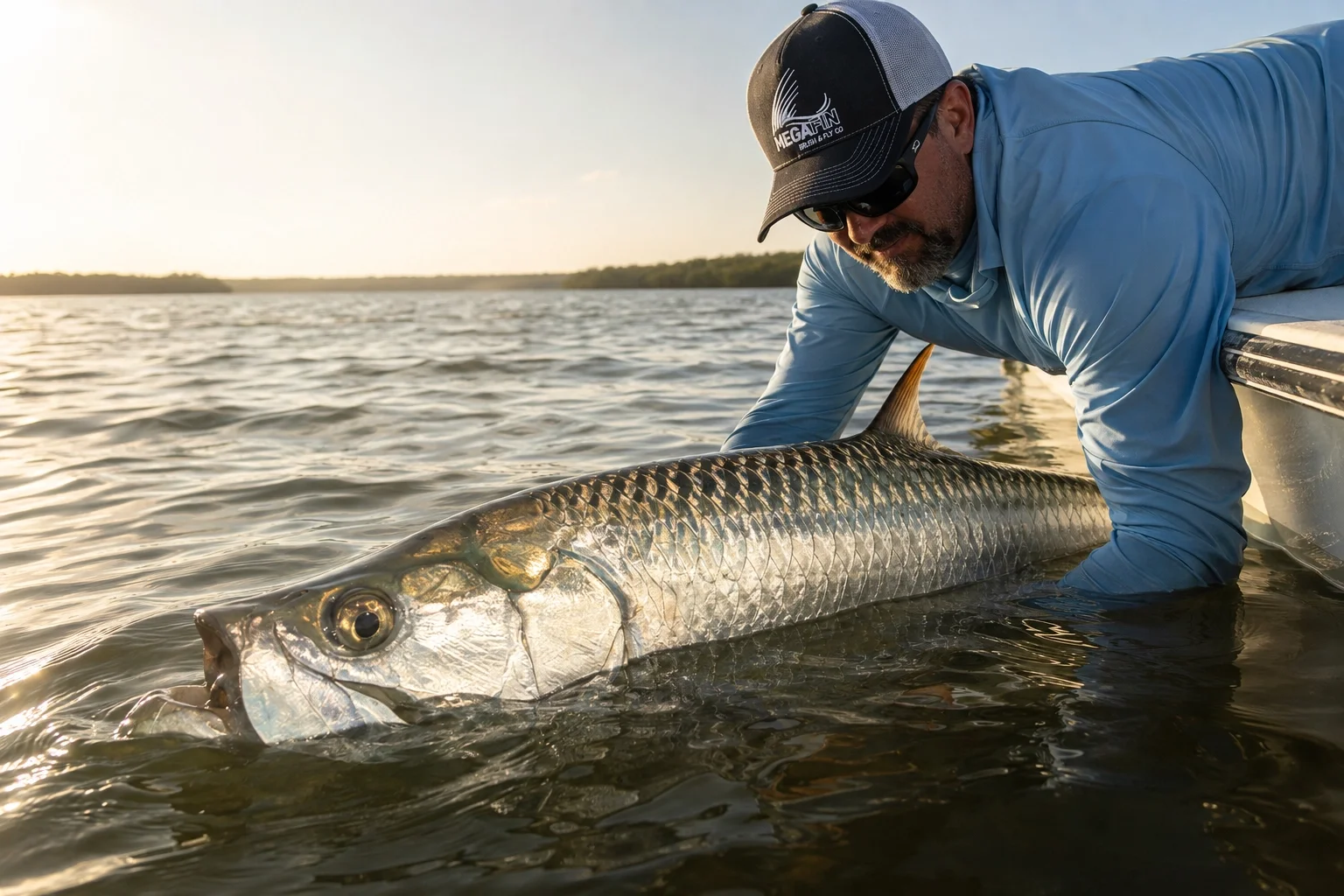
The chrome scales catch the afternoon light. This fish ate a dark pattern in two feet of water — laid-up, not moving.
The Weight Matrix
Permit have broken more fly rods — and more spirits — than any other fish on the Keys flats. The refusal rate is high even among experienced anglers fishing correctly tied patterns with clean presentations and ideal angles. That's not a complaint; it's what makes the eat extraordinary when it finally happens.
What matters most in the box is the weight matrix. A permit feeding in two feet of water over white sand with slight current needs a fly weighted entirely differently from one tailing in six inches of calm, flat water. The crab pattern needs to reach the fish's feeding zone at the right speed — fast enough to get there before the fish moves on, slow enough to look like something that actually sank through the water column naturally. Get the weight wrong and the presentation is wrong, regardless of the pattern.
Deeper water, moving current, fish at depth. Merkin-style crabs, #2–#4. Sinks fast; loud entry — only when depth or current demands it.
Standard Keys flat presentation, 1.5–2.5 ft water. Strong Arm Merkin, #4. The everyday pattern — enough weight to sink cleanly without spooking.
Tailing fish in six inches or less. Avalon, Squimp, #4–#6. Quiet entry is non-negotiable. Let the fly drift down naturally.
Carry three flies in each weight category: nine permit patterns total. The water depth and current conditions determine which box to open — that decision happens when you can see the flat, not at the fly shop the day before the trip. Three options in each weight category means you can lose a fly to a snag or a bad hookset and still have backups for the right scenario.
For a detailed look at why permit refuse your fly — angle, speed, presentation height, and the things that cause refusals even on perfect patterns — that article covers the mechanics that the fly box alone can't fix.
The Flat, the Tail, the Wait
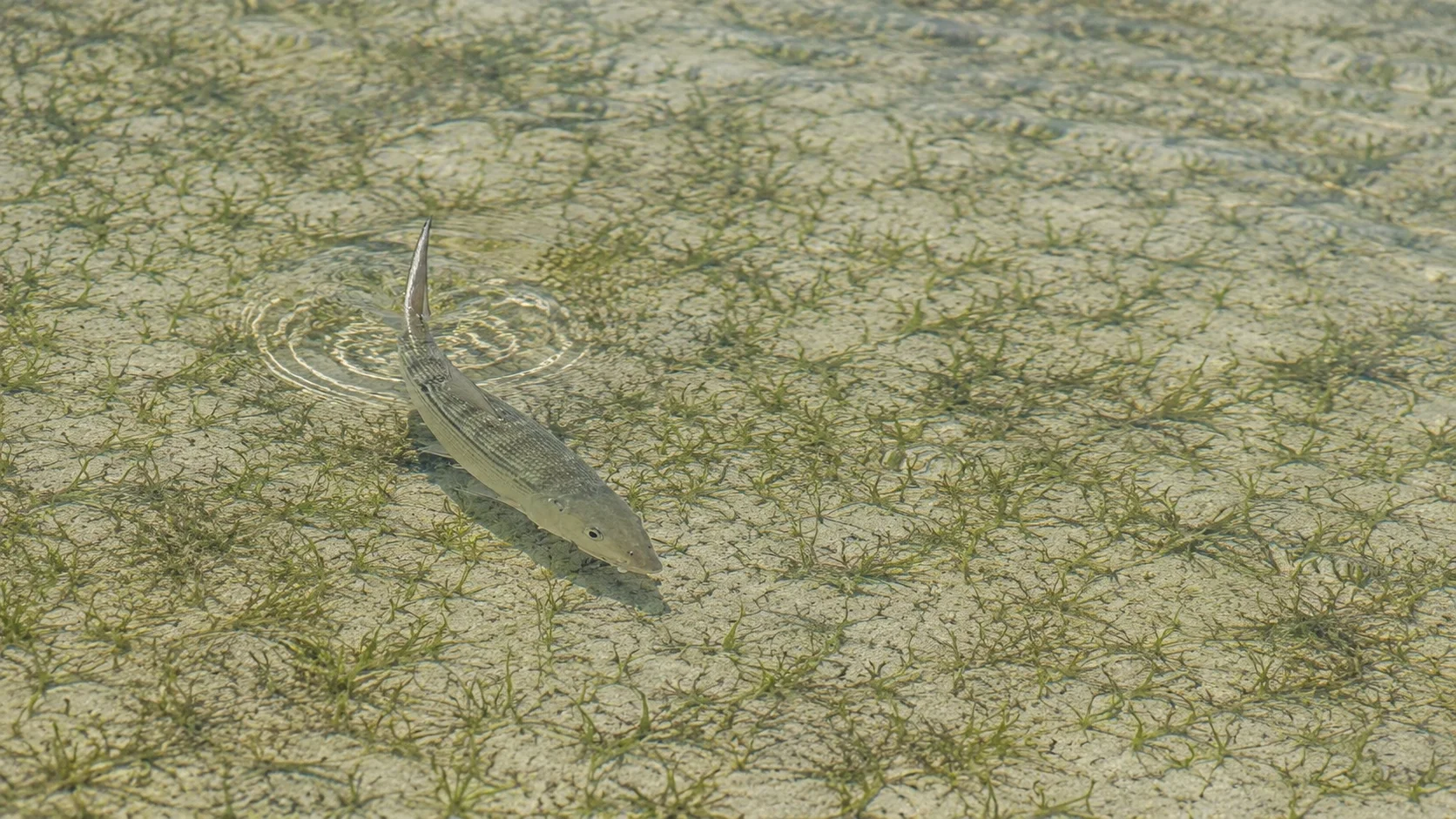
A tailing bonefish on a Keys flat. It looks urgent. The mistake is casting before you have the right angle.
A tailing bonefish is an easy animal to misread. The tail breaking the surface looks dramatic, but the fish is calm — head down, working the bottom deliberately, following the smell of shrimp through the sand. The mistake is rushing the cast while the fish is still at 70 feet because the sight of the tail made you anxious. Wait until you have a clean angle and a confident read on the direction of travel. Lead it by four to six feet minimum. Land the fly softly.
In the Keys, bonefish run smaller than what you find in the Bahamas. That shifts the fly selection: lighter patterns, smaller hooks, quieter entries. Standard presentations — Gotcha and Crazy Charlie in tan and white/pearl on #4 to #6 hooks with medium bead-chain — cover most conditions. For the shallowest flats, especially in the early morning when the water is glassy and calm, lighter bead-chain patterns like the EP Spawning Shrimp in pink/tan or olive cream will land softer and get more eats where the heavier pattern would push the fish out.
Carry four in each category. The water depth that morning tells you which column to open. For a fuller read on bonefish behavior on the flats — tides, feeding windows, and presentation distance — that guide covers the approach before the cast.
Structure First, Pattern Second
Snook live different lives depending on where you find them. Open-water snook in tidal channels and near river mouths behave more like a hunting predator — they'll move for a fly, they'll cover ground, and when they commit they commit hard. Snook holding in mangrove cover are ambush feeders. The fly has to come to them, and it needs to be weedless or semi-weedless to work around the roots and branches without hanging up every other cast.
For open water: EP Baitfish and Clouser-style patterns in white/olive and chartreuse on 1/0 to 2/0 hooks. Three patterns. Snook in open water eat with conviction — you don't need a small fly. Work it with irregular strips and pauses: the pause is often when the fish commits.
For mangrove cover: Bendbacks on 1/0 in white and tan/olive. Two patterns. Unweighted so they ride hook-up and slide through the structure. Cast tight to the root line, let the fly pause at the shadow edge, and strip slow. The eat is usually right at the boundary of dark and light — the mangrove edge is where the fish sits, watching for anything that crosses the threshold.
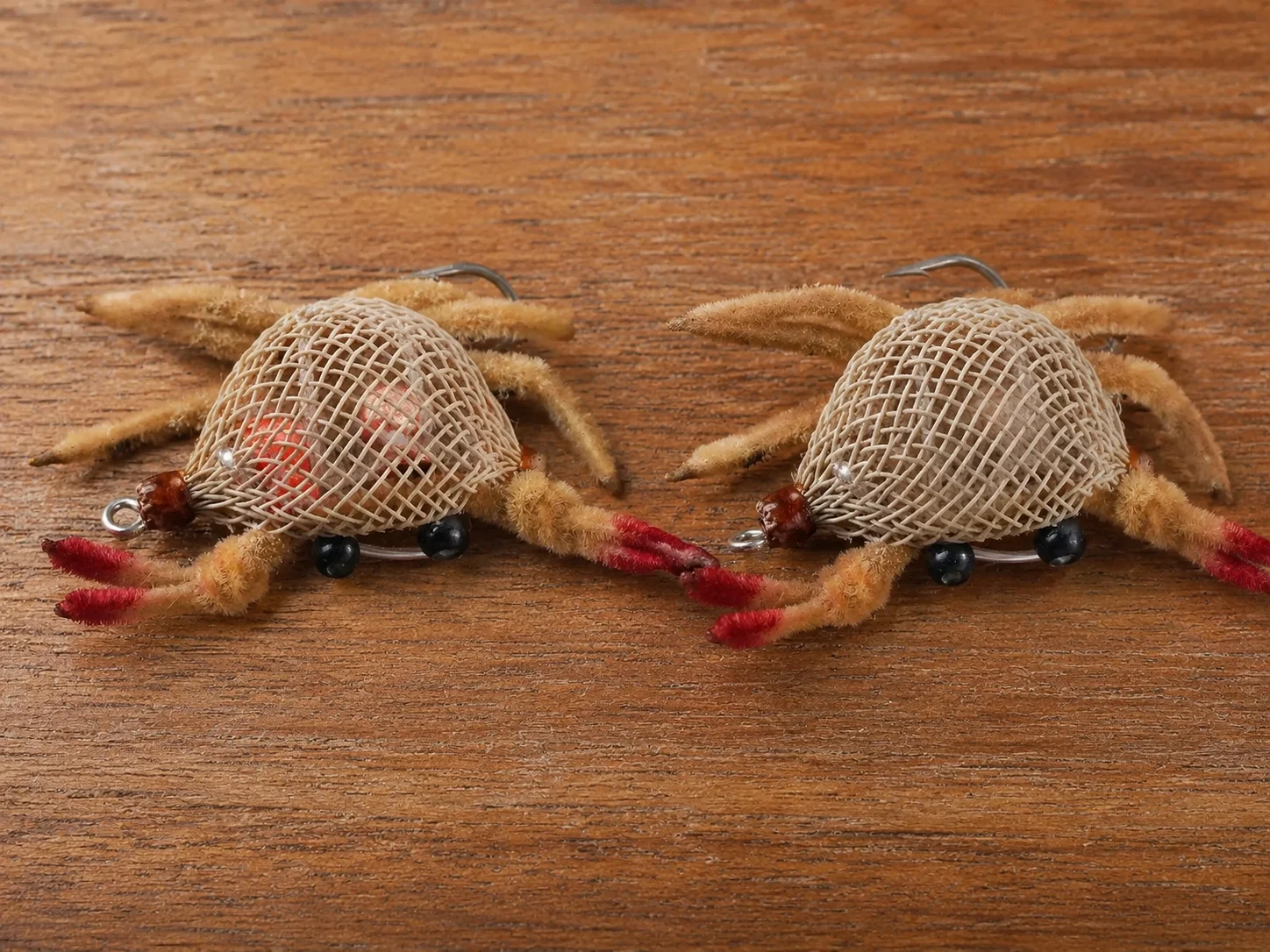
Same pattern, different weight. Same hook, same crab profile, entirely different behavior in the water.
The Same Fly Isn't the Same Fly
Here's the thing most anglers get wrong when packing for the Keys: they bring the right patterns and the wrong weights. A Gotcha with heavy eyes is not the same fly as a Gotcha with light bead-chain — not functionally. They do different things in the water and they do them at different depths.
The weight of the eyes controls sink rate. Sink rate controls where in the water column the fly fishes, how quickly it reaches the feeding zone, and critically — how much disturbance it creates on entry. A tungsten-eyed crab landing on a flat in six inches of calm water makes a sound that a permit hears before it can see the fly. The same pattern with light bead-chain enters softly, sinks at a natural rate, and gives the fish a clean look at the profile without announcing itself.
This is why the packing table below organizes flies by weight category, not just by pattern name. The weight decision is a field call — made when you can see the water, read the depth, and watch the fish. But you have to have all three options in the box before you can make that call.
If I Were Packing My Box Tonight
Species by species. Weight by weight. Organized for the boat, not the shop.
| Species | Pattern Type | Examples | Size | Weight | Colors | Qty |
|---|---|---|---|---|---|---|
| TarponMigrating | Splayed wing / baitfish | Cockroach, Black Death | 2/0–3/0 | Unweighted | Dark: black/brown · Light: tan/chartreuse | 8 |
| TarponLaid-up | Toad / worm | Tarpon Toad (Bunny) | 1/0 | Unweighted | Black, dark olive, purple | 4 |
| PermitDeep / current | Crab | Merkin-style | #2–#4 | Heavy tungsten | Tan, olive | 3 |
| PermitMid-depth | Crab | Strong Arm Merkin | #4 | Medium bead-chain | Tan, olive | 3 |
| PermitShallow / tailing | Crab / shrimp | Avalon, Squimp | #4–#6 | Light bead-chain | Tan, cream, pale olive | 3 |
| BonefishStandard flat | Shrimp | Gotcha, Crazy Charlie | #4–#6 | Medium bead-chain | Tan, white/pearl | 4 |
| BonefishSkinny water | Shrimp | EP Spawning Shrimp | #6–#8 | Light bead-chain | Pink/tan, olive cream | 4 |
| SnookOpen water | Baitfish | EP Baitfish, Clouser | 1/0–2/0 | Light / unweighted | White/olive, chartreuse | 3 |
| SnookMangrove cover | Weedless baitfish | Bendback | 1/0 | Unweighted | White, tan/olive | 2 |
How to Organize the Box When You Get There
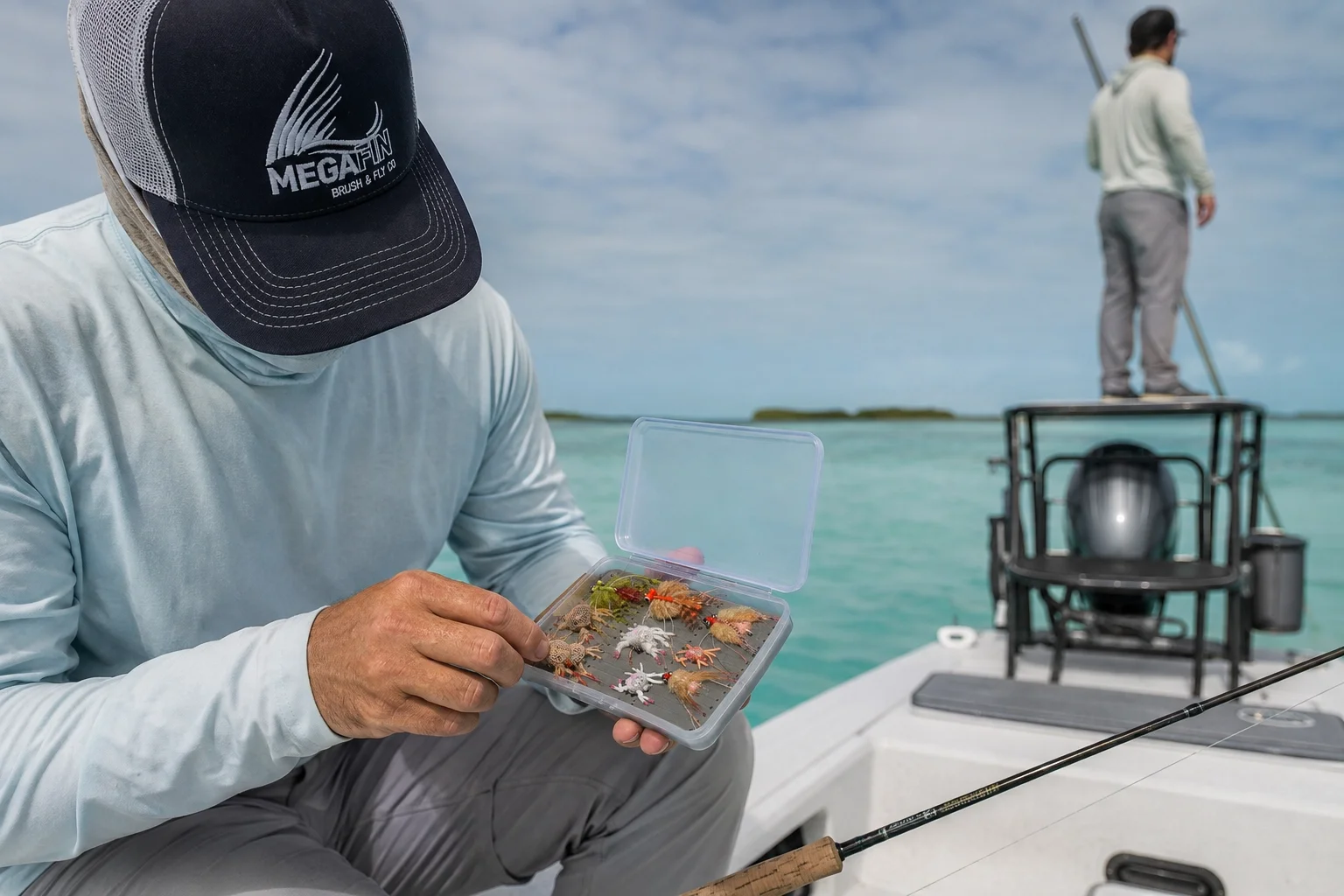
The guide will know what's on the flat before you do. When they say "there are fish on the south rim — permit, maybe bones too" and the boat is moving, you have thirty seconds to have the right fly on and the right amount of line out the tip. That's not the moment to sort through a box that's organized by color.
Before you leave the dock, ask the guide what species they expect to see first and what conditions to expect. Slot a fly for each likely scenario on the outside clips of the box lid — one tarpon pattern, one permit crab in the appropriate weight, one bonefish shrimp. You want the first cast available without opening the box.
Once you're on the water, consolidate. If you're fishing a tarpon flat all morning, move the permit and bonefish patterns to the bottom of the box and let the top half be tarpon-only. If the plan changes mid-day — if you're crossing to the backcountry for the afternoon — take three minutes at anchor to reorganize. A box that's set up for the right species is faster than a full box that contains everything.
Keep the box closed when you're not actively selecting a fly. A fly box that slides off a skiff gunwale in a chop or a turn is a significant problem. Clip it to your vest or bag when you're on the bow. The guide will not circle back for a lost box — and you shouldn't ask them to.
What to Leave Home
The biggest problem with most fly boxes brought to the Keys isn't what's missing — it's what's in there that doesn't belong. Every unnecessary pattern is weight, bulk, and one more thing to sort through under pressure. Leave these behind:
- Dry Flies and Nymphs There is no dry fly fishing in the Florida Keys. If you packed dry fly boxes from a previous trout trip, they stay home. The weight and space they take up in a gear bag or vest serves no purpose on a flats boat.
- Generic Bead-Head Streamers Standard freshwater streamers — Woolly Buggers, cone-head patterns not tied for saltwater — belong in a different trip. Saltwater hooks are built for corrosion resistance and hook strength under the sustained pressure of a permit or tarpon. Freshwater hooks rust and fail in the salt.
- Bass Bugs and Heavy Poppers Unless you're planning an evening snook session on a specific water, large foam bass bugs and heavy poppers don't have a place in a Keys fly box. They spook flats fish on entry and they're nearly impossible to cast effectively on an 8 or 9 weight in any wind. Leave them for the bass water.
- Duplicate Patterns in the Same Weight If you have three different tan shrimp patterns all tied on medium bead-chain eyes, you don't need all three. Pick the one you trust. Redundancy in pattern is less valuable than redundancy in weight options. Four versions of the same pattern takes space away from the light bead-chain category that might be the deciding factor on a shallow tailing flat.
- Anything You Haven't Tied or Haven't Fished The fly you've never used before is not the one you want at the end of a long tide when you finally have a clean shot at a permit. Carry patterns you understand — how they sink, how they swim, how they look in the water. Confidence in the pattern is part of the presentation.

The Box We'd Bring
Everything in the Florida Keys Fly Assortment was selected for the specific conditions of the Keys flats — from the Lower Keys to Islamorada. Fifteen patterns, six species, one waterproof box. Built for the fish that are actually there.
Florida Keys Fly Assortment — Tarpon, Permit and Bonefish
What's in the box- Tarpon Roach
- Tarpon Toad (Bunny)
- Gurgler
- Mega NYAP Popper
- Permit Crab
- Alphlexo Crab Variant
- Megafin Avalon
- Bonefish Bitters
- Gotcha (Spawning)
- Gotcha (Hot Legs)
- Rubber Leg Charlie
- Mini Hammer Baitfish
- Best Brush Fly
- Deceiver (Forked Tail)
- Persuader (Pinfish)
Megafin Journal · The Fly Box
