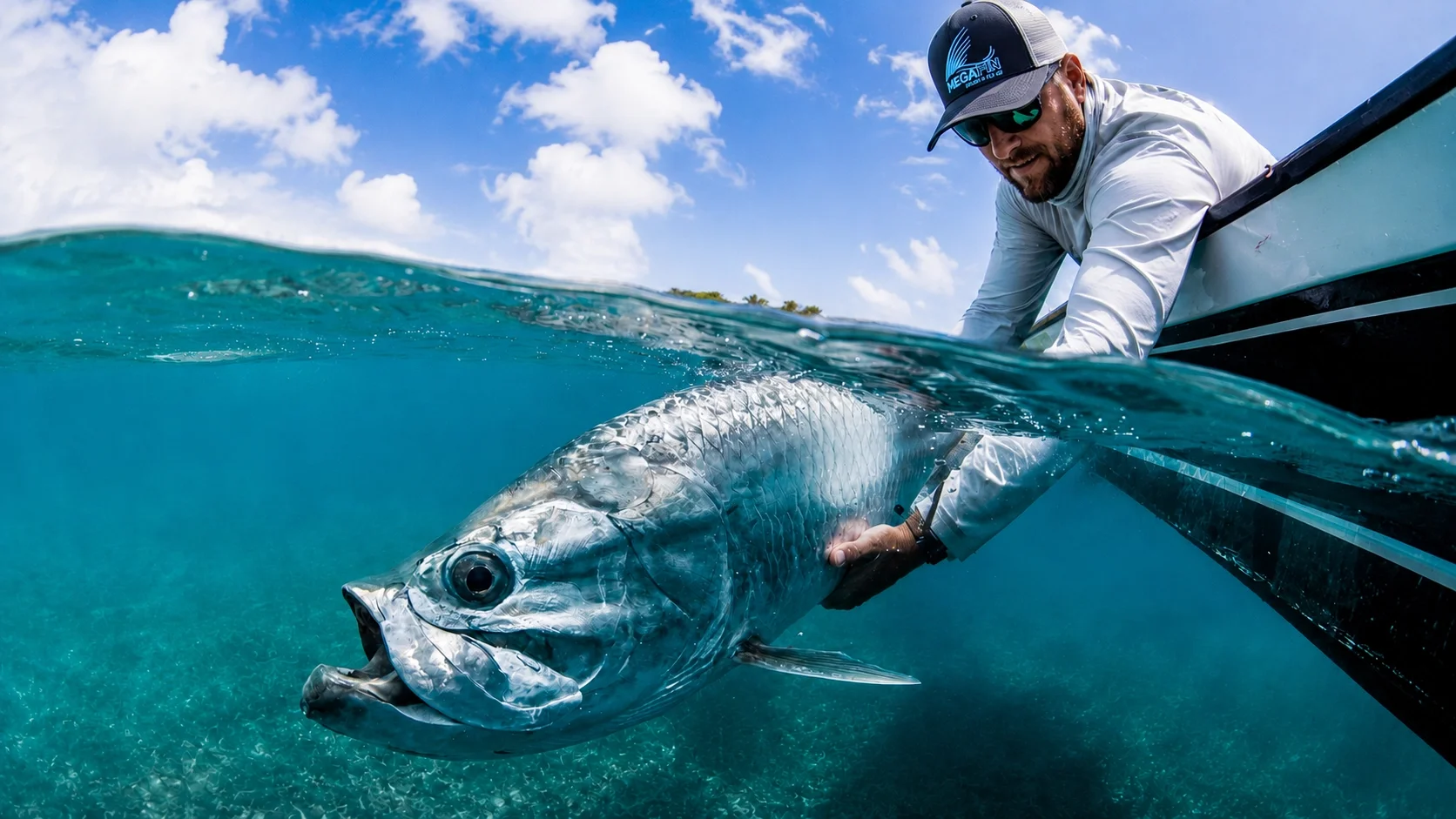
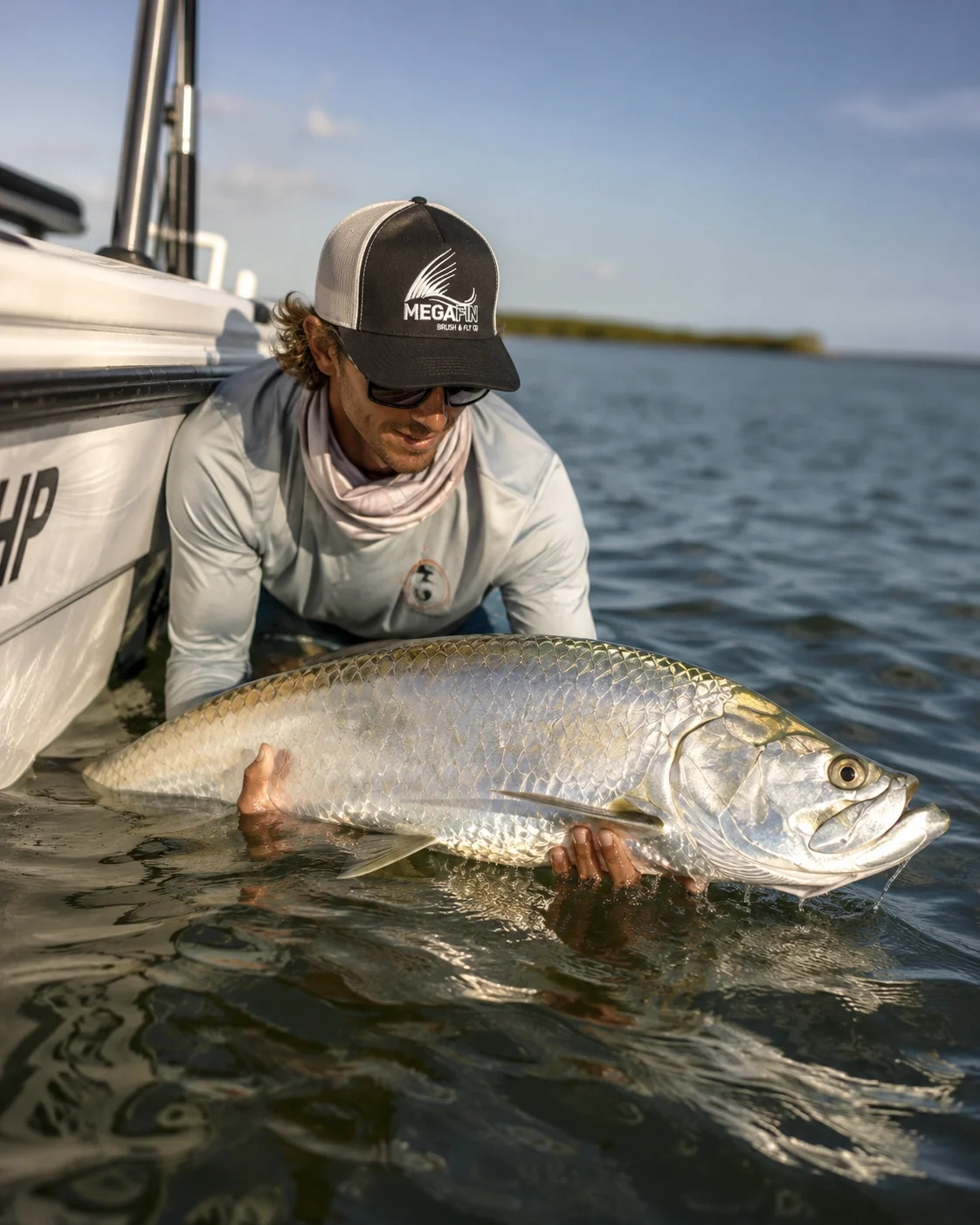
The 3-Second Window Before the CastA technical field note on tarpon behavior, flat reading, and why the most important part of the shot happens before the fly leaves your hand.
On the flats, the most important part of the shot often happens before the fly leaves your hand. Florida Keys.
The fish is forty feet away, moving left at a steady pace, showing no awareness of the skiff. You have the right fly, a clean shooting position, and roughly three seconds to decide: where does this cast go, how far does it lead the fish, and what angle gives the fly its best chance to move naturally past the tarpon's nose before the window closes.
Most anglers cast. A few anglers decide, then cast. On a tarpon flat, that difference is the whole game.
The Florida Keys' spring migration puts some of the most studied and pressured tarpon in fly fishing within casting distance of a skiff. These fish are not unknowable. Decades of guides, biologists, and serious anglers have built an extraordinarily detailed picture of how tarpon behave, what triggers an eat, and what ends a shot before a cast is ever made. What that knowledge keeps returning to is timing: the decision that happens before the fly leaves your hand is where most opportunities are won or lost.
"The most important part of a tarpon shot often happens before the fly leaves your hand."
Megafin Field Notes · Florida Keys
What the 3-Second Window Really Means
"Three seconds" is a practical compression, not a measured window. It's the shorthand for every decision that has to happen before a tarpon presentation — a framework for the fact that everything must resolve before the cast, not during it.
In those seconds, an experienced angler identifies the fish's behavioral state. Calculates the lead based on speed and current. Accounts for wind in the cast angle. Confirms where the fly needs to land to intercept the fish naturally, and that the retrieve will move the fly away from the tarpon — not toward it. Then the cast happens without hesitation.
Experienced Keys guides call it "getting ahead of the fish" — and they don't mean casting distance. They mean mental position. An angler who is already thinking about the correct lead, the correct strip speed, and where the fly needs to land before the fish appears is more likely to succeed than an angler who begins processing only after the fish is visible.
The window doesn't get longer with practice. You just learn to use it more efficiently.
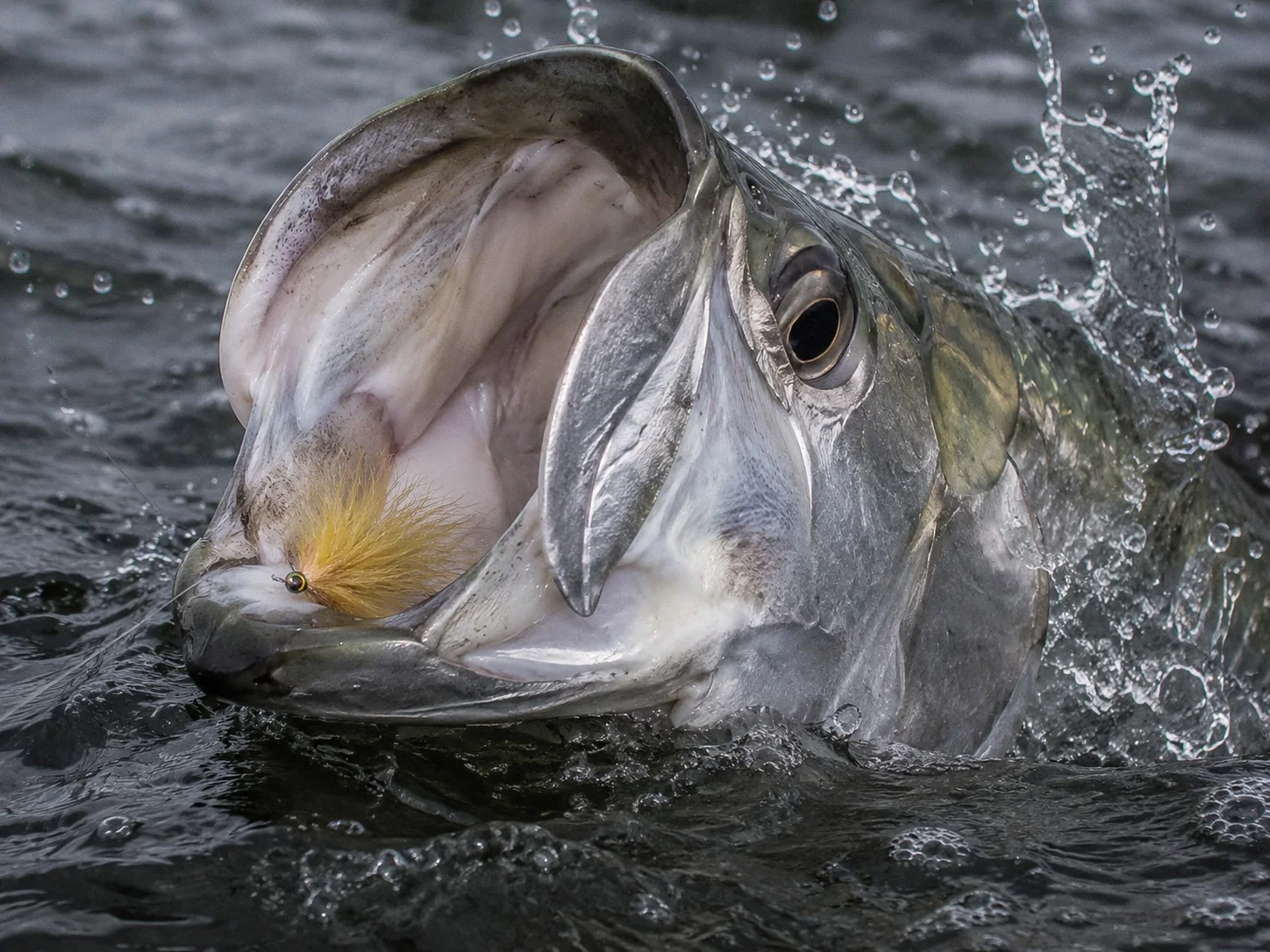
A tarpon eat looks explosive, but the decision often starts seconds earlier — when the fish first registers the fly's profile, movement, and direction in the water column.
Five States of a Tarpon — and What Each Tells You
Before any decision about a cast, you need to know what the fish is doing. Tarpon don't behave uniformly — their behavioral state directly determines how they'll respond to a presentation, which angle gives you the best odds, and whether the shot is worth taking at all.
Rolling Fish
Tarpon possess a primitive air-breathing swim bladder that allows them to supplement oxygen intake by rolling at the surface. Rolling peaks at dawn when dissolved oxygen is lowest and continues in warm water or on overcast, low-wind days. A rolling fish reveals direction, speed, and size. More importantly, rolling tarpon are actively metabolizing — they're accessible. Read the quality of the roll: a slow, arching surface break indicates a fish moving calmly. A short, nervous break may indicate pressure or a fish already beginning to shut down.
Cruising Fish in Strings
A school of tarpon moving with directional purpose — heads down, tails visible, pace consistent — is the defining shot of Keys season. The important tactical note: target trailing fish in a string, not the leader. The lead fish carries the highest alert state. A presentation that spooks it cascades behavioral signals through the entire school. A trailing fish is calmer, its attention divided. Your guide will tell you which fish to cast to — listen.
Laid-Up Fish
A tarpon floating nearly motionless near the surface is resting. A resting fish is not a feeding fish. Laid-up tarpon can be triggered by a precise presentation, but the margin is paper-thin. The fly must land softly, settle to the right depth, approach from the correct angle, and move as natural prey would. One degree of wrong approach, and the fish departs without visible reaction — not spooked dramatically, simply gone.
Daisy-Chaining Fish
Tarpon circling in a rotating loop — nose to tail, fish after fish — are engaged in social and courtship behavior, not active feeding. Guides will attempt presentations to daisy chains, and fish occasionally break from the circle to eat. But these fish are focused on each other. Manage expectations accordingly.
Megafin Pro Tip
Watch the tail beat before you cast. A slow, wide tail swing means the fish is relaxed and in travel mode. A faster, tighter beat usually indicates a fish that is feeding or reacting to something in the water column. Match your retrieve cadence to what the tail is telling you.
"Most lost tarpon shots are lost before the presentation. They're lost in the read."
Field Notes · Florida Keys Flats
Why Most Presentations Fail Before the Fly Lands
The reasons are almost always positional and angular — not casting failures.
Wrong angle. This is the most fundamental source of refusal. Tarpon's natural prey moves away from a predator. It doesn't swim toward a tarpon or cross in front of it in a way that suggests approach rather than escape. If a fly lands and begins moving toward the fish, the tarpon refuses — not because the pattern is wrong, but because the physics are wrong. Research confirms what experienced guides have always known: tarpon eyesight is keenest in the upward and forward-looking zones. A fly that lands above and slightly ahead of the fish, moving away as the tarpon approaches, occupies exactly the quadrant tarpon are built to hunt.
Insufficient lead. Lead distance is a function of current speed and water clarity. In slow current, leading a moving tarpon 5–6 feet is a reasonable starting point. In stronger current — a tidal cut, a channel edge — that increases to 10 feet or more. In high-clarity water, err toward more lead: the fish has more time to study the approach.
Too many false casts. Two false casts at tarpon. Three in exceptional circumstances. Every false cast is a moment your eyes are on your loop and your guide's eyes are on the fish. By the third false cast, the fish has often changed direction, accelerated, or moved out of the angle you were setting up for.
Hard entry. On clear water, a fly landing hard reads as a threat. The cast that arrives quietly gives the fish a chance to simply encounter the fly. The cast that splashes announces itself as something that doesn't belong.
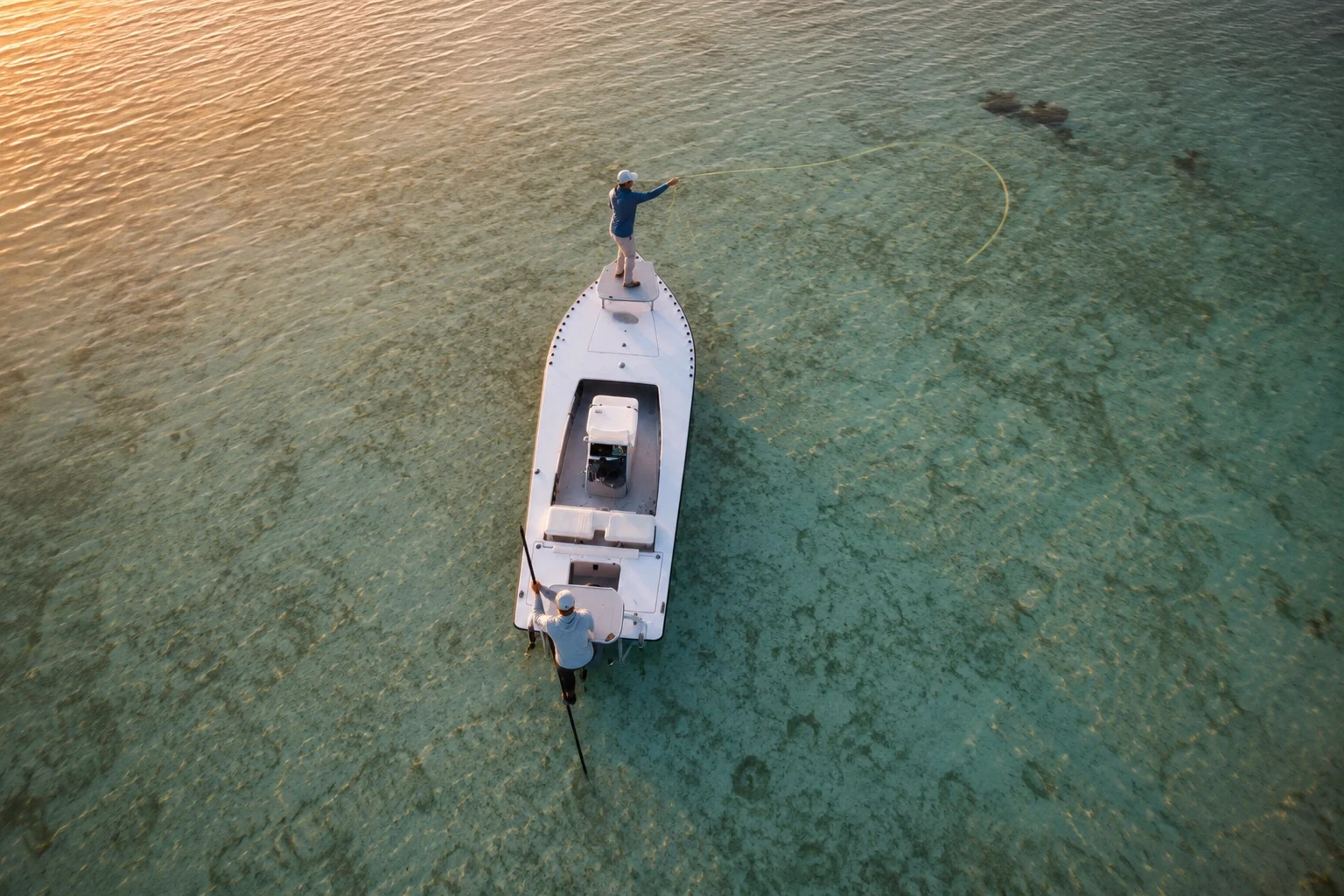
The shot begins with boat position, light, wind, and the direction of the fish — before the angler ever picks up the rod.
Light, Wind, Tide, and Boat Position
These are variables the guide manages while the angler is focused on the fish. Understanding them changes what you ask of the shot.
Light angle determines how well you can see the fish and how well the fish reads the fly's profile against the water column. Guides position skiffs with the sun behind the angler and to one side — this configuration lets polarized lenses cut through surface glare and see into the water column at depth. Many shots are lost because the angler couldn't see the fish in time, not because the cast was wrong.
Wind direction dictates what casts are available. An eight-knot crosswind from the left is manageable. Twenty knots from directly behind compresses the loop and shortens reach. An angler who understands wind doesn't fight it — they adjust cast angle and fly size to work within what the conditions allow.
Tide stage affects where tarpon stack and how they move. Outgoing tides on shallow flats concentrate fish at channel edges and cuts. Incoming tides push fish into grass and over sand. Slack water often produces laid-up fish that respond to a different presentation than moving fish on a full tide. Ask your guide what the tide is doing before you're on the water — it changes the entire approach.
Boat position determines the casting angle, lead direction, and whether the angler can present the fly without the boat's shadow crossing the fish first. When you see a tarpon and the guide is already positioned correctly, that is not luck.
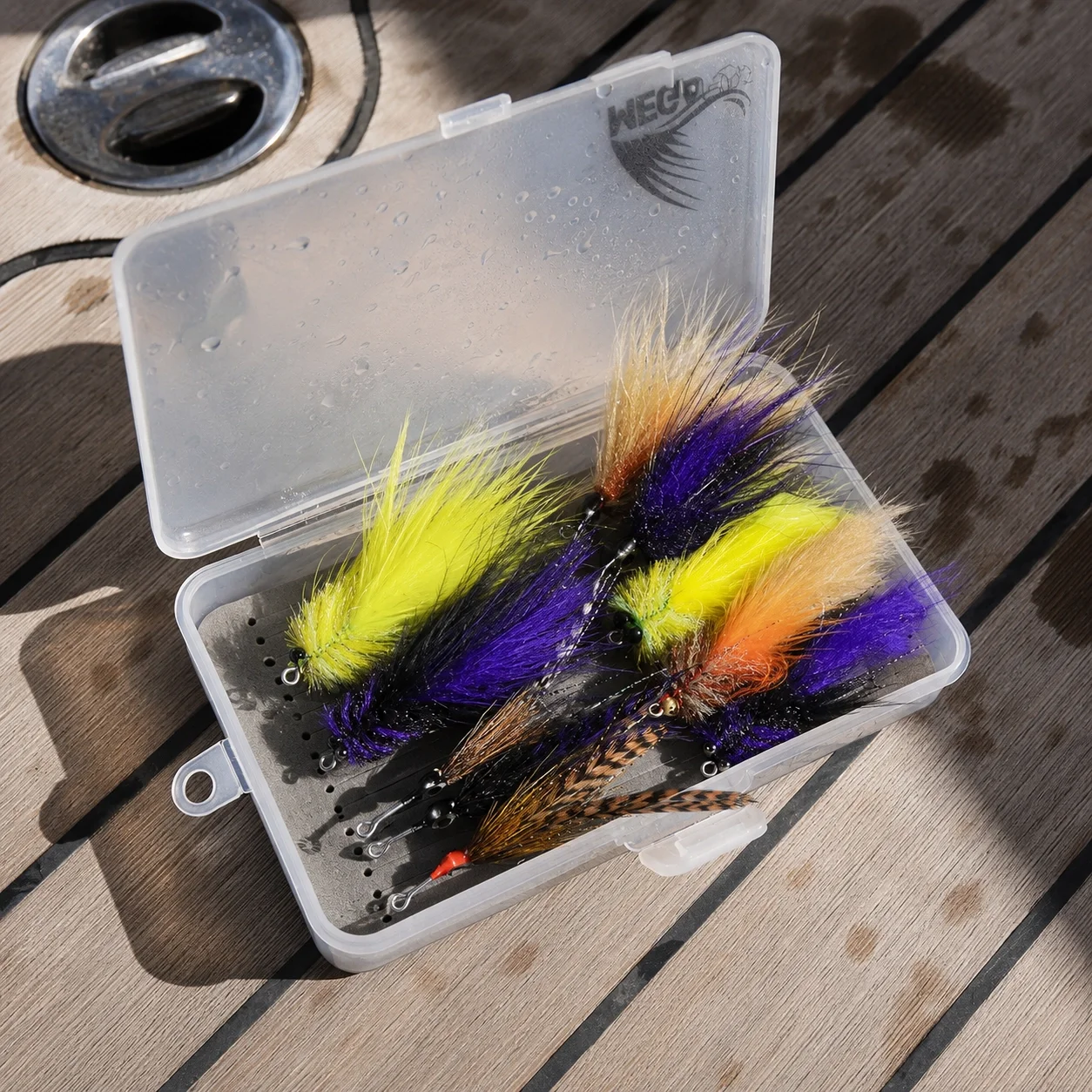
MF Tarpon Roach & Toad Fly Assortment
Built for the Keys — the patterns that work when the window is three seconds and the cast has to be right the first time.
The three seconds before the fly leaves your hand. Make them count.
1
Direction & Speed
Where is the fish going and how fast? Cruising, hunting, or laid-up? Lead distance depends entirely on your answer.
2
Behavioral State
Rolling, feeding, or just moving through? Mood determines retrieve speed more than pattern selection.
3
Depth in the Column
Surface, mid-column, or deep? A fly that doesn't reach the fish's level will rarely draw a committed eat.
4
Wind & Landing Zone
What is the wind doing to your loop? Where exactly does the fly need to land to intercept — not chase — this fish?
5
First Strip
How will the fly move on the first strip? Slow and subtle, or committed and aggressive? Decide before you cast.
6
Is This the Commitment Shot?
One clean presentation or a repositioned second cast? Deciding before the cast removes hesitation from the execution.
7
Lead or Trailing?
Am I targeting a lead fish or a trailing fish in this string? Target the trailer — the lead fish carries the highest alert state.
8
Will the Fly Move Away?
Will the retrieve move the fly away from the fish, or toward it? Wrong angle is the single most common cause of refusal.
The Right Fly Is Part of the Read
Fly selection and reading the fish are not separate decisions. They're extensions of the same information loop. A properly built tarpon box gives you options that respond to the variables you're reading in real time: water color, light angle, fish mood, and depth in the column.
In low light or stained water, a darker, high-contrast profile — a black-over-purple toad or a dark roach — gives the fish a silhouette to key on. In clear, bright conditions over white sand, a lighter pattern with a natural baitfish tone often draws more committed eats. In a heavy tide with fish moving fast, a weighted pattern that sinks quickly gets in front of the fish before it passes. In slow, still water with laid-up fish, a sparse pattern with minimal water resistance moves more naturally on a slow strip.
The biology matters here: adult tarpon visual sensitivity is strongest in short wavelengths — purples, blues, and ultraviolet light. Red reads as near-black in the marine environment. Pattern choices that account for how the fish actually sees, not just what looks good in a fly box, give each presentation its best structural chance.
The guides who consistently move tarpon in the Keys aren't changing flies constantly. They build boxes around behavioral scenarios — and they select flies that work across multiple conditions so the in-the-moment decision is a confirmation, not a search.
Megafin Pro Tip
On the strip set: never lift the rod. Strip until you feel the weight of the fish, then strip set hard — multiple times. The instinctive trout set (lifting the rod tip on the eat) will pull the fly out of a tarpon's bucket mouth before the hook finds purchase. The strip set keeps the line tight and the hook driving. Your guide will remind you. Listen.
A tarpon box should be built around behavior, water, light, profile, and presentation — not just color. When the fish appears, the decision should already be made.
Megafin Fly Box · Florida Keys
MF Tarpon Roach & Toad Fly Assortment
A serious tarpon shot starts before the cast — and your fly box should be built the same way. Prepare for the Keys with profiles designed for the moments when the fish gives you one clean window.
Roach and toad patterns for Keys-specific water conditions
Dark and light profiles for changing light angles
Weighted for correct sink rate and depth interception
Built for the strip set — not trout-weight hooks
Tied for the Florida Keys migration, April through July
The moment after the eat is earned by everything that happened before the cast — the read, the lead, the presentation, the strip set.
The tarpon eat is one of the most dramatic moments in fly fishing. A six-foot fish turning toward a fly, opening its bucket mouth, and committing to the presentation — after everything that went into putting the fly in the right place at the right moment — is a sequence that stays with an angler for years.
But the eat is earned. It's earned by the guide who positioned the boat correctly at first light. It's earned by the angler who understood what the fish was doing in the three seconds before the cast. It's earned by a fly box that was built for behavioral scenarios, not just color preference. It's earned by a strip set that was already muscle memory before the fish appeared.
The flat is honest. It doesn't reward hope or good intentions. It rewards preparation — the kind that happens before the fish shows up, before the shot opens, before the window starts counting down.
Three seconds is plenty of time. If you've already done the work.
Megafin Fishing Company · Built for the Eat.
Prepared for the Window
Build Your Keys Tarpon Box
When the fish gives you three seconds, your fly selection should already be decided. The MF Tarpon Roach & Toad Assortment is built for exactly this moment.