
Redfish on Fly: Why It's the Best Introduction to Saltwater Predator Fishing
Megafin Fly Fishing Journal · Species & The Eat
Redfish on Fly: Why It’s the Best Introduction to Saltwater Predator Fishing
The flat looks familiar if you’ve ever watched a bass work a shoreline in late summer. Here’s what red drum actually teach — and why that matters for every saltwater species that follows.
Jump to section
The push moves across the edge of the grass flat like something that knows exactly where it’s going. The water is eight inches deep, maybe less, and the shape underneath it — dark against pale sand — is unmistakable if you’ve spent time watching bass work a shoreline in late summer.
You’ve seen this before. Not the fish, not the flat, not the salt smell cutting through the morning air. But this: the specific urgency of a predator on a mission. The way it tracks along the edge, hunting. You freeze without thinking about it, the way you always do when the water shows you something.
The difference is that your fly rod is a nine-weight you borrowed last winter, the line feels unfamiliar in your hand, and the wind is doing something unexpected. The fish is forty feet away and moving. You have maybe ten seconds.
You cast. The fly lands behind the fish. It keeps moving.
That is, more or less, where the education starts.
The Fish Between Two Worlds
Red drum — Sciaenops ocellatus — live along the Atlantic coast from roughly Massachusetts to the Florida Keys, and across the Gulf Coast from Florida through Texas into Mexico. They are the same species everywhere, though behavior, average size, and habitat vary enough by region that a Louisiana marsh angler and a Florida grass flat angler might fish for them with different presentations, different expectations, and different gear.
A few terms worth clarifying before the conversation goes further:
Redfish is the most common informal name, used widely across the Gulf Coast and Southeast. Red drum is the formal common name and appears in most regulatory language. Puppy drum refers to juvenile fish, typically under fifteen inches. Slot fish refers to fish within the legal keeper size range — which varies by state and changes over time. Bull red describes large adult fish that have moved offshore to spawn and are typically not the target for fly anglers in shallow water.
These are regional colloquialisms, not scientific categories. The fish is one species. What changes is where it is in its life cycle and how it’s being fished.
Do not confuse red drum with red snapper, redbreast sunfish, or any other fish locally called “redfish” in a given region. Sciaenops ocellatus is specific: copper to bronze flanks, a white belly, one or more black spots near the base of the tail, and a body built for shallow, variable-salinity environments.
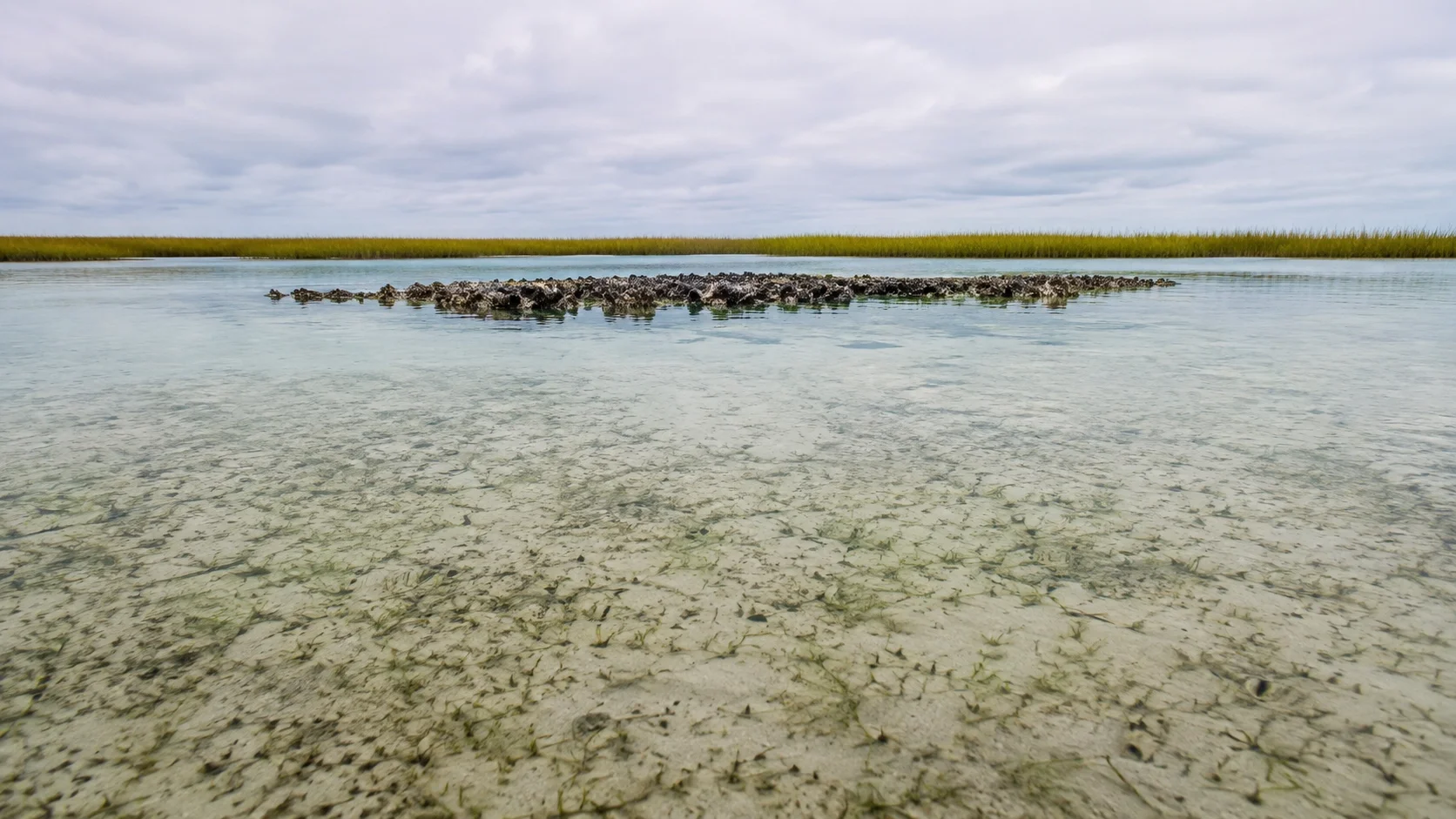
Grass flat, oyster bar, tidal creek mouth. Each environment demands a different approach. The fish rewards those who adapt.
What Makes a Red Drum a Predator
The mouth tells you a lot. Red drum have a subterminal mouth — positioned slightly below the snout — which means they feed most naturally from below or from a horizontal position. On a grass flat with the tide pushing in, a redfish with its nose in the sand and its tail breaking the surface is not struggling. It is doing exactly what its anatomy is designed to do: rooting crustaceans out of the bottom.
They feed by a combination of sight, smell, and the lateral line system that detects vibration and pressure changes in the water. In turbid Louisiana marsh conditions, smell and lateral line dominate. In clear Florida grass flat water, a redfish will track a fly visually across open bottom and refuse it based on something as subtle as the angle of the hook or the rate of the sink.
This is important for fly selection and for understanding why “just throw a Clouser” can work on a murky Texas bay and fail completely on a clear, pressured flat in February.
Red drum are opportunists. Juveniles and slot-size fish in estuaries feed heavily on shrimp, crabs, and small finfish. The specific forage mix changes by season, region, and habitat — a grass flat fish in Florida may eat more shrimp; a creek-mouth fish in South Carolina may encounter more mullet and killifish. No universal diet exists, and any fly box built around one will eventually disappoint you.
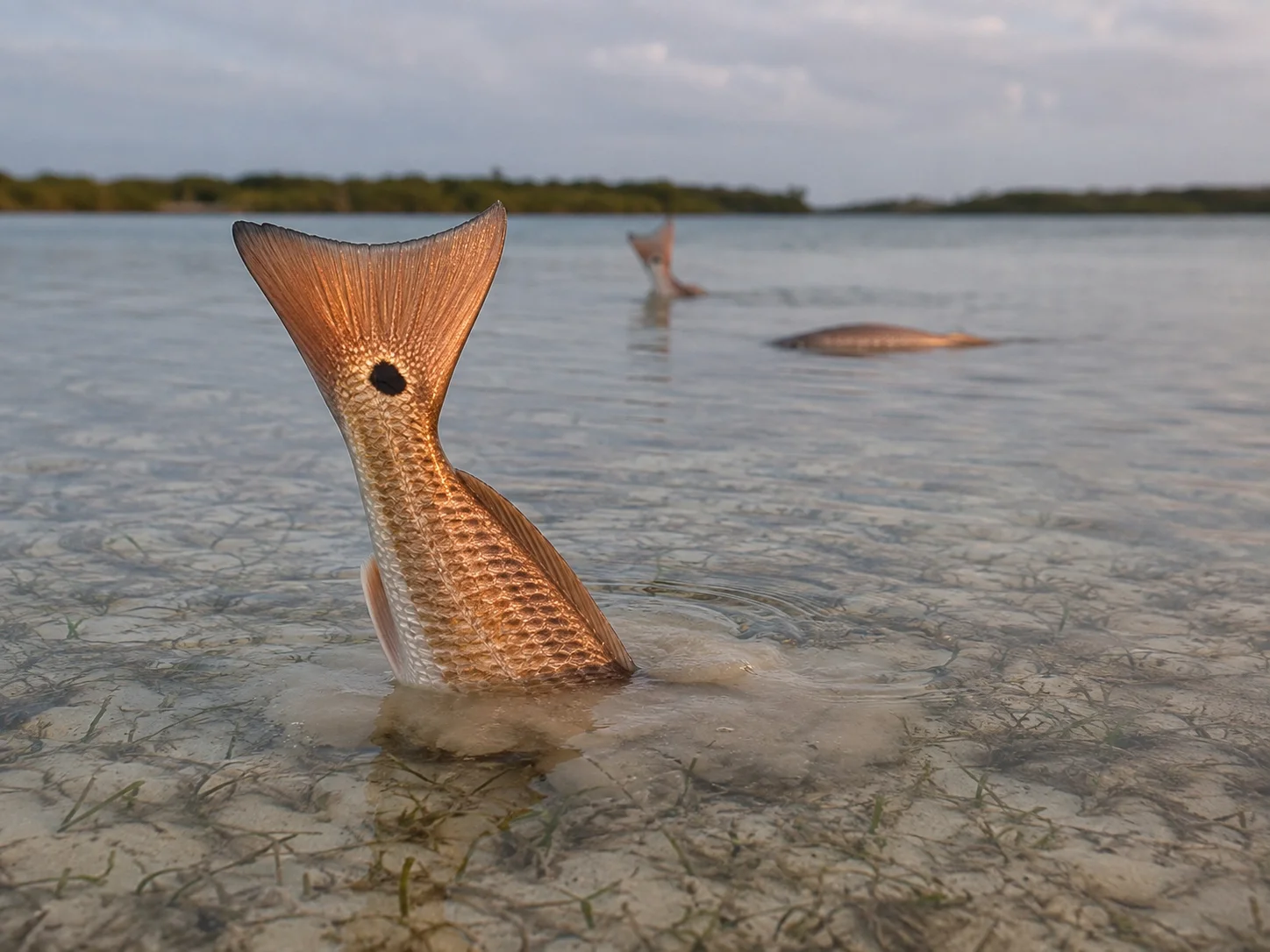
A tailing redfish at first light. The fish is focused on the bottom. You have about ten seconds.
Where They Live
Red drum are an estuarine species for most of their life. Juveniles recruit to inshore waters and stay through their early years, using marshes, grass flats, tidal creeks, and oyster bars as feeding and refuge habitat. Adult fish eventually move to nearshore or offshore waters to spawn, but slot-size fish — typically the target for fly anglers — are almost always inshore.
Grass flats in places like Tampa Bay, Charlotte Harbor, or the Florida panhandle offer sight fishing over open bottom where you can spot fish from a distance. Water is often clear enough to see the fish and watch it respond to the fly.
Oyster bars concentrate fish along edges, especially during a falling tide when water drains off the flat and baitfish pile up at the drop. Weedless flies matter here, and the cast angle matters more than usual.
Tidal creeks and drains in marshes from Louisiana to Georgia funnel bait on outgoing water and pull fish into predictable feeding positions. The fish may be harder to see in darker water, but the location logic is easier to read.
Mangrove shorelines in South Florida provide ambush structure similar to dock pilings or fallen timber — the kind of structure any bass angler can immediately understand.
Sight Fishing: The Signals
The vocabulary of sight fishing is visual, and learning it takes time on the water. But the instinct — scanning, waiting, reading — is one most freshwater anglers already have.
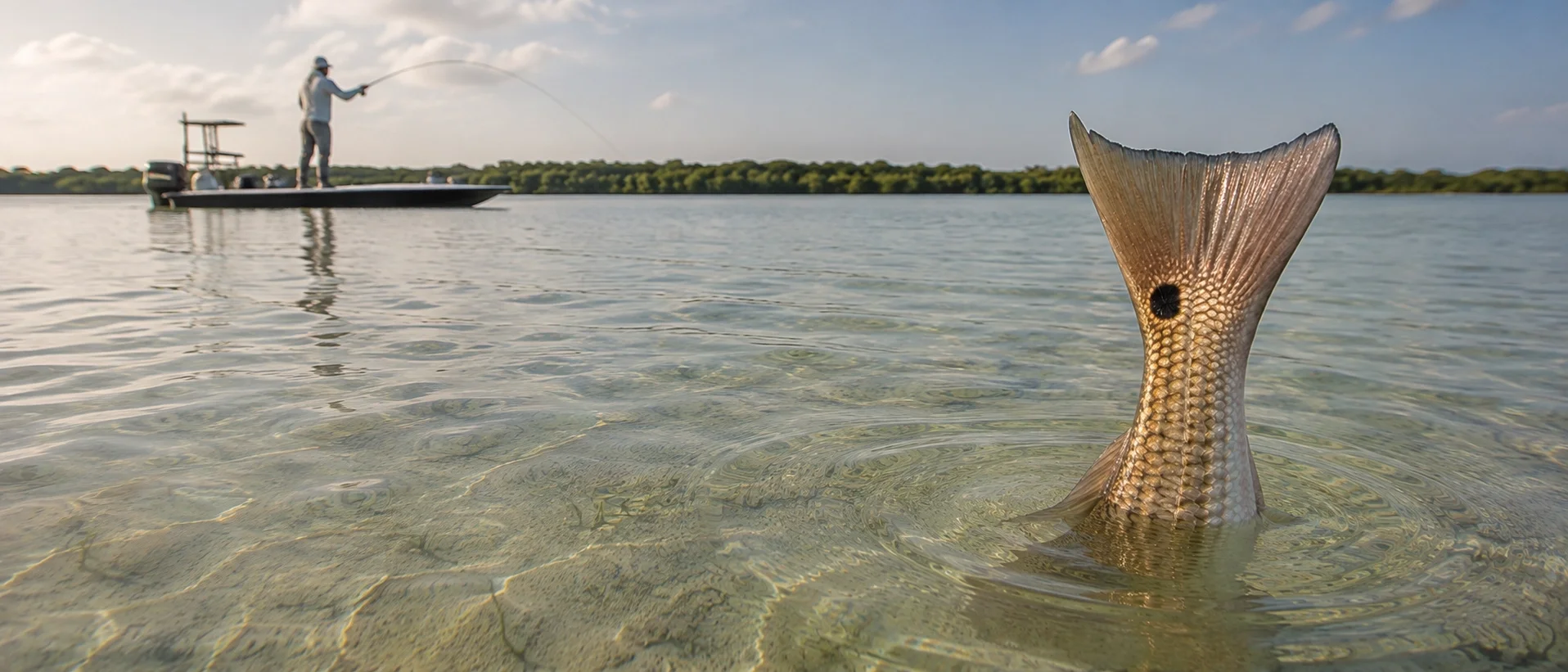
A tail is the most recognizable signal: the tail of a feeding redfish breaking the surface, often waving slowly as the fish roots along the bottom. It’s unmistakable once you’ve seen it and maddening the first time you cast at it and watch the fish spook.
A push or wake is what you see when a fish moves through shallow water fast enough that its body displaces water upward. This is the signal most likely to be missed by a freshwater angler — it doesn’t look like a fish at first. It looks like something moving under the water. Which is exactly what it is.
Nervous water is the slight surface disturbance caused by a school of baitfish reacting to a predator below. If you see bait skittering and the surface has a slight chop that doesn’t match the wind, look underneath it.
A back is the dorsal surface of a fish large enough, or in water shallow enough, to be partially visible above the surface. Less common than a tail but unmistakable.
Mud — a cloudy plume off the bottom — indicates recent bottom feeding. The fish may have moved on, but it tells you the flat is worth working.
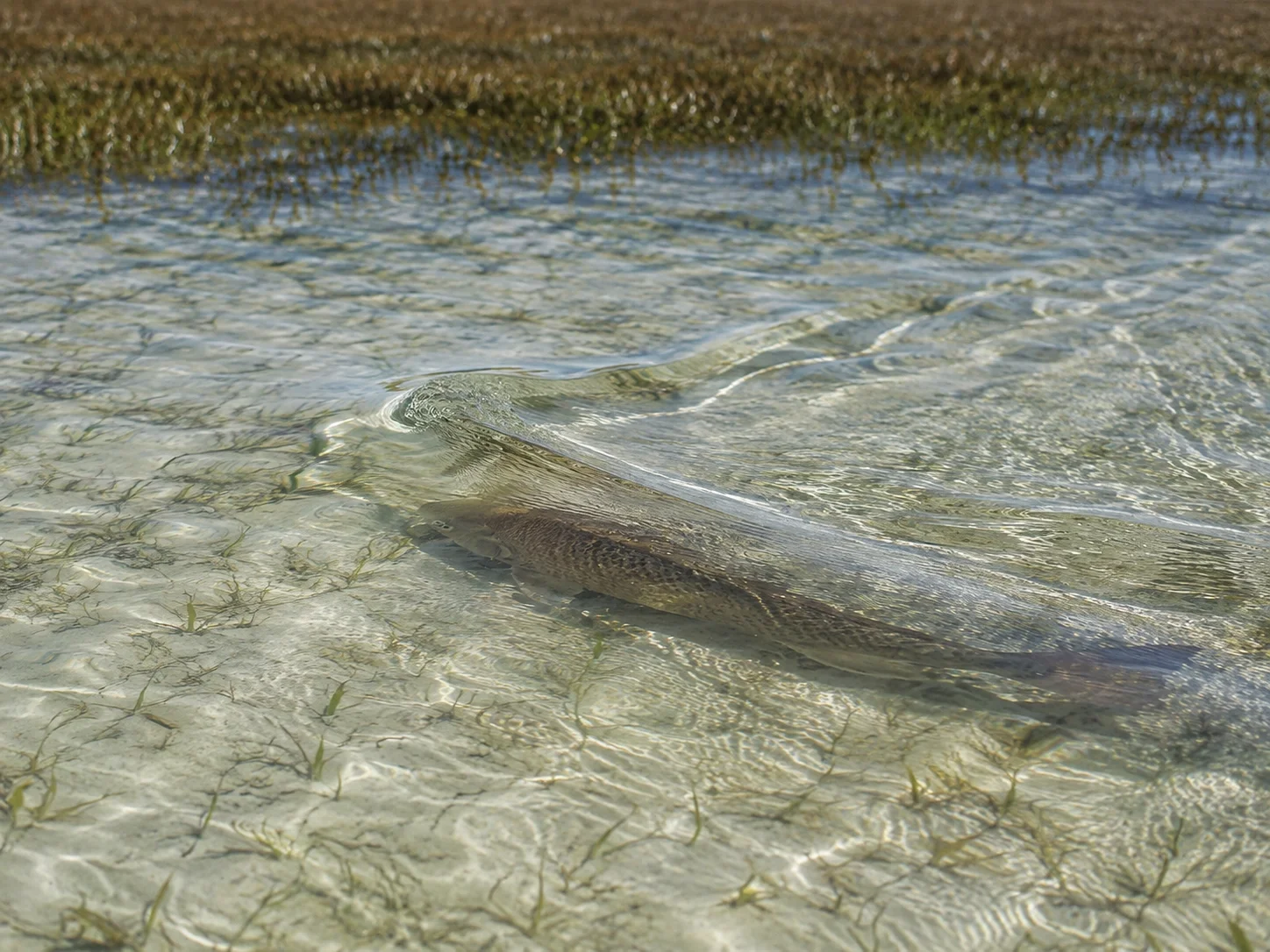
The push arrives before the fish does. By the time you can see it clearly, the window is usually closing.
The mistake most beginners make is looking for the fish itself. Look for what the water is doing around it.
The Tide Is a New Language
Freshwater anglers understand current. They understand how it moves food downstream and how predators sit in eddies waiting. Tidal water works on similar principles with one additional variable: the direction of the current reverses on a predictable schedule and the fish organize their feeding accordingly.
A flooding tide pushes water onto the flat, often bringing baitfish and crustaceans with it. Fish move shallower and spread out. A falling tide pulls water off the flat and concentrates fish at creek mouths, drain channels, and drop-offs where bait funnels through.
Which tide is better depends entirely on the specific body of water, the time of year, the water temperature, the wind, and the local forage situation. Anyone who gives you a universal rule about incoming vs. outgoing tide for redfish is giving you a shortcut that will eventually send you to the wrong place.
What matters more than memorizing tide rules is understanding why fish move when the tide changes: food availability and access to habitat shift, and the fish follow. Learn the specific water you’re fishing, and the tide logic will emerge from observation rather than theory.
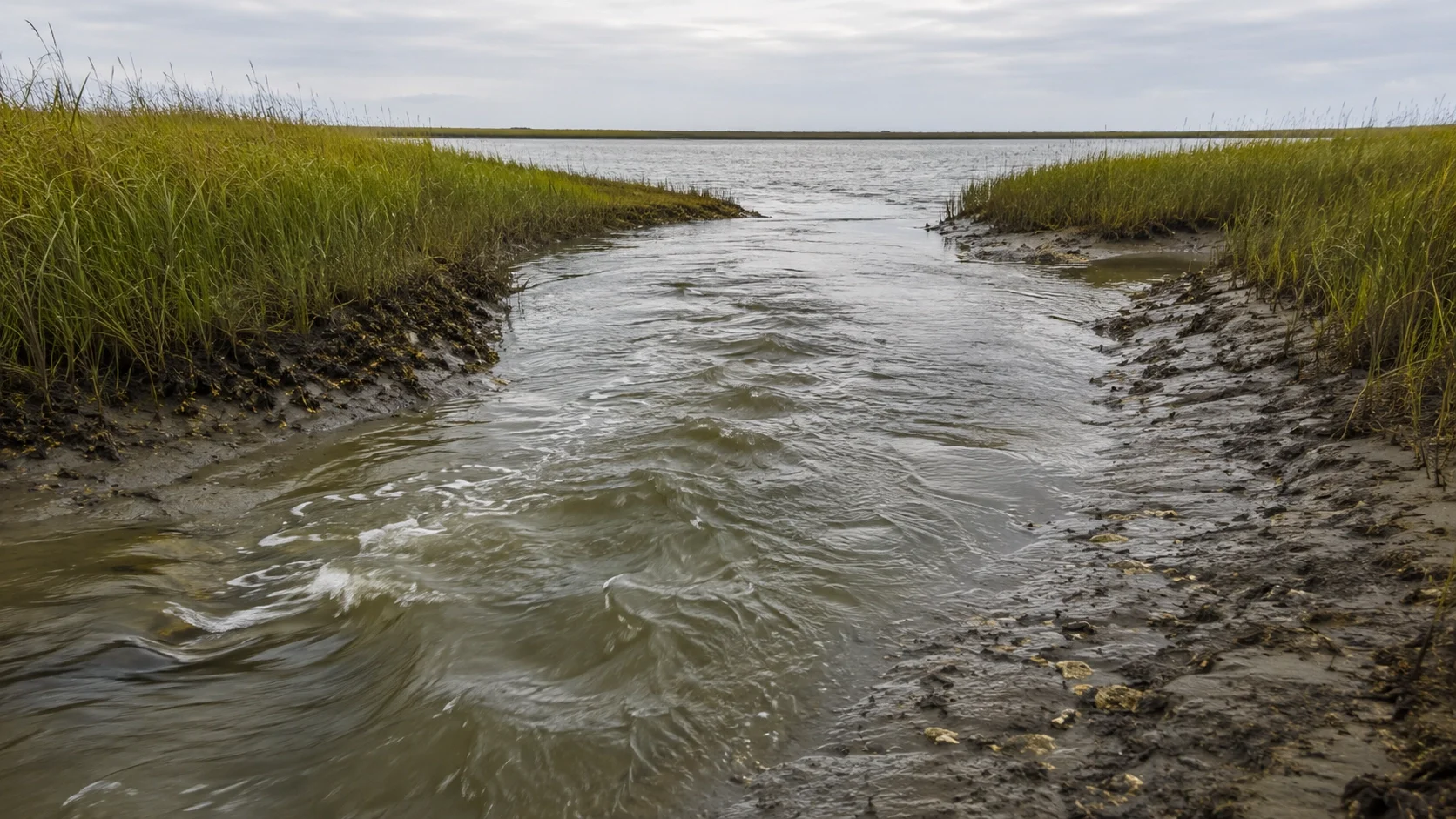
On the falling tide, water funnels through drains like this one. The bait has no choice but to follow.
Why “Forgiving” Is the Wrong Word
Redfish are often described as forgiving compared to bonefish or permit. There’s some truth to this. A redfish in turbid water may track a fly it cannot see clearly. A fish in a tailing group may eat aggressively because competition has temporarily suppressed caution. A large, heavy pattern that lands with a splash will sometimes trigger an immediate eat from a redfish that might have spooked a bonefish.
But the word “forgiving” creates a specific kind of early mistake: the angler who stops paying attention to presentation because they believe the fish doesn’t care.
A redfish tailing in six inches of clear water on a February flat in Florida is not forgiving. It will refuse a fly that lands two feet too close, spook at a shadow, or stop feeding the moment the retrieve speed doesn’t match whatever it was looking for. A redfish that has been fished over repeatedly in an accessible location may become leader-shy, shadow-aware, and selective about profile in ways that would surprise anyone who fished it the first time the season opened.
The more useful framing: redfish are readable. Their behavior often telegraphs what they want. But readable and easy are not the same thing.
A fish that followed and refused is not necessarily a lost cause. Wait. Let it settle. Change something small — speed, depth, angle — before recasting. The most common mistake after a refusal is casting again too soon.
What Transfers From Freshwater
A bass angler approaching their first redfish flat has more relevant experience than they realize.
Structure. Redfish relate to edges the same way bass relate to structure — grass line edges, oyster bar drops, creek channel margins, dock pilings. The instinct to work structure rather than open water transfers directly.
Ambush logic. Both species use current and cover to position for feeding. A creek mouth draining a marsh at low tide is the saltwater version of a tailwater seam. The fish is in the right place for a reason.
Retrieve reading. Experienced bass anglers already know to slow down after a follow and no eat, to vary the retrieve until something triggers a response, to let the fly sit. These instincts apply. The specific patterns differ, but the logic doesn’t.
Observation. The ability to read the water before the cast — to spend ten minutes watching before picking up the rod — is a freshwater skill that transfers completely and is undervalued by many beginning saltwater anglers.
Water temperature awareness. Bass anglers who fish seasonally already understand that water temperature governs behavior. Redfish activity responds to temperature too, particularly in the northern parts of their range where winter can push fish deep or into warmer refuge areas.
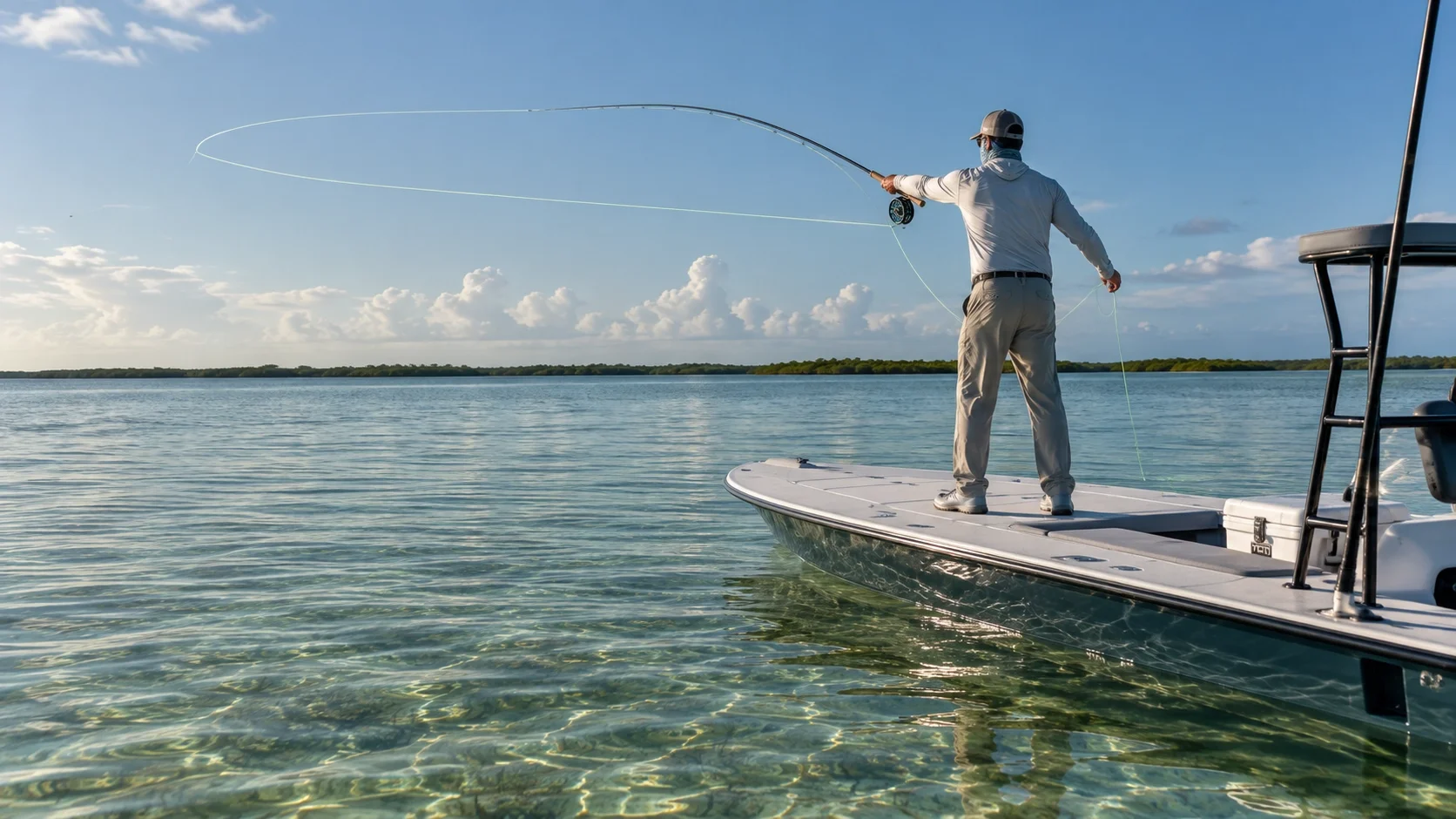
Fewer false casts, tighter loops, different timing. The mechanics have to change before the rest can follow.
What Saltwater Forces You to Learn
Wind is the first and most persistent teacher. Saltwater fly fishing in most redfish environments means casting in fifteen to twenty-five mile-per-hour wind with a nine-weight rod and a heavy fly. The mechanics of the cast — fewer false casts, tighter loops, different timing — take time to develop. There is no shortcut except practice before the first trip.
The strip set is non-negotiable. A trout set — lifting the rod tip on the take — will pull the fly out of a redfish’s mouth almost every time. The strip set means stripping line with the rod hand while keeping the rod low and pointed at the fly. This must be practiced until it replaces the instinct to lift the rod.
Line management on a skiff or kayak is different from managing line on a river. Coiled fly line on a platform can tangle in boat cleats, lodge under your feet, or blow off the deck in a gust. Shooting line without tangles is a skill that takes physical practice.
Heavier and larger flies behave differently in the air and on the water. Timing changes. A weighted crab pattern that lands hard can spook a fish; the same pattern at a slightly different angle might be exactly right. Learning to place larger flies accurately in wind takes repetition.
Corrosion is not a skill but it will cost you equipment if ignored. Rinse everything — reel, line, hooks, hardware — with fresh water after every trip. This is non-negotiable.
Sun angle and glare affect sight fishing significantly. A pair of quality polarized glasses is not optional equipment. Learn to position yourself with the sun at your back or side when possible, and understand that the fish can see your shadow on the water long before you can see it.
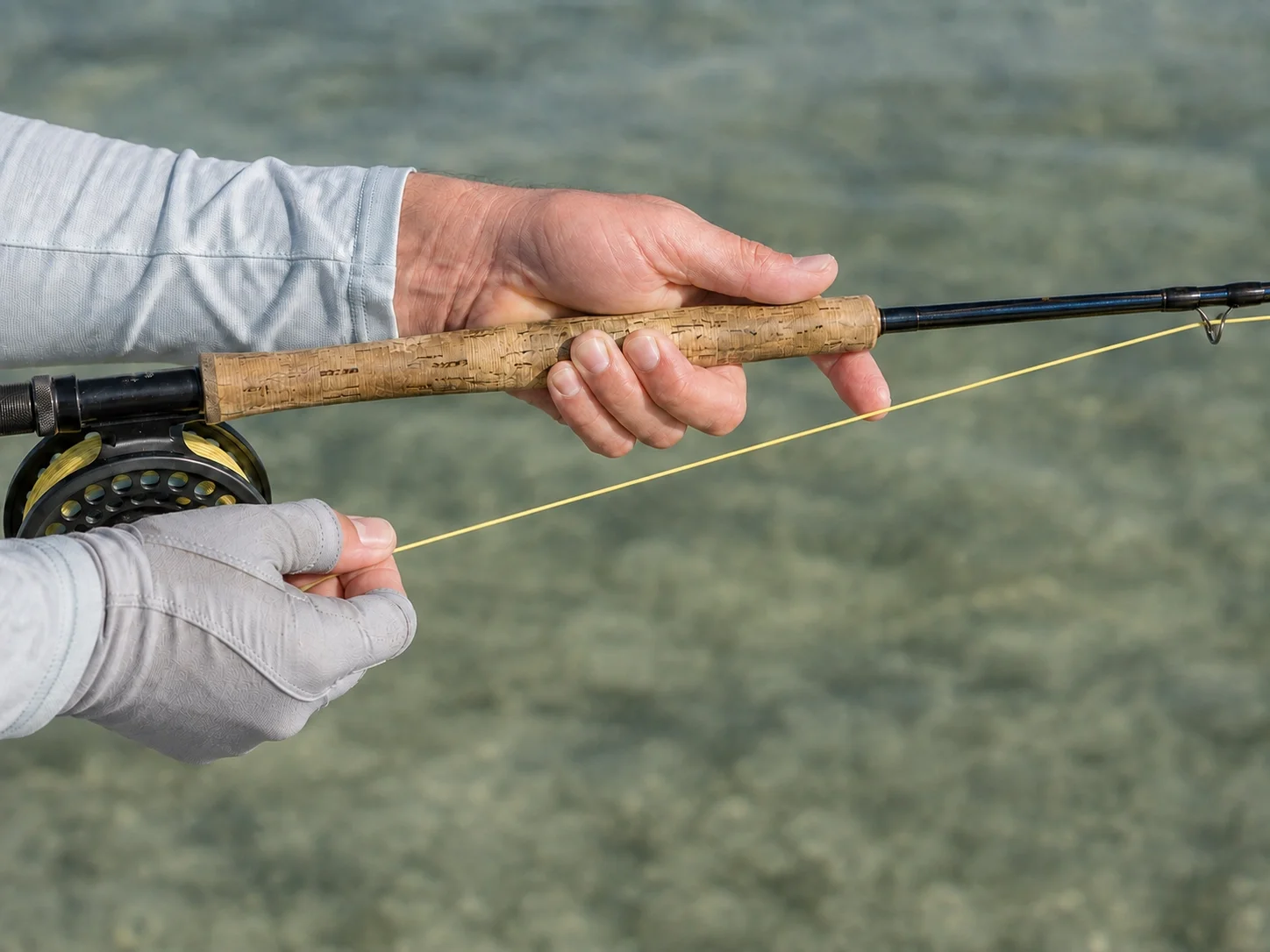
Low rod. Strip hard. Feel the weight. The strip set must replace every freshwater instinct you have.
What Redfish Eat
Red drum are opportunistic feeders. In estuarine environments, their diet typically centers on three categories:
Shrimp — the most consistent and widespread forage. Shrimp are present in most redfish habitat year-round, though abundance peaks vary. A shrimp pattern in a natural color with the right sink rate covers most situations.
Crabs — particularly important for fish feeding on oyster bars or grass flats where fiddler crabs, mud crabs, and blue crabs are abundant. Crab patterns are heavier and require a different retrieve — often minimal movement, allowing the fly to sink in front of the fish.
Small baitfish — mullet, menhaden, killifish, mud minnows, and various small finfish depending on region and season. In areas with heavy baitfish schools, a baitfish profile may outperform shrimp or crab.
What to carry depends on the habitat and the conditions. A marsh angler in Louisiana fishing dark water near creek mouths will make different choices than an angler on a clear, sandy grass flat in Tampa Bay. Talking to a local guide or shop before the trip is still the most reliable way to narrow the selection.
What Flies to Carry
Organize the box by function, not by pattern name.
| Water / Situation | Profile | Weight | Color | Presentation | Reason |
|---|---|---|---|---|---|
| Clear grass flat, calm | Shrimp, small profile | Medium — sink in 8–18” | Natural tan, olive, white | Lead 3–5 ft, let sink, one slow strip | Fish is visual; presentation timing matters |
| Murky marsh or creek | Baitfish or shrimp, larger | Medium to light | Chartreuse, white, natural | Active retrieve, shorter lead | Fish using lateral line; movement helps |
| Oyster bar edge | Crab, bottom-oriented | Heavy — sink fast | Natural brown, tan, olive | Minimal retrieve; let it settle | Fish feeding off bottom; movement pulls fly away |
| Tailing fish, very shallow | Shrimp or crab, weedless | Light — quiet entry | Natural | Careful lead; don’t land on fish | Spook risk high; quiet entry essential |
| Baitfish activity | Baitfish streamer | Light to medium | White, silver, chartreuse/white | Faster strip, match baitfish movement | Match forage behavior |
| Pressured or clear-water fish | Small shrimp, natural | Medium | Natural, muted tones | Slow, deliberate; pause after sink | Fish has seen patterns; subtlety matters |
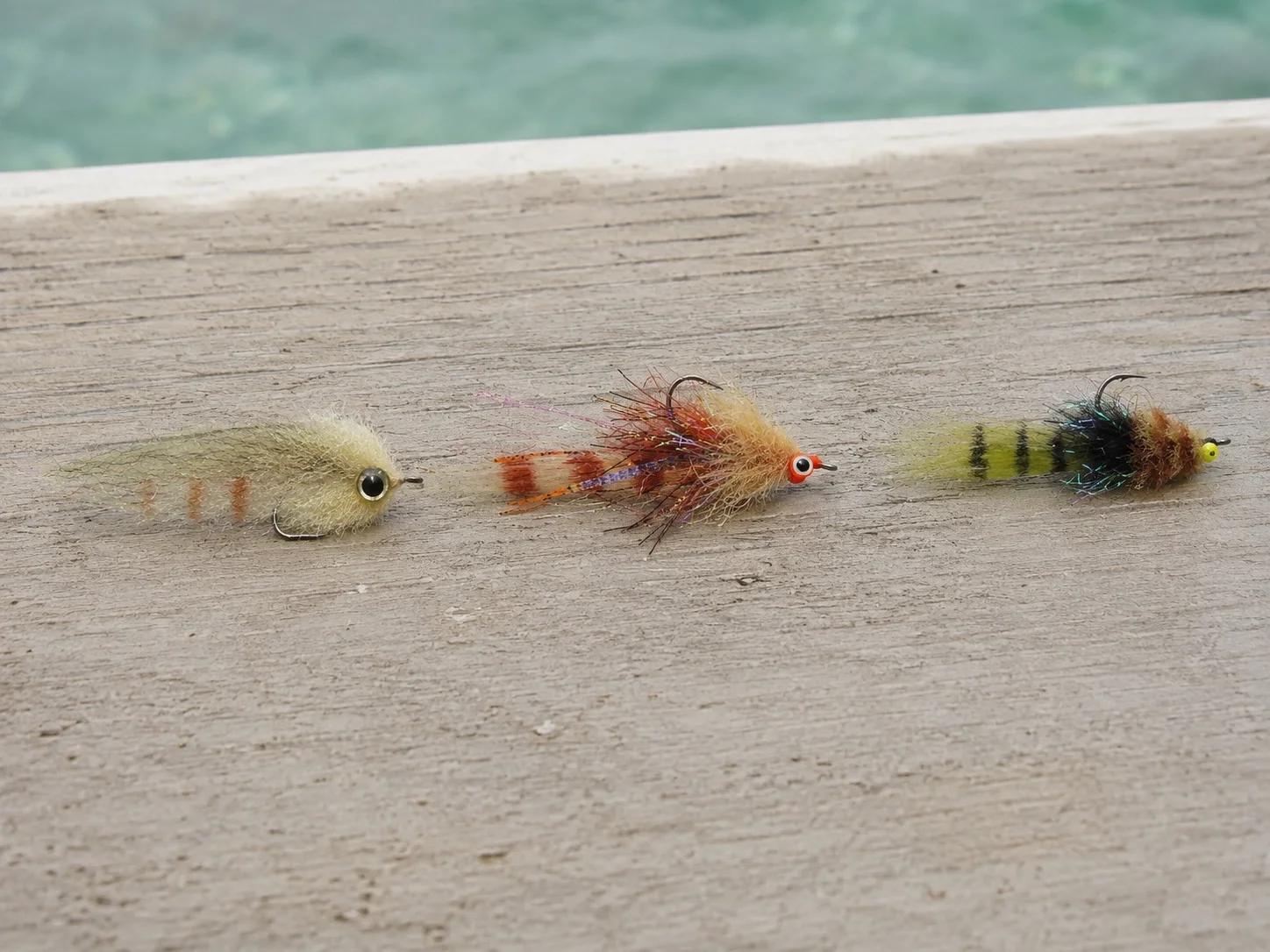
Profile before pattern. Each category serves a different feeding scenario.
On fly weight: This is the selection variable most beginners get wrong. A fly too light won’t reach the bottom in the sink window between the cast and the fish’s position. A fly too heavy splashes on entry and can spook a fish in shallow, calm water. Carry the same profile in at least two weight variations, and let the depth and conditions tell you which to use.
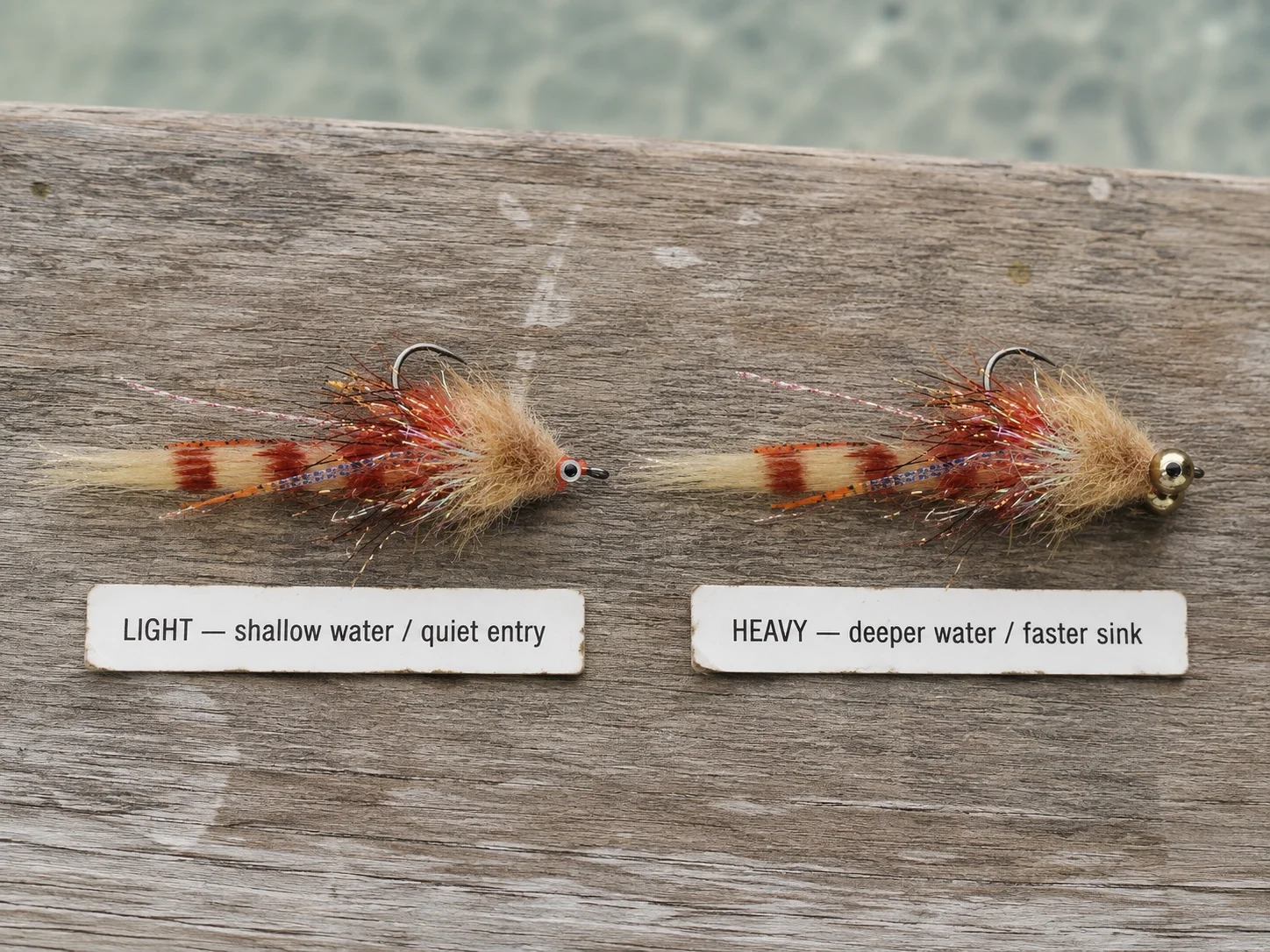
Same profile. Different sink rate. Let the depth decide.
The First Presentation
A good presentation to a redfish involves four variables: lead distance, angle, sink time, and the first strip.
Lead distance means placing the fly far enough ahead of the fish that it sinks to the right depth before the fish arrives — typically three to six feet, depending on how fast the fish is moving and how deep the water is. This is easier to describe than to execute under pressure.
Angle matters because a fly that lands in the fish’s blind spot behind the gill plate is useless. Cast across the fish’s path, not directly at it.
Sink time means resisting the instinct to strip immediately. Let the fly reach the fish’s feeding zone before it moves.
The first strip should be slow. Watch the fish. If it turns toward the fly, pause or slow down. If it doesn’t react, add movement. If it follows and doesn’t eat, stop the fly. Redfish that follow without eating are often fish that need the fly to act like something that stopped moving — like a shrimp that froze.
And when the fish eats: strip set. Low rod, strip hard, feel the weight. Do not lift the tip.
Common Mistakes Freshwater Anglers Make
Too Many False Casts
Every false cast over a visible fish increases the odds of spooking it. Line in the air is line that can be seen.
Practice single or double-haul presentations. Deliver the fly in two casts maximum.The Trout Set
The instinct to lift the rod on a take will cost fish until the strip set is fully rewired. This is the single most common mistake from freshwater anglers on their first inshore trip.
Low rod, strip hard, feel the weight. Practice before the trip.Casting After the Fish Has Passed
A fish that has moved past the fly’s position is rarely worth chasing. The cast becomes a disturbance, not a presentation.
Wait for the next opportunity or a new fish. Patience is not wasted time.Moving Too Much on the Boat
Footstep vibration transmits through a skiff hull. The fish knows you’re there before you know it’s there.
Move quietly. Every step you don’t take is a fish you haven’t spooked.Choosing the Pattern Before the Weight
Weight affects sink rate, entry sound, and how the fly behaves in current. It is the first decision, not the last.
Decide on the weight for the conditions first, then select within that weight class.Retrieving Without Watching the Fish
The retrieve rate should respond to what the fish is doing, not to a predetermined speed. You can’t adjust what you’re not watching.
Learn to watch the fish while stripping. The fish tells you what it wants.Recasting Immediately After a Refusal
A fish that followed and refused is not necessarily a lost cause. Recasting immediately often puts it down permanently.
Wait. Let it settle. Change something small before recasting.Using Freshwater Hooks in Saltwater
Standard freshwater hooks rust quickly and may fail on the first good fish. The failure usually happens at the worst possible moment.
Use saltwater-rated hooks and rinse your flies after every outing.A Practical First Fly Box
A functional first redfish box doesn’t need twenty patterns. It needs coverage across three forage categories, two weight classes, and at least one weedless option.
Shrimp pattern, medium weight, natural color — the most versatile choice across most conditions.
Shrimp pattern, lighter weight, very shallow water — quiet entry, same profile.
Crab pattern, heavier, natural — for oyster bar and bottom-feeding situations.
Weedless baitfish pattern, medium weight — for marsh, creek, and areas with grass or structure.
High-visibility color version of the shrimp pattern — for murky water or when natural tones disappear.
A curated assortment covering these categories — shrimp, crab, and baitfish profiles in multiple weights with both natural and higher-visibility options — can simplify the first inshore season by removing one set of decisions. Local conditions and guide recommendations still determine what actually gets tied on for a specific trip.

Gulf Coast & Southeast Inshore
MF Redfish & Speckled Trout Fly Assortment
Built around the logic above — multiple forage profiles, varied sink rates, and patterns that hold up to the specific conditions of Gulf Coast and Southeast inshore fishing.
- Shrimp, crab, and baitfish profiles covering the three primary forage categories
- Multiple weight variations — conditions choose the fly, not habit
- Saltwater-rated hooks built to hold through a redfish’s first run
- Ready for grass flats, oyster bars, tidal creeks, and marsh edges
Why Redfish Make You a Better Saltwater Angler
Every skill the redfish environment demands will appear again in different form on the next species.
Learning to cast in wind for redfish is preparation — incomplete, but real — for the longer shots required for bonefish. Learning to read a tail and calculate a lead distance for redfish is a foundation, not a guarantee, for the more demanding sight fishing that permit require. Understanding how to manage fly line on a moving platform is the same skill whether you’re on a shallow flats skiff chasing tailing fish or a deeper boat drifting for snook along a mangrove edge.
This is not to say that redfish prepare you for everything. Permit will still be permit. Tarpon will still be tarpon. Each species has its own specific demands that no amount of redfish fishing can fully replicate.
Casting in Wind
Tighter loops, fewer false casts, earlier delivery. What the redfish flat demands, the bonefish flat requires. Same mechanic, longer shots.
Reading the Tail
Lead distance, sink time, watching the fish respond — the foundation for every sight-fishing situation that follows, including permit and bonefish.
Line Management
Coils on the deck, shooting without tangles, controlling line under a run. The platform changes. The problem doesn’t.
But the vocabulary of saltwater fly fishing — the tide, the wind, the strip set, the visual read, the relationship between fly weight and water depth, the patience required to present a fly without spooking the fish — that vocabulary is what redfish teach. And that vocabulary is the same in every language the saltwater speaks.
Redfish are not the entry point because they’re easy. They’re the entry point because they’re readable.
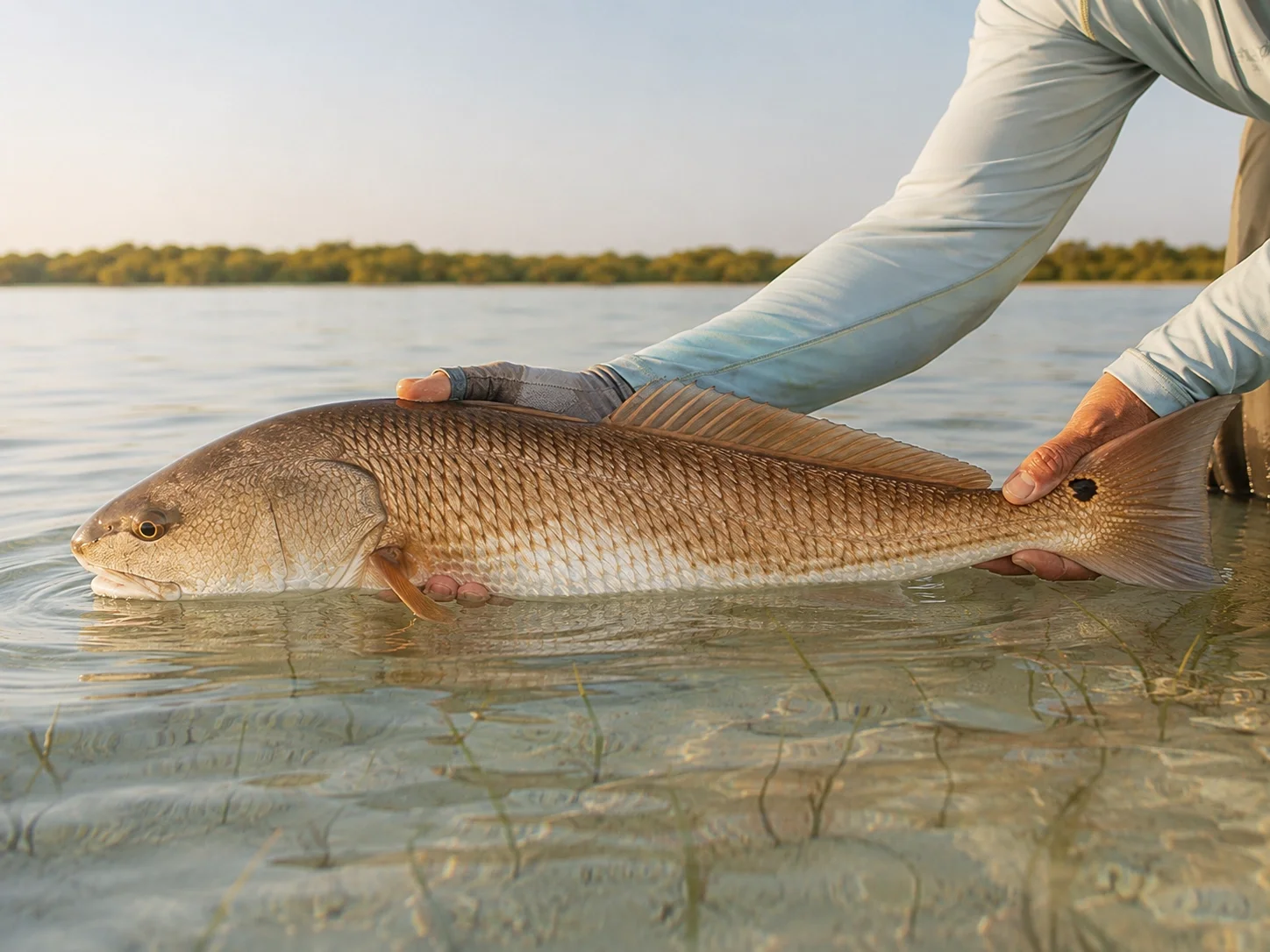
The release matters as much as the catch. Redfish held correctly and returned quickly continue to feed on the same flat.
You missed the first fish. The fly landed behind it and the redfish never knew it was there.
An hour later, you’re watching the grass edge when a tail comes up thirty feet ahead, slow and deliberate. You’ve been thinking about lead distance. You’ve been thinking about the weight of the fly and the depth of the water and the speed of the fish. You cast three feet ahead of the tail and wait.
The tail disappears. You count. You strip once, slow.
The line goes tight.
That is the moment freshwater ends and something new begins. It doesn’t happen because redfish are easy. It happens because they’re readable — and reading them is a skill worth having.
