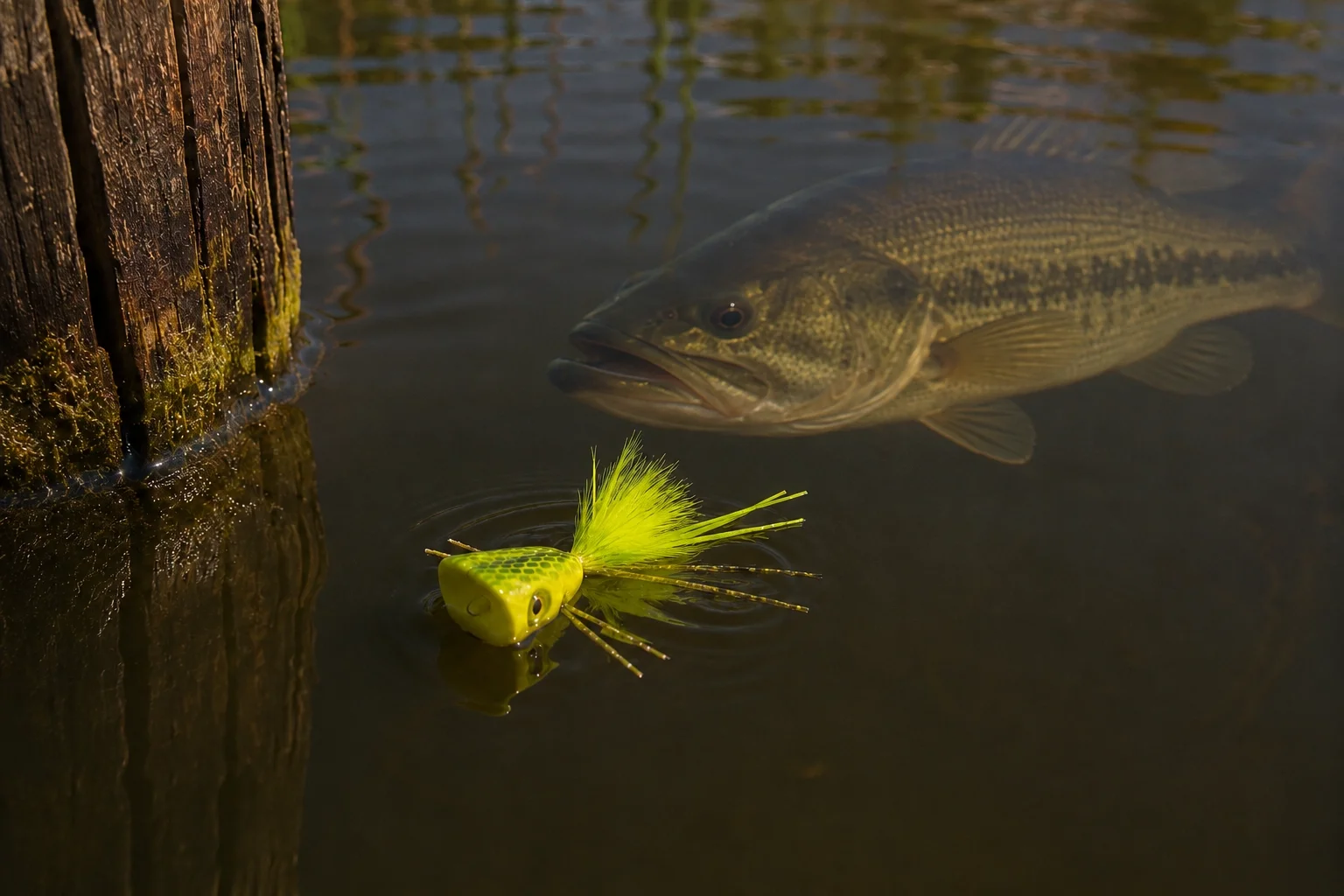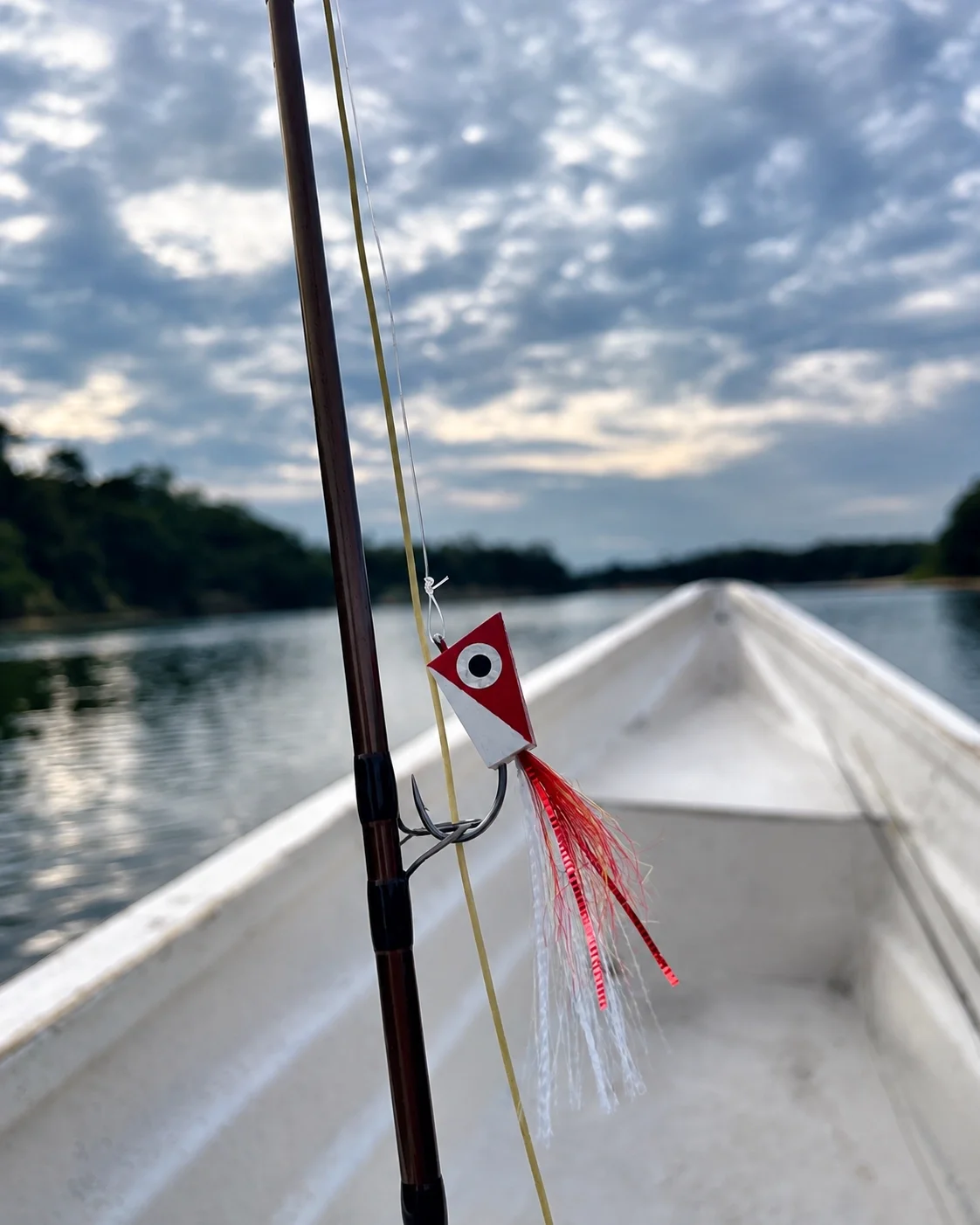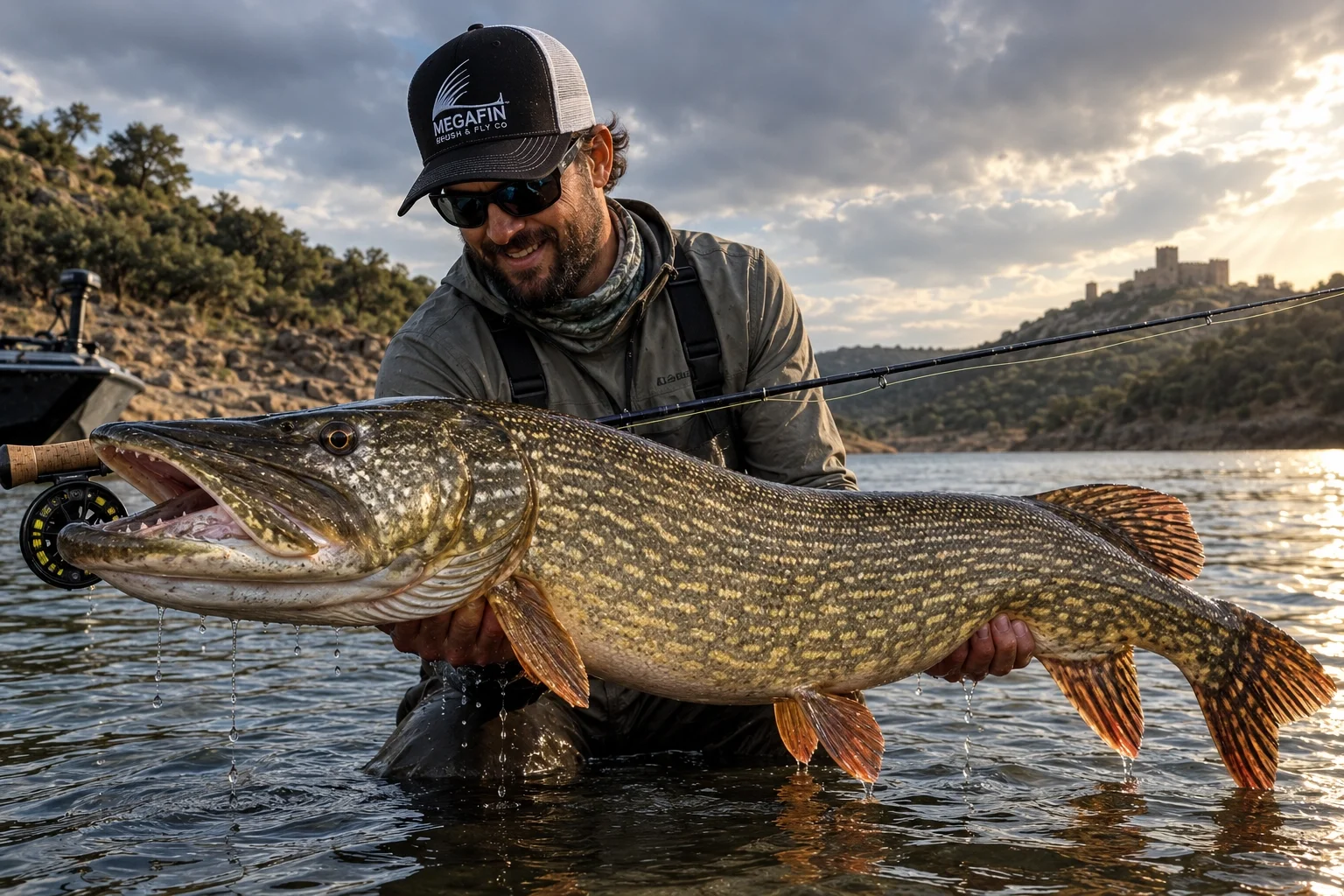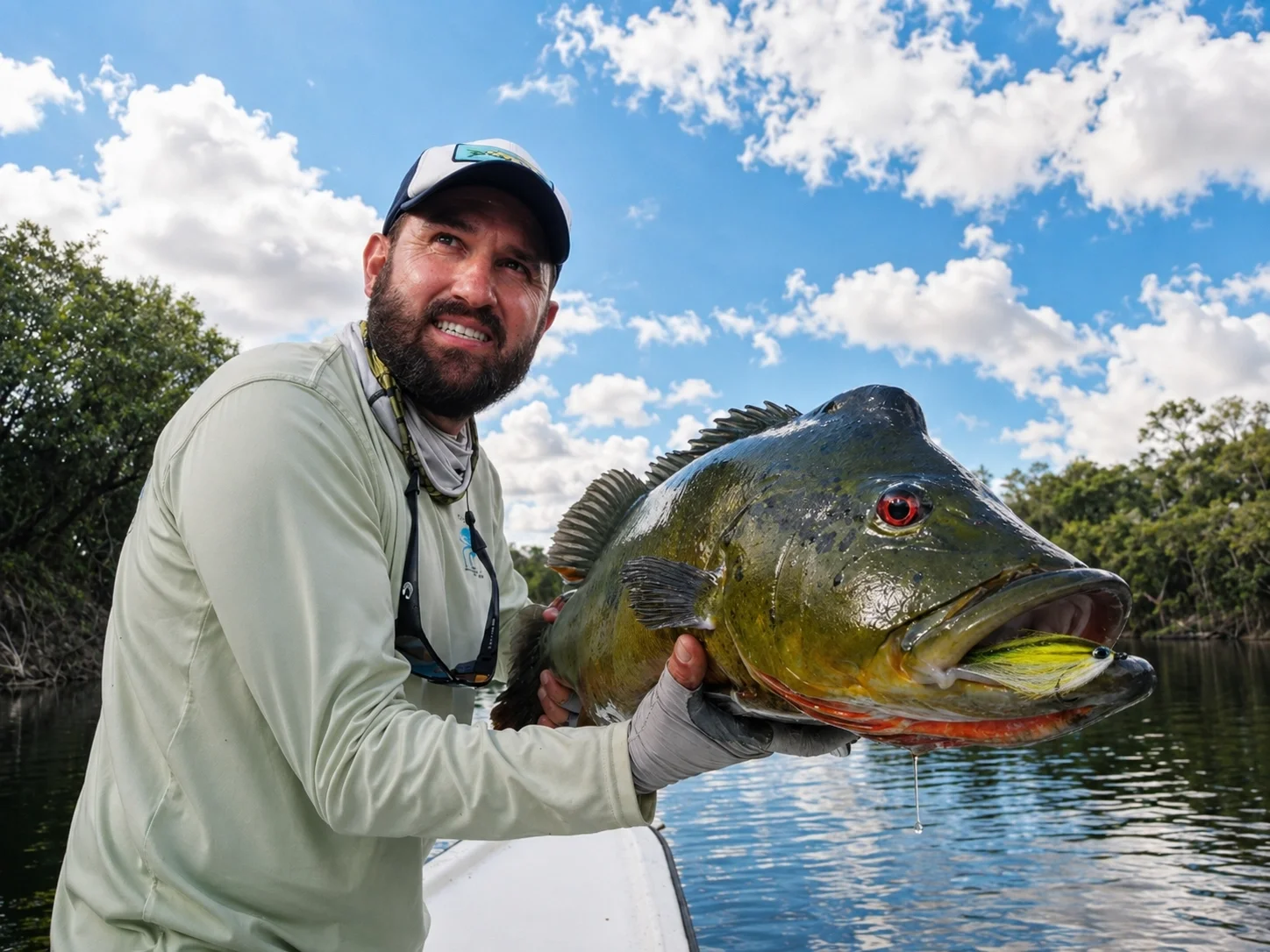
The problem with most warmwater fly boxes isn't a shortage of patterns. It's a shortage of thinking. A box built by accumulation — one fly from this trip, two from that sale, three more from a guide recommendation — doesn't have a strategy. It has a history.
A functional predator box is organized around jobs. What does the fish need to see? What does the water allow? What presentation gives you the best probability on this specific water, on this specific day? Answer those three questions, and your fly selection becomes a decision framework instead of a lottery.
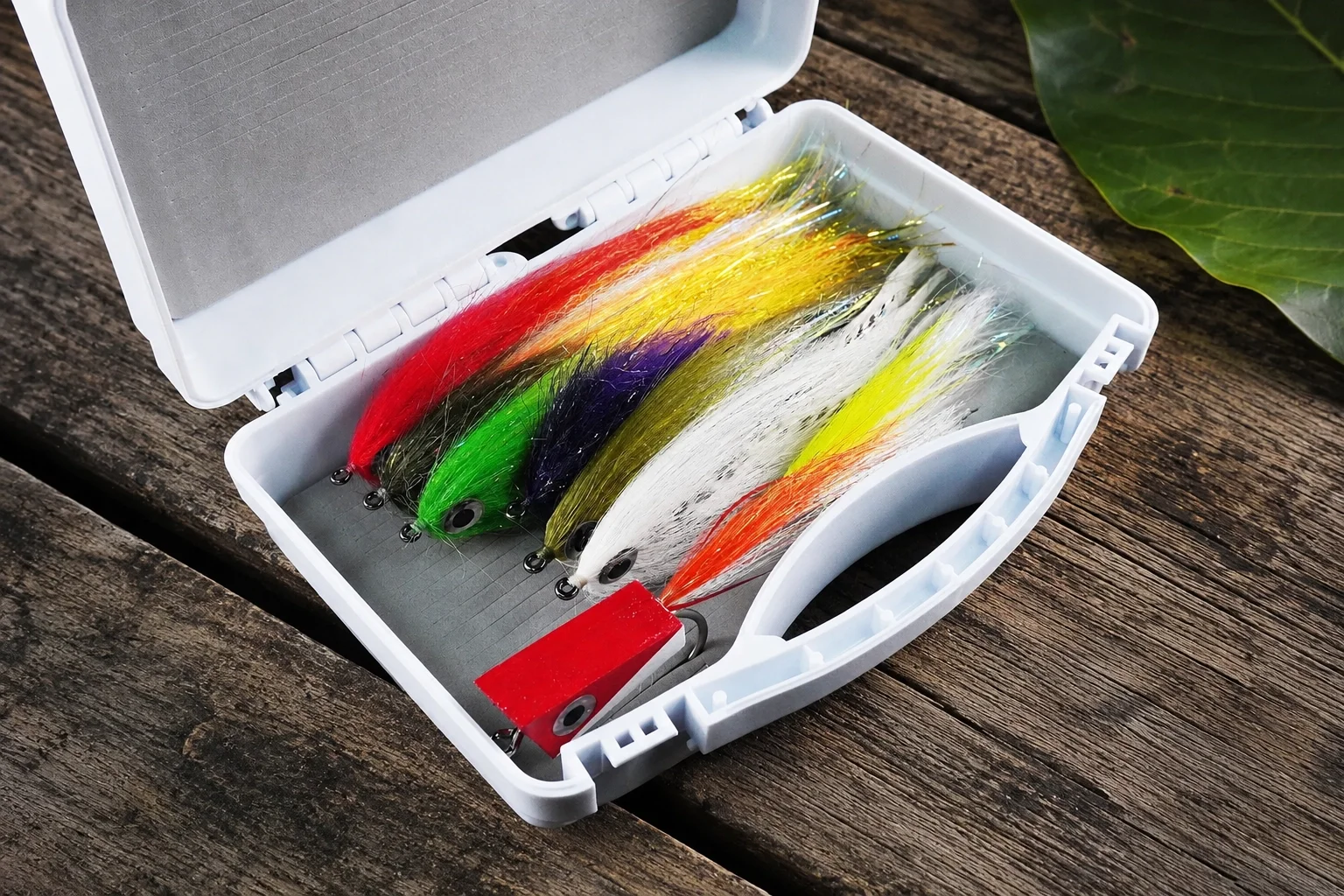
Seven flies. Seven answers. This is not an exhaustive catalogue of every pattern that catches warmwater predators. It's the minimum viable box — the patterns that, together, cover more situations than any single-species or single-style selection could. Surface reaction at two scales. Subsurface baitfish for three different water types and forage sizes. A depth pattern for structure. A utility classic for clear water and selective fish. Each fly solves a specific problem. None of them overlap much.