
The Material Is the Fly: Why What Your Pattern Is Made Of Matters
Megafin Journal · Gear & Craft
The Material Is the Fly: Why What Your Pattern Is Made Of Matters
Two flies can look identical in the vise and fish nothing alike. What a pattern is made of decides how it moves, casts, sinks, and survives — long before the fish ever sees it.

Two flies sit on the bench, and by silhouette they are the same fly. Same length, same profile, same baitfish shape you’d tie to a leader without a second thought. One is built from bucktail and a few strands of flash. The other is a synthetic‑fiber wing over the same hook. In the vise they are near twins. In the water they are two different animals — one hangs and breathes on a dead stop, the other knifes and darts and sheds water off the back cast like it was never wet.
That gap between how a fly looks on the bench and how it behaves once it’s swimming is the whole subject here. The pattern name and the shape are only the blueprint. What the fly is actually made of decides how that blueprint behaves.
The pattern is a blueprint; the material is the build
Most anglers choose flies the way they’d choose a paint color: by look. Profile, size, color, the name on the bin. Those things matter. But a fly is a small machine for moving through water, and a machine is defined by its parts. Fish respond to profile, movement, silhouette, translucency, and sink rate far more than to whether a material is natural or synthetic, and every one of those behaviors is a material and construction decision before it is anything else.
This is worth separating cleanly, because fly writing tends to blur it. Some of what follows is physical fact. Some is field practice that generations of tiers and guides have converged on. And some is design choice — a builder deciding what the fly needs to do. Keeping those apart is the difference between understanding a fly and repeating folklore about it.
The pattern name and the shape are only the blueprint. What the fly is made of decides how that blueprint behaves.
A fly changes the moment it gets wet
The first thing water does is add weight, and it does not add it evenly. Natural materials tend to integrate with water — they absorb it — while synthetic fibers and closed‑cell foam shed it and hold their buoyancy longer. That single difference drives more of a fly’s on‑water personality than most anglers realize.
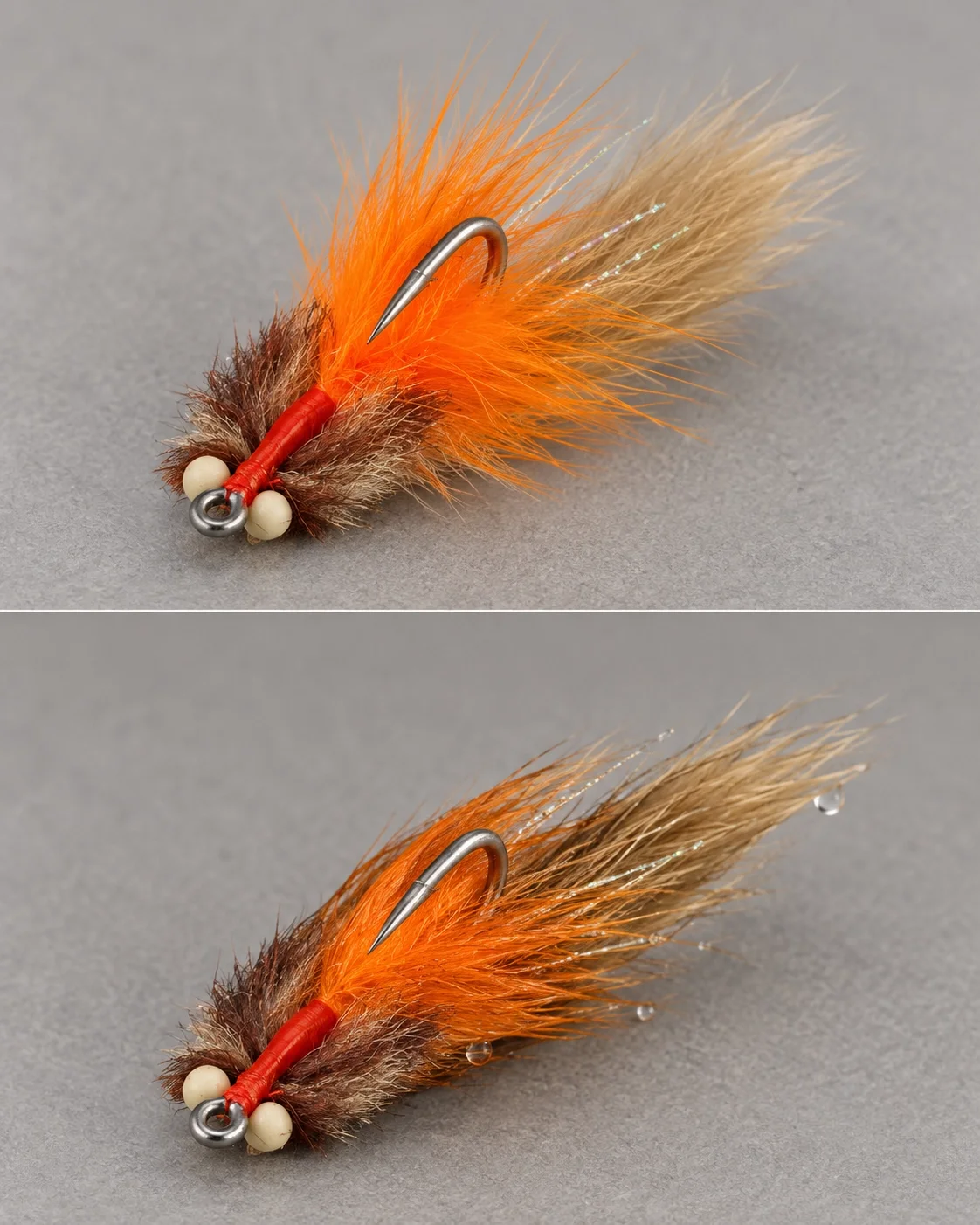
A soaked natural‑fiber fly is heavier than the same fly was in the air, which changes how it loads a rod and turns over at the end of a cast. A synthetic baitfish wing does close to the opposite. EP‑style fibers absorb essentially no water, so on the first back cast the water shakes off, and large flies built from them are far easier to cast; they also hold their profile. None of that makes synthetic “better.” It makes it different, and the difference has consequences you feel in your casting arm on the hundredth throw of the day.
Movement is engineered, not chosen off a shelf
Ask why a fly swims the way it does and the answer is almost always in the fibers: their stiffness, their taper, their length, and how much of them is on the hook.
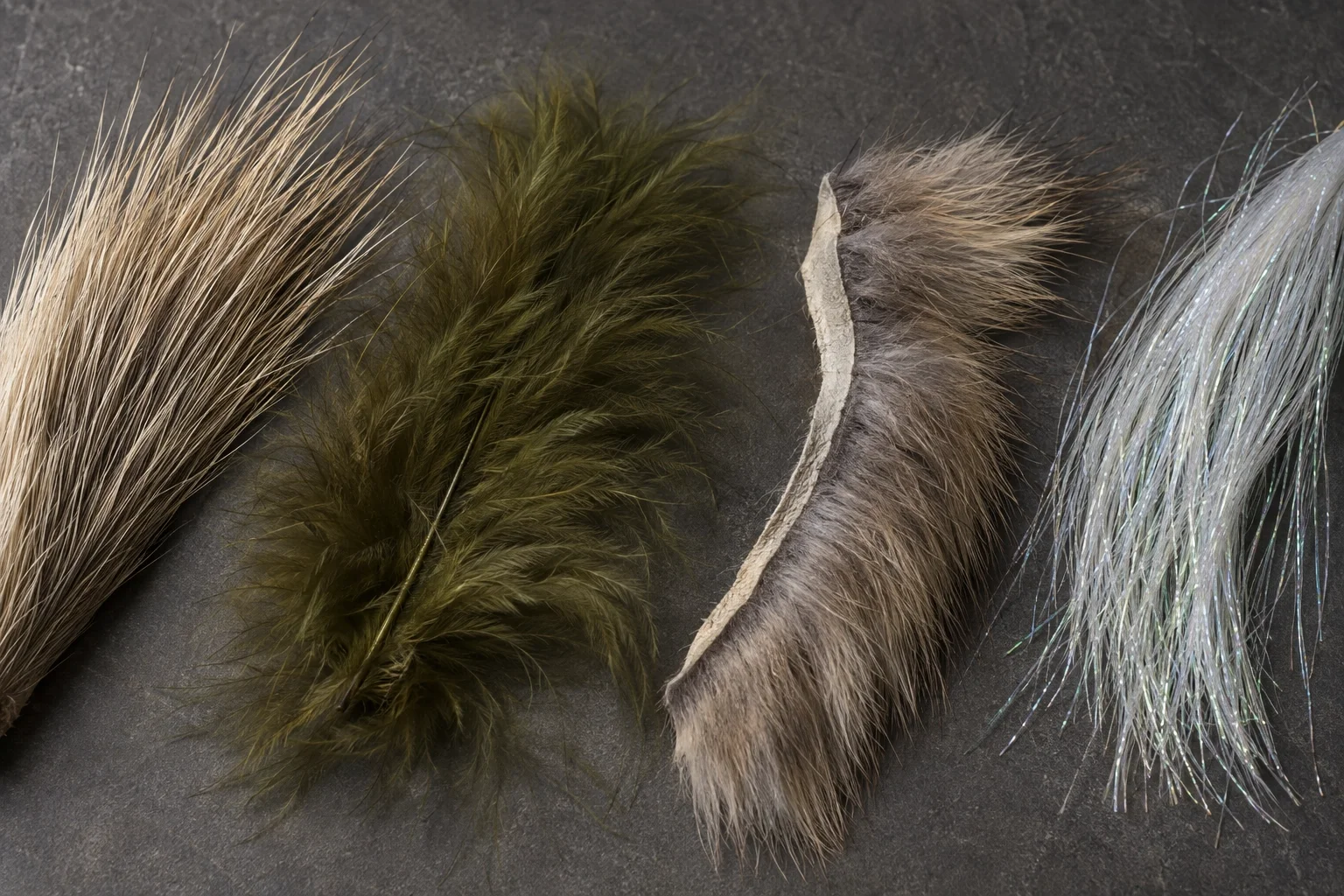
Marabou is the clearest case. Its fibers come alive on the smallest input, compress and expand naturally, and because it expands in the water, experienced tiers use fewer fibers than they expect to. Rabbit does something marabou doesn’t: the soft hide undulates with every twitch, and because each fiber flexes independently, the strip keeps pulsing even when you stop stripping — which is exactly why rabbit‑strip streamers have lived in pike, musky, and bass boxes for fifty years. Bucktail is a third character entirely. Its hollow‑based fibers flare under thread pressure, it holds its profile and tracks straight, and its natural taper reads subtle and lifelike in slow, clear water in a way a lot of uniform synthetic fiber doesn’t. Synthetic baitfish fiber, for its part, is often described as sitting between marabou and bucktail in action while holding a shape the naturals can lose.
The practical takeaway is not that one of these is the movement king. It’s that movement isn’t one thing. Breathing on the pause, darting on the strip, and pulsing in current are different jobs, and different materials are built for them.
Bulk is not profile
A fly can be big without pushing water, and it can push water without being big. Those are two separate properties, and material sets both.

Some materials hold an open, water‑pushing shape; others collapse into a thin quill the moment they’re wet. A lot of solid synthetic fiber flattens when fully soaked, while bucktail’s hollow fibers help keep the profile from collapsing. This is where the oldest advice in predator tying keeps proving out: use less than you think. Overdressing is the common error, and it usually costs you — a fly with too much material wastes it and often fishes worse. A sparser, well‑chosen wing frequently moves better and casts better than a fistful of fiber crammed behind the eye. The point of a big fly is a big silhouette, not a heavy one, which is why the tiers who build the largest predator flies obsess over keeping them light.
The point of a big fly is a big silhouette, not a heavy one.
Depth is mostly hardware
Here is the myth worth dismantling: that natural flies sink and synthetic flies float, or the reverse. Where a fly rides in the water column is governed mostly by weight and construction, not by fiber category.
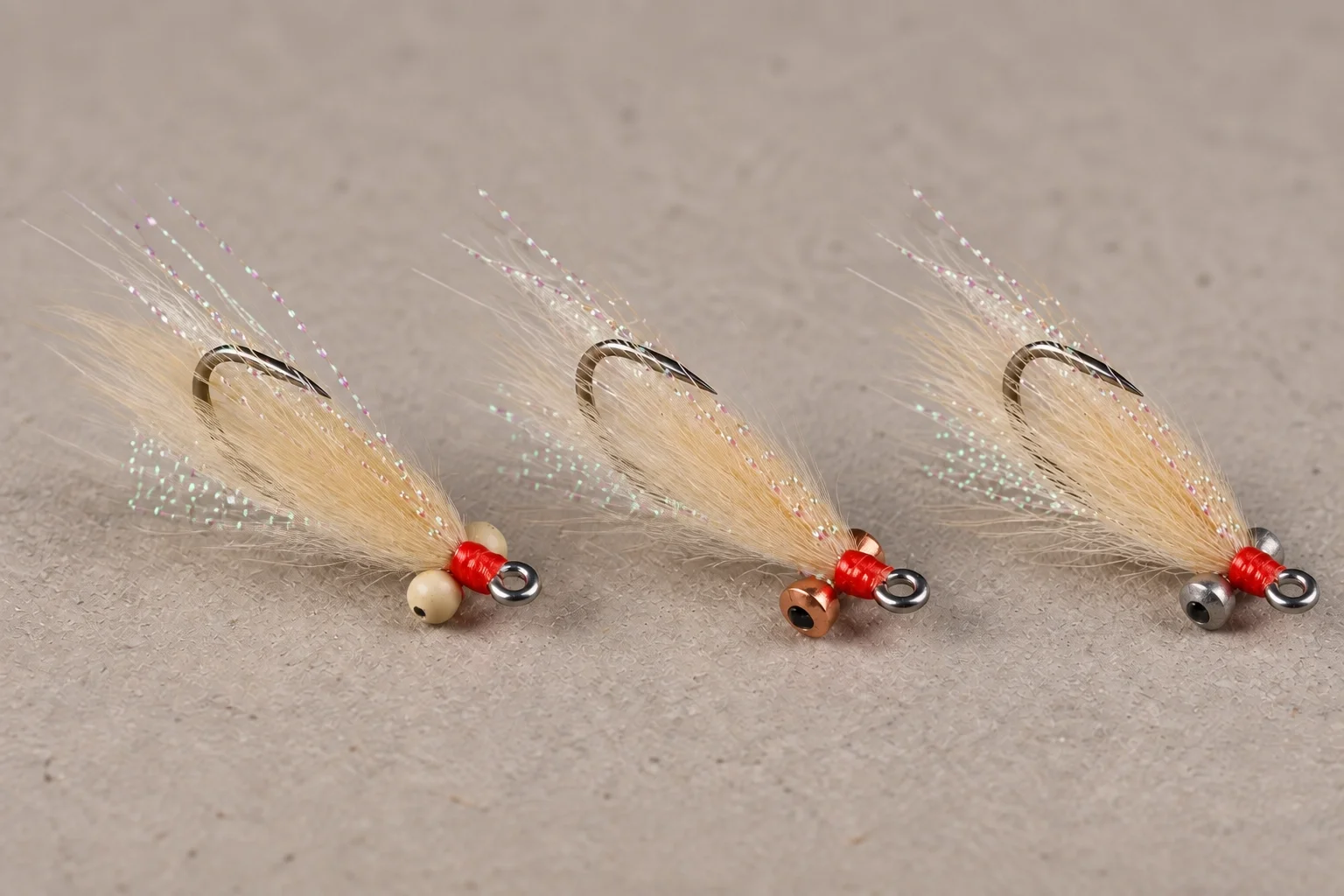
The weight usually comes from the eyes and the hook. Where you place dumbbell eyes on the shank decides how the fly falls — a third of the way back for an even drop, farther back for a nose‑first dive. The type of eye sets the sink speed and even the fly’s attitude: bead‑chain eyes sink at roughly half the rate of dumbbells and tungsten sinks fastest for its size, and because the weight rides on top, the fly flips to swim hook‑point up, which cuts snags. Then the line and the retrieve finish the job — line type, current speed, and how long you let the fly free‑fall all set the working depth on any given cast.
Material plays a supporting role, not the lead. Bucktail, for instance, doesn’t trap air bubbles the way some materials do, so it doesn’t fight the sink, and a heavily dressed buoyant tie can genuinely resist going down. The same buoyancy is what a hollow‑tied fly uses to dart: the material resists the water, and the balance between how much you use and how heavy the hook is determines whether the fly floats, hangs, or drops. But if you want a fly deeper, you change the hardware and the line before you change the hair.
When the fish hit back
Durability sounds like the least interesting property until a barracuda or a musky turns your best fly into a bare hook.
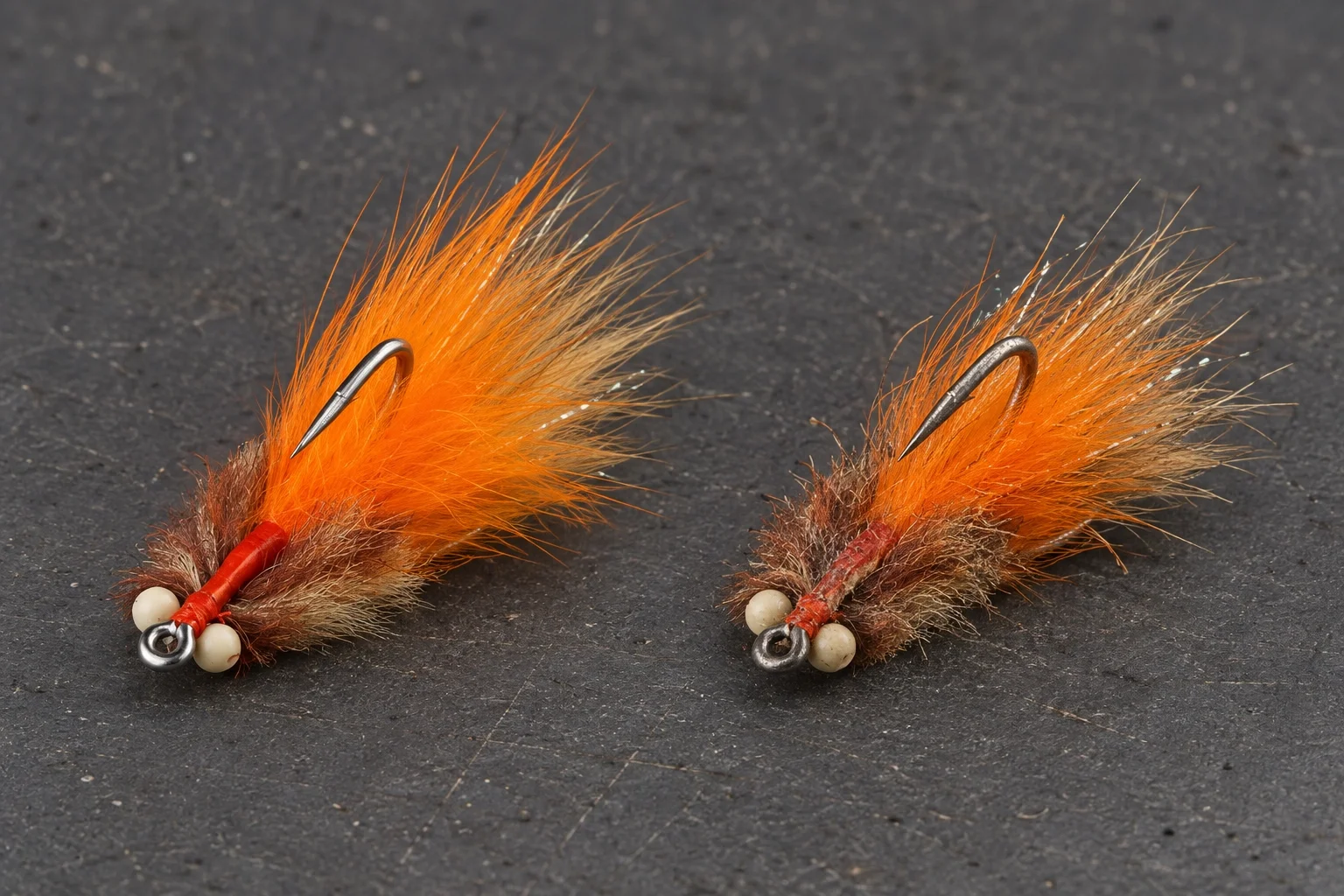
It helps to separate what actually fails. Material durability, tying durability, and hook durability are three different things, and so is tooth damage. Natural materials, for all their movement, are organic and wear out. Rabbit’s great advantage is motion, and its tradeoff is that the strip thins after enough strikes from toothy fish. That’s the direct reason so much hard‑use tying goes synthetic: guide flies, saltwater patterns, and high‑volume commercial flies lean synthetic because they survive abuse. When the teeth are the problem, the fix is usually construction, not just fiber — for bluefish, pike, or barracuda, tiers swap to synthetic hair and add a bite tippet.
Fouling belongs in the same conversation, because it’s often mistaken for a material flaw when it’s really a construction one. A fly fouls when the wing or tail wraps the hook bend on the cast and swims dead. The cures are structural. Tiers locate the material farther back on the shank, keep the wing sparse, hold the tail to about twice the shank length or less, and use a slightly stiffer mid‑section of hair — and on long flies they’ll add a couple of beads on the shank whose real job is to keep the rear from fouling. Blaming the material misses the point; the build is what keeps the fly fishing.
Color and flash, briefly
Color and flash matter, but they’re worth handling with restraint, because it’s easy to state as fact what is really a guess about the fish. Treat them as visibility and contrast decisions — how easy the fly is to find, and against what background — rather than claims about what the fish perceives. Flash along a lateral line or a few strands through a wing is a design lever for that, used in the amount the water and light call for. It’s telling that even the most imitative patterns aren’t literal copies; all successful patterns imitate something to the fish, and even a good imitation is partly an attractor. A little flash is a tool. A lot of it is a decision you should be able to justify.
There is no best material, only the right one for the job
Every property above cuts more than one way, which is why the search for a single best material is a dead end. The right choice depends on the target, the water, the presentation, the retrieve, the depth you need, and how hard the fly is to cast at size.
| Material | What it does best | Trade-off |
|---|---|---|
| Bucktail | Holds profile, flares, tracks straight, near‑neutral buoyancy | Quality varies tail to tail; absorbs some water |
| Marabou | Comes alive on the smallest input; expands in water | Delicate; easy to overdress |
| Rabbit (zonker) | Breathes even on the pause; unmatched movement | Absorbs water; wears under toothy fish |
| Synthetic fiber | Sheds water, casts easily at size, durable, holds shape | Can read uniform; some types collapse when soaked |
| Foam | Floats indefinitely; tough | Buoyancy only; not for subtle movement |
| Weighted eyes & hook | Set the depth, fall attitude, jig, and hook‑up ride | Hardware, not movement — adds casting weight |
The examples write themselves once you think in behaviors. A fly meant to hang in front of a laid‑up fish and breathe on a dead stop asks for soft, mobile material. A pattern for clear, spooky water leans on subtle, tapered movement and a modest silhouette. A fly for toothy fish or long guide days leans synthetic and reinforced. A fly that has to be seen and pushed across a windy flat wants a water‑pushing profile built light enough to still turn over. Many of the most effective flies simply combine materials — natural taper where you want subtlety, synthetic where you want durability or a shape that won’t quit. The material follows the job, not the other way around.
Choosing a fly with a builder’s eye
You don’t have to tie to fish better. But it helps to read a fly the way a tier does before it goes in the box. Look past the name and the color and ask three questions: what is it made of, what is that material supposed to do, and does the construction match the job you’re buying it for. A soft‑hackled, sparse tie and a stiff, bulky synthetic wing are answers to different questions. Knowing which question a fly answers is most of knowing whether it belongs in your box.
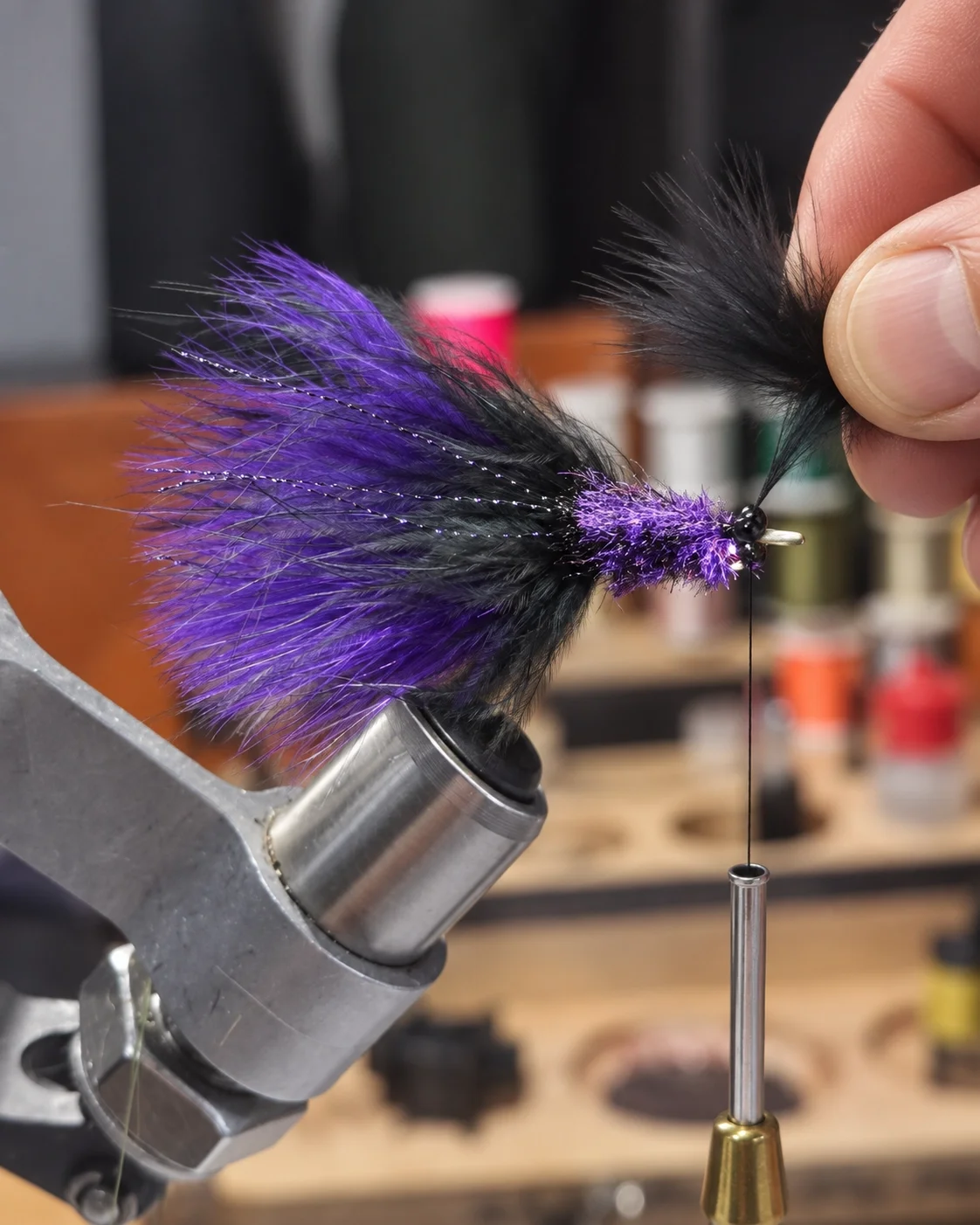
From the bench to the box
This is the same logic a serious fly company builds on. Megafin’s flies are made for predators, and the construction shifts with the target — high‑floating foam heads on the surface poppers, soft bunny and marabou dressings on the tarpon toads where a hanging, breathing profile matters, water‑pushing roach and brush styles where a fish needs to find the fly. The line the brand fishes under, tied for the eat, is really a statement about this: the material is chosen for what the fly has to do at the moment a fish decides.

Megafin Predator Fly Assortments
Boxes built around the fish, the water, and the presentation — not around a material for its own sake. Understanding what a fly is made of is one more way to understand what it was designed to do.
See What’s in the BoxTwo flies can share a silhouette and behave nothing alike. Once you know why, you stop buying shapes and start buying tools — and you start to see, before the fly ever gets wet, what it’s going to do when it does.
Common questions
Do fly materials really matter more than the pattern?
The pattern is the blueprint; the material and construction decide how that blueprint actually moves, casts, sinks, and holds up. Two flies with the same silhouette can fish very differently because of what they’re made of.
What makes a fly sink faster?
Mostly the hardware — the eyes, the hook, and the line — not the fiber. Tungsten sinks fastest for its size, dumbbell eyes next, bead‑chain slowest, and eye placement changes how the fly falls. Fiber affects sink only at the margins.
Bucktail or synthetic fiber — which is better?
Neither, universally. Bucktail gives natural taper and subtle movement and holds profile; synthetic fiber sheds water, casts easily at size, and lasts longer against abuse. Many of the best flies use both, each where its strength fits the job.
Why does my fly keep fouling?
Fouling is usually a construction issue, not a material one. Keep the wing sparse, tie material farther back, hold the tail to about twice the shank length or less, use slightly stiffer mid‑tail fibers, and on long flies add anti‑foul beads on the shank.
Which material has the most movement?
Marabou and rabbit are hard to beat for soft, breathing movement, and rabbit keeps pulsing even on the pause. But movement isn’t one thing — darting, pulsing, and breathing are different jobs suited to different materials.
