

The Tarpon Obsession: Why Anglers Chase the Same Fish Their Whole Career
Megafin Journal · Predator Culture
The Tarpon Obsession: Why Anglers Chase the Same Fish Their Whole Career
A landed tarpon settles nothing. On the roll, the shot, the eat, and the jump — and why the silver king becomes a lifelong pursuit.
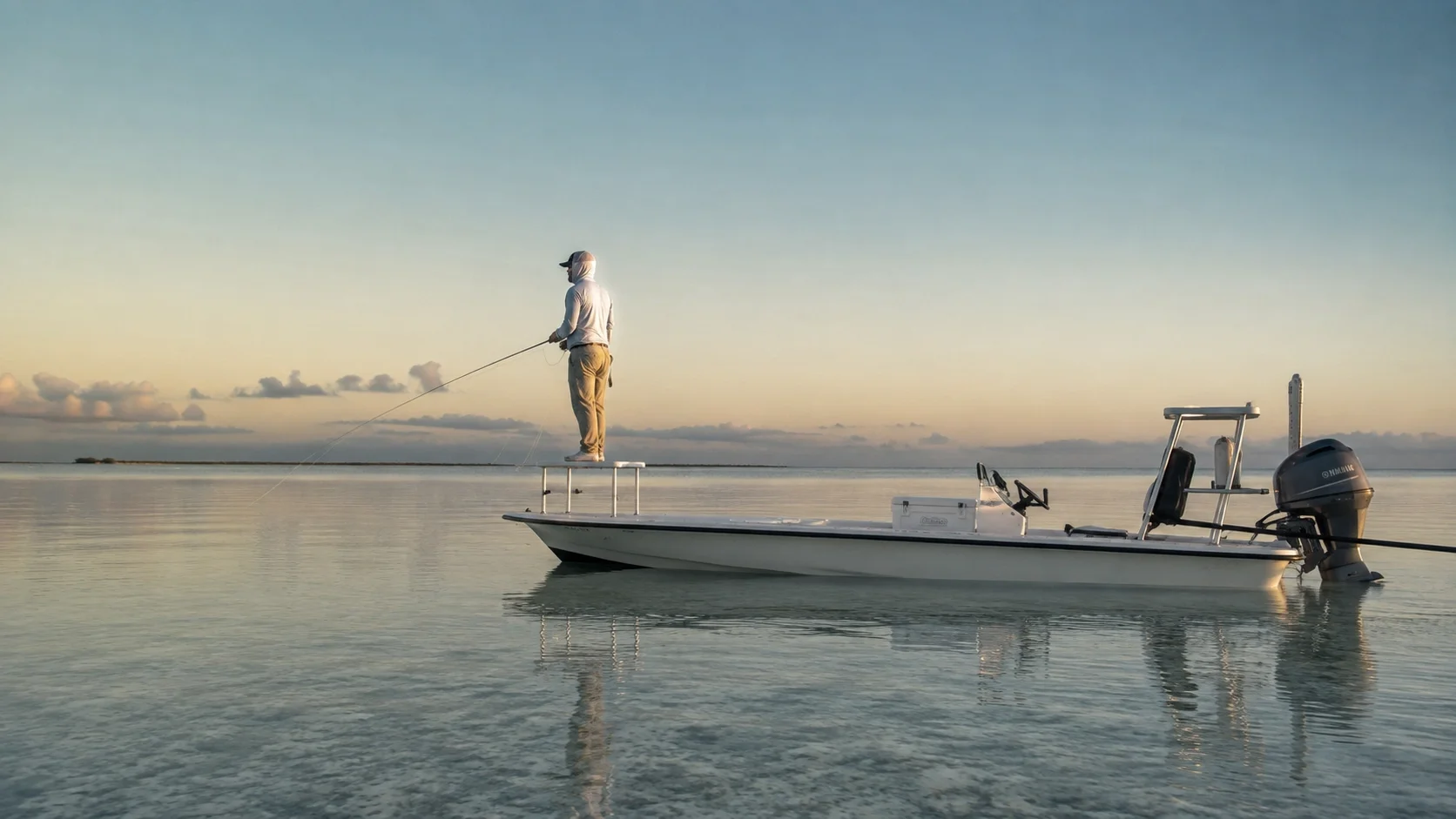
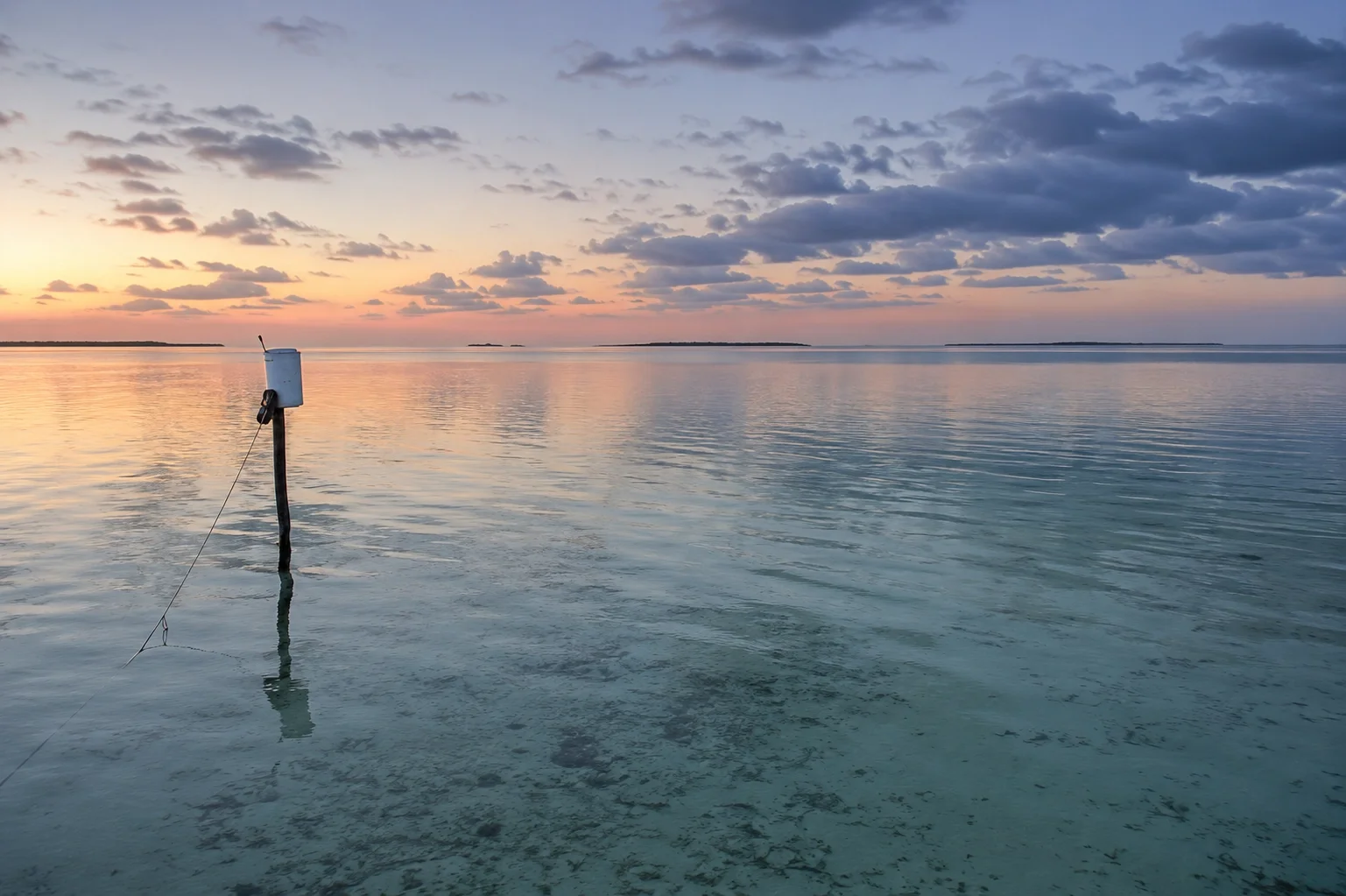
Before the sun clears the mangroves, the water gives them away. A back breaks the surface, then a gill plate, then the slow silver wheel of a fish rolling for air and sliding under again. You have been on the bow long enough that your eyes ache from reading light off the flat, and now there is nothing to do but wait for the string of fish to come inside a cast and try to keep your hands still when they do.
That waiting is where it starts. Not with a fish landed. With a fish seen.
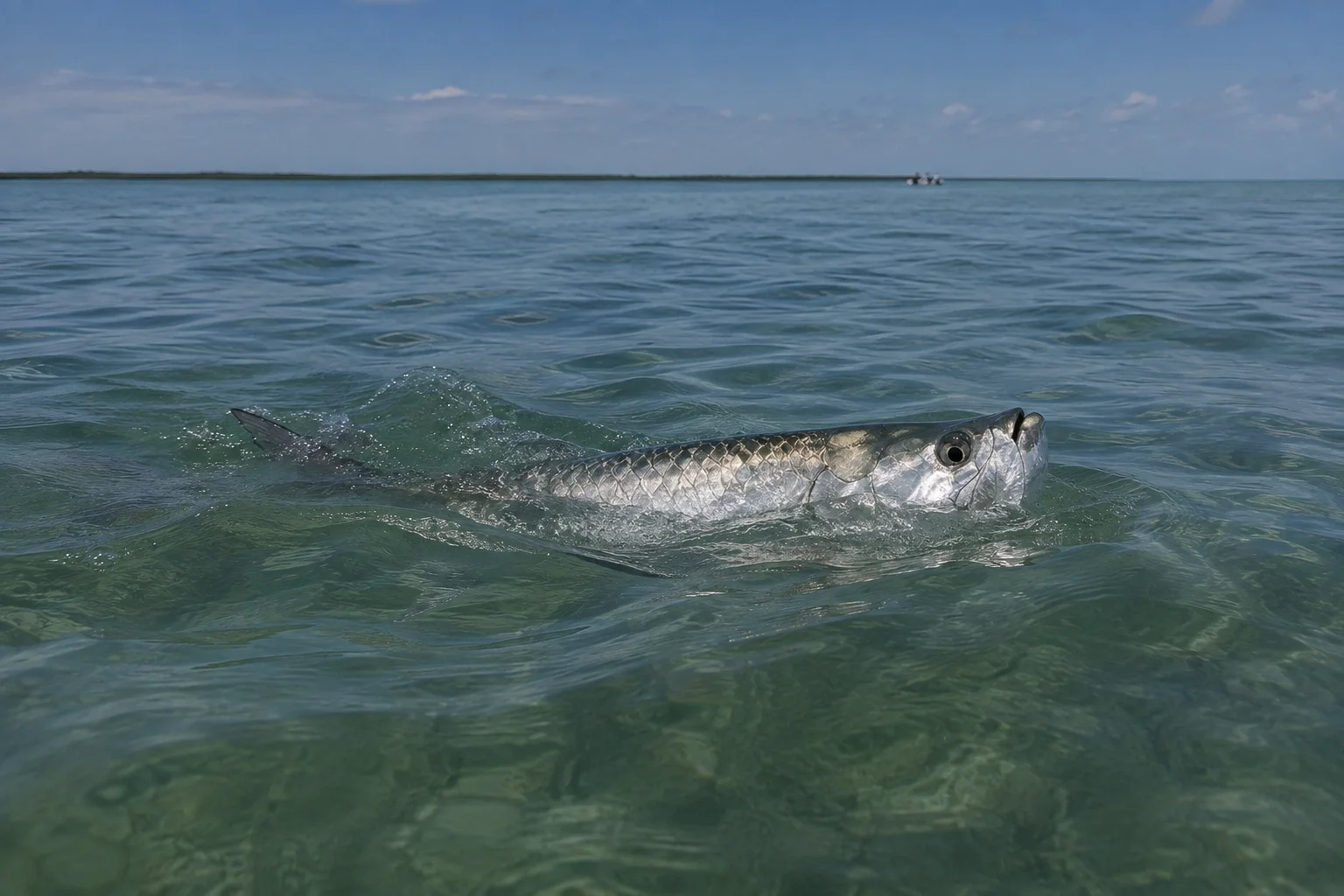
Tarpon roll because they have to. The fish carries a swim bladder connected to its gut and lined with lung‑like tissue, and it can gulp air at the surface and pull oxygen straight from it, an adaptation that lets it survive in water too warm or too low in oxygen for most other fish. At first light, after a night with no photosynthesis to feed oxygen back into the water, levels sit at their lowest and the fish roll more often to make up the difference. The angler learns to love that hour for the wrong reason. The fish are breathing. He decides they are showing themselves to him.
The fish that shouldn’t still be here
It helps to understand what you are actually casting to, because a tarpon is a strange animal wearing the costume of a game fish.
They are old, one fish at a time and as a kind. A tarpon can live past fifty years, with the average life span often put around fifty‑five, and a fish doesn’t reach spawning age until somewhere around seven to thirteen years old. Life begins far offshore, where a female may release up to twelve million eggs into water salty and stable enough to keep the larvae alive. Those larvae are transparent, ribbon‑shaped things — a leptocephalus stage the tarpon shares with bonefish and eels — and they drift toward the coast before they ever look like fish. A hundred‑pound tarpon on the flat is the survivor of a lottery with brutal odds, moving through habitat its kind has used since long before anyone thought to throw a fly at it.
That long life carries a bill the fishery pays. Because tarpon grow slowly and live so long, a population that crashes does not come back on a human schedule. Port Aransas, Texas, once called the Tarpon Capital of the World, lost its fish beginning in the 1960s and has never recovered despite decades of protection. This is not a renewable convenience you are fishing for. It is something that took most of a century to arrive in front of you, which does nothing to make it easier to catch and everything to make it harder to forgive yourself when you blow the shot.
The shot
Tarpon fishing on the flats is a visual sport, and that is most of the trouble.
These are sight feeders with large eyes, and much of the day is spent looking — for rolls, for the nervous push of water a moving school shoves ahead of it, for the silver flash of a flank turning under the sun. The guide sees them first. He calls the distance and the clock — eleven o’clock, sixty feet, coming left — and then it is on you. One cast, maybe two, to drop a fly where the fish is already headed: far enough ahead that the leader doesn’t cross it, close enough that it doesn’t have to leave its lane to eat.
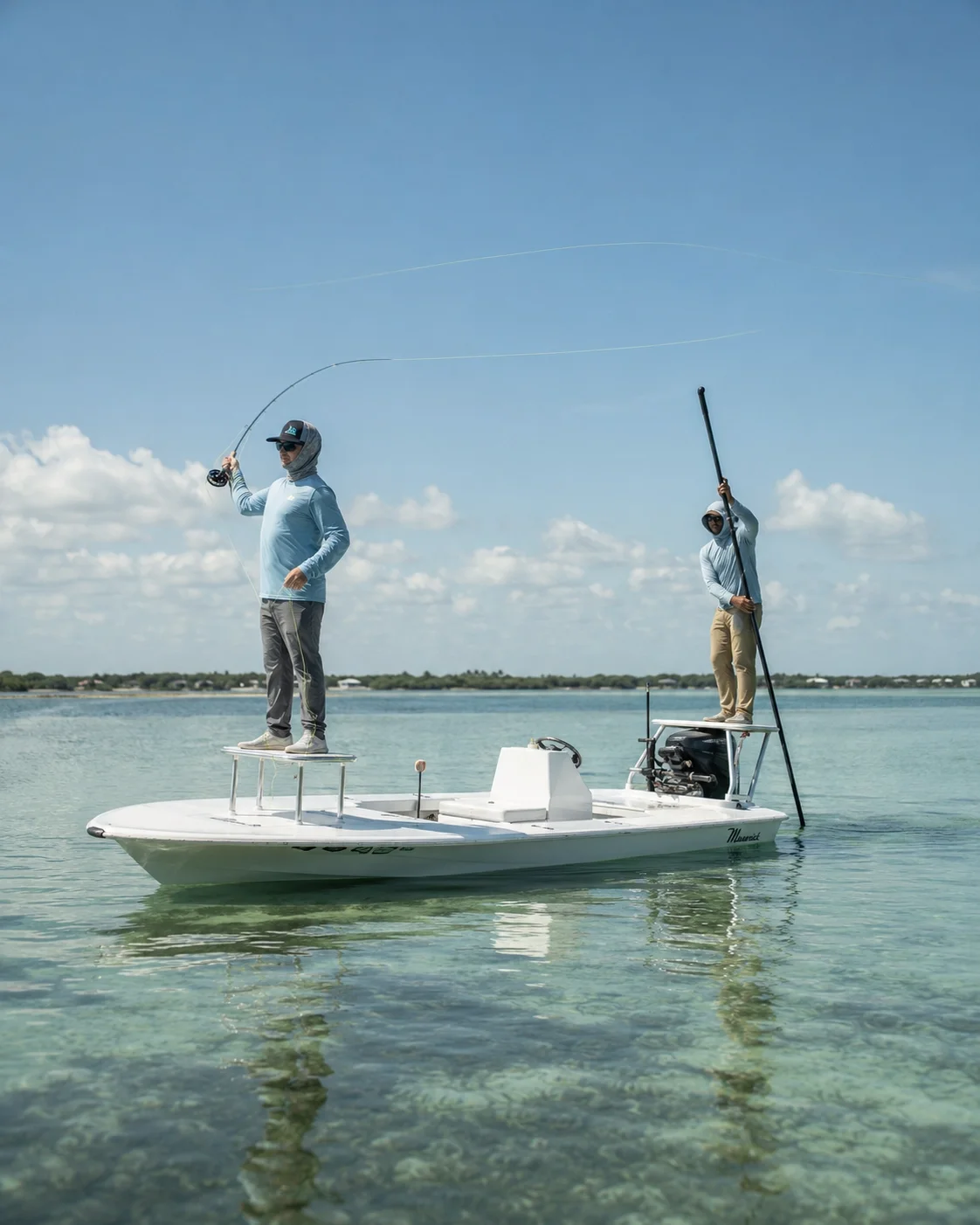
How far to lead a moving tarpon is the kind of question with no honest single answer. It shifts with the fish’s speed and angle, with depth and current, with how fast the fly sinks. Good anglers are not obeying a number. They are solving the same problem again every time a fish shows, and living with the fact that they get it wrong more often than right. That is the first cruelty of the fish. Hours of preparation collapse into a few seconds in which your body has to do something precise while the rest of you comes apart.
There is a season to all of this that sharpens the pressure. In the Florida Keys the migration builds through the spring — the fishery gets going in March and runs hard by May — and for a few weeks the flats fill with the picket lines of skiffs waiting on fish moving up the banks. Everyone is there for the same handful of shots. You wait most of the day for the chance to fail in front of an audience.
The wall
Say you make the cast. Say the fish tips down and eats. Now comes the part that undoes people.
A tarpon’s mouth is hard and bony, and sealing the hook takes a series of aggressive, low strip sets rather than a trout‑style lift of the rod. Rod tip low and pointed at the fish, and a hard, long pull with the line hand, more than once, driving the point past bone into the corner of the jaw. Everything a lifetime of fishing has taught you says to raise the rod. Do it and the fish is gone.
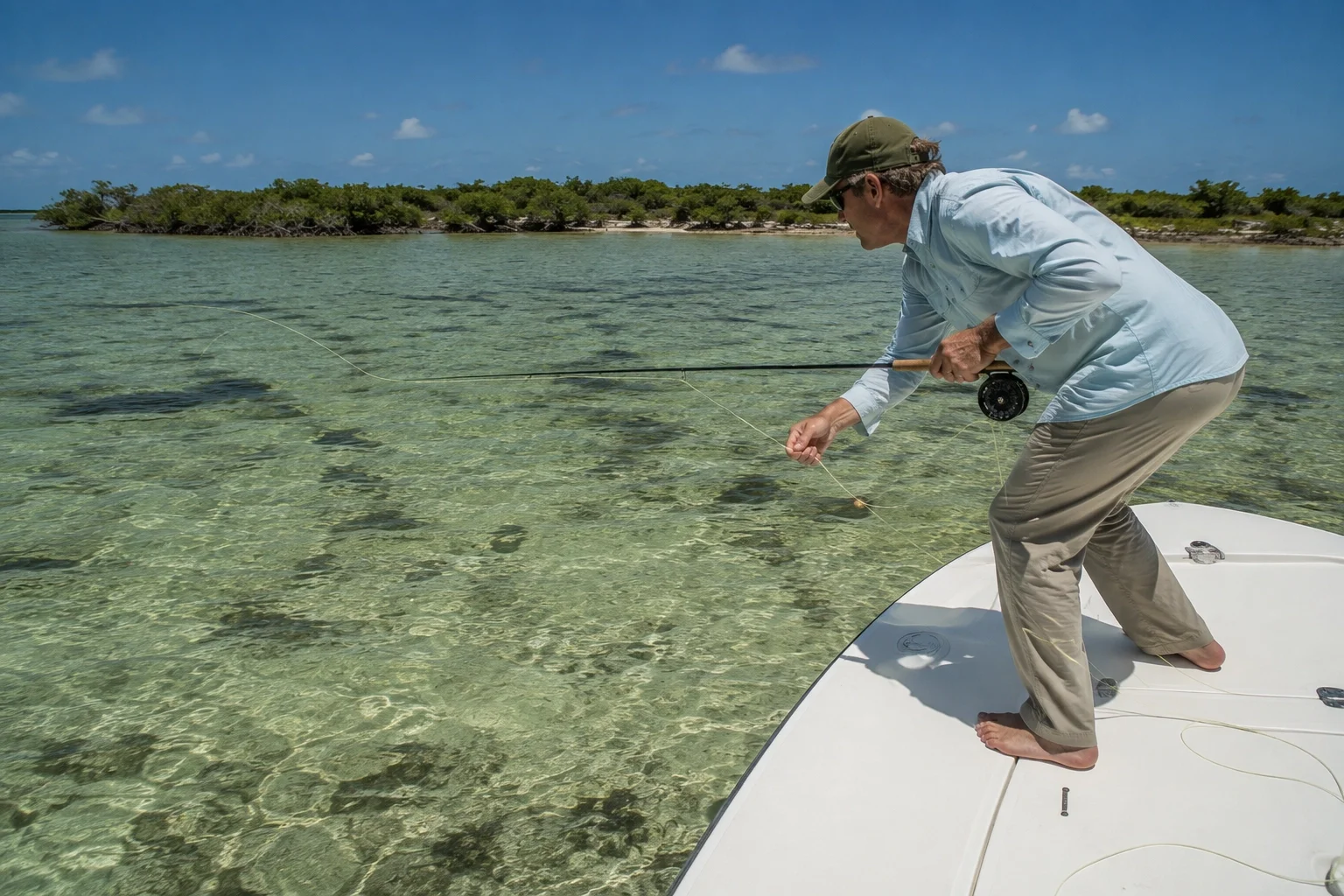
Even done right, most of them come off. For a newer tarpon angler it is realistic to land only one or two of every ten fish hooked, and veterans lose their share too. A chasing fish may take the fly two or three times before the hook sticks or it spooks for good. The counsel that matters most is also the hardest to obey: wait until you feel the weight of the fish before you set. Wait — when every nerve is screaming to do something.
Success in tarpon fishing is not the baseline. It is the exception, and it stays the exception no matter how good you get.
Bow to the king
Then, if the hook holds, the fish leaves the water.
A big tarpon jumps to throw the hook, using the weight of the fly line as leverage, and it comes down shaking its head hard enough to tear the fly loose or snap the leader. The countermove is old and backward: when the fish goes up, you bow to the king. You drop the rod tip and point it at the jumping fish, taking the pressure off so the head‑shaking can’t lever the hook out or break the line. You spend the fight handing line back to the animal you are trying to land.
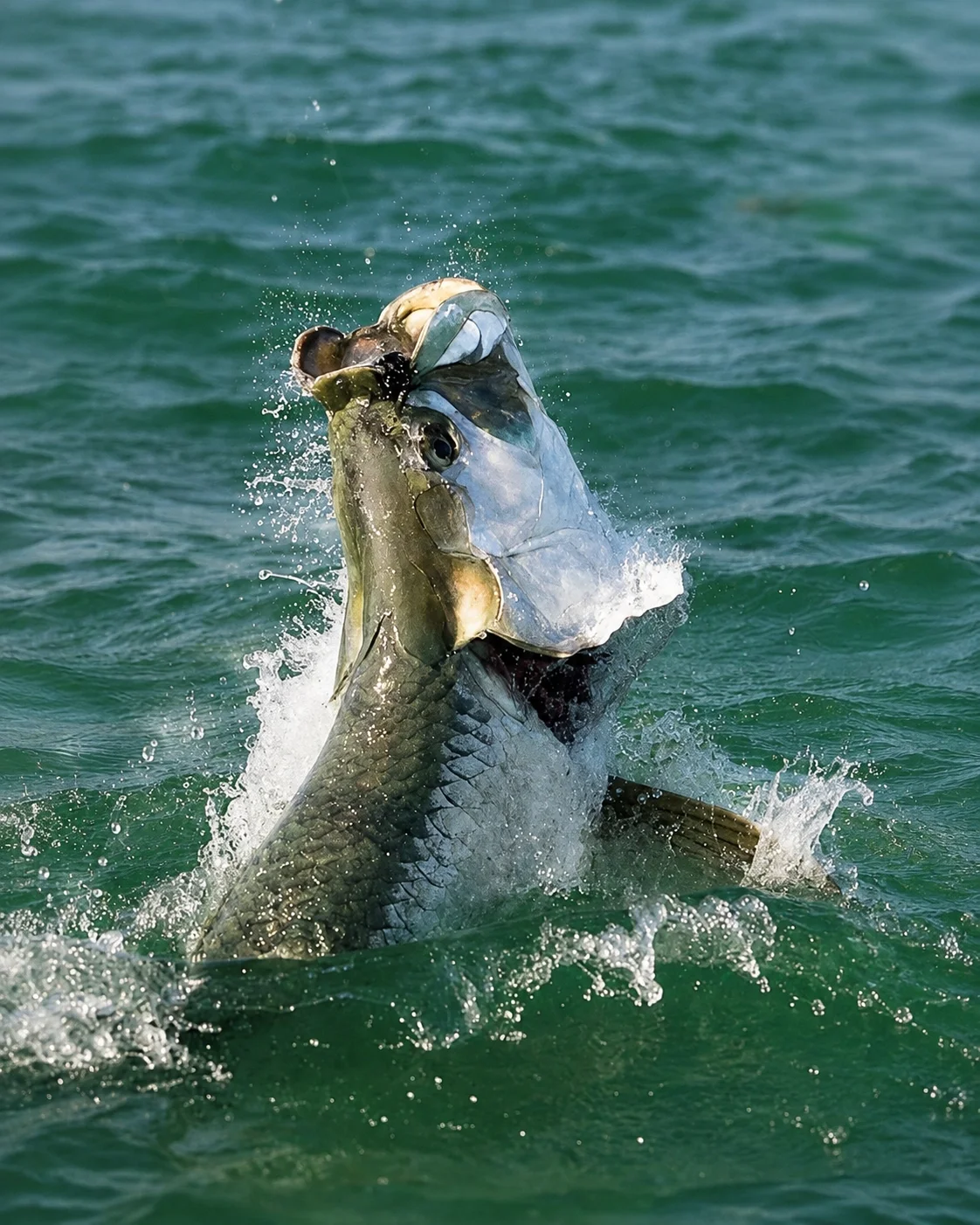
The first run empties a reel in seconds. A fish will strip a hundred yards and more, then break you off on a bridge piling if you hesitate for half a second. The jumps come in a series, and every one is a fresh chance to lose everything. There is a reason the fish is called the silver king, and it is not courtesy. It is the closest thing in shallow water to being flatly overmatched, and the angler who has felt it once tends to arrange the rest of his fishing around feeling it again.
The ones you remember
Here is what nobody warns you about. You will remember the fish you lost more clearly than the fish you landed.
Any honest tarpon angler can walk you through his failures in forensic detail — the fish that ate boatside and came off on the first jump, the cast that fell two feet wrong, the strike that never came tight — while the good days blur together into a pleasant sameness. The misses have edges. The eat you didn’t convert replays itself for years. Fishing has always run partly on memory, but tarpon sharpen the mechanism, because each encounter carries such weight and the encounters are so few.
A landed tarpon closes one account and opens three more. The pursuit never resolves. It only accumulates.
That is the real engine, and it has nothing to do with a trophy on a wall. It is unfinished business — the next fish, the next tide, the next mistake you can already feel coming. And a ledger that never closes is the most durable reason there is to keep showing up.
A hundred years of the same pull
None of this is new, which is its own strange comfort. The fixation has a paper trail. Zane Grey and Ernest Hemingway both chased big fish out of Key West, and by the late 1960s and early ’70s a loose circle of writers and artists — Thomas McGuane, Jim Harrison, Guy de la Valdéne, Jimmy Buffett among them — had built much of their lives around the town’s tarpon flats, a fever caught in the 1973 cult film Tarpon. The record‑hunting years at Homosassa, when the best anglers and guides in the world gathered to chase the largest tarpon that swam, fill a book of their own in Monte Burke’s Lords of the Fly. Go back further and the American sport begins in the 1880s — a ninety‑three‑pound fish in 1885, and the early Florida clubs that turned tarpon into a pursuit worth crossing the country for. People have been losing their sense of proportion over this fish for well over a century. When you stand on the bow with your pulse in your ears, you are joining something, not inventing it.
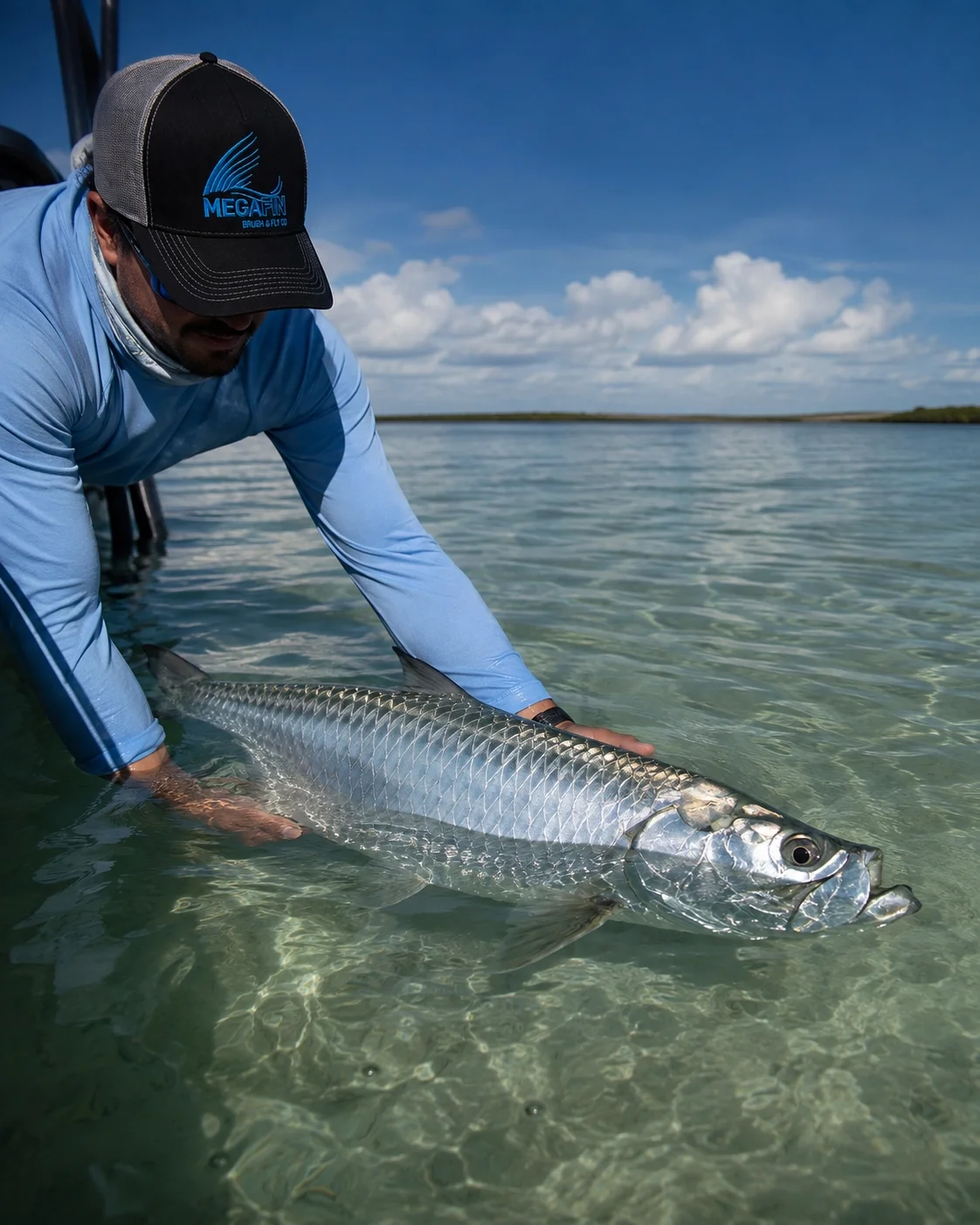
The inheritance comes with an obligation. These are largely catch‑and‑release fish now, and how you handle one matters to a slow‑growing population. The Bonefish & Tarpon Trust guidance is plain: keep air exposure brief, use wet hands, and never hold a big tarpon vertically by the jaw — support it horizontally, at the head and midsection, until it swims off on its own. The obsession only stays possible if the fish keeps outliving the anglers chasing it.
Why you go back, and the flies that go with you
Ask a room of tarpon anglers what matters most and you’ll hear the same answer more than any other: presentation over pattern. The fish forgives the wrong fly far sooner than the wrong cast, the wrong angle, the wrong moment. The patterns that have lasted did so because they behave well in the water and stand up to the abuse — the Tarpon Toad, whose evolution runs through a line of Keys anglers, and the roach and cockroach patterns that have been catching silver kings for generations.
From the flat to the box
That is the honest place for a fly to enter this story — not as a promise, but as a tool that respects the difficulty. Megafin ties its tarpon patterns the way the tradition asks, and packs the ones that matter into a single box.
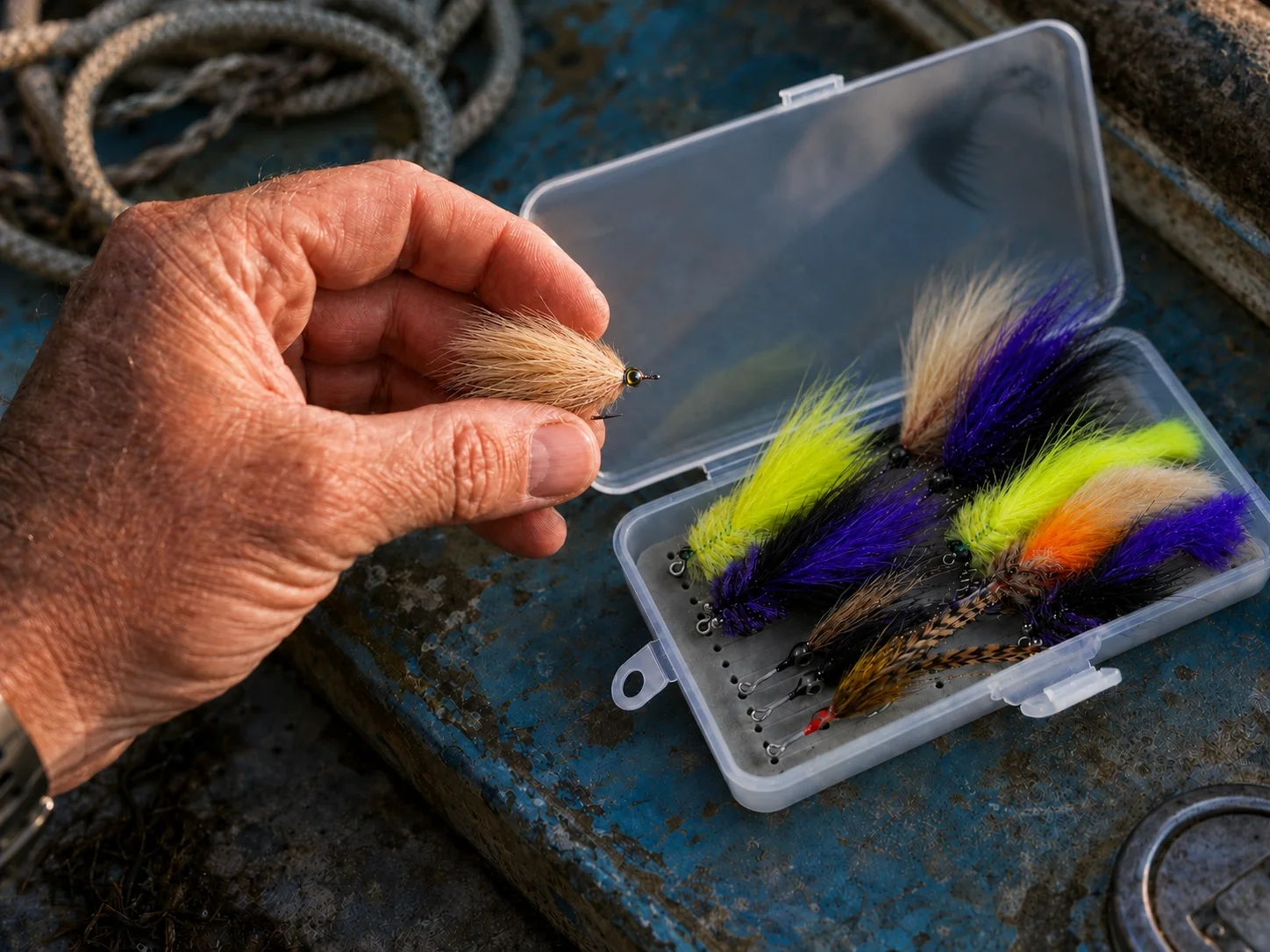
Tarpon Roach & Toad Fly Assortment
Ten proven tarpon patterns in a foam box — Tarpon Roaches, Sumo Roaches, and Tarpon Toads in bunny and marabou, in 1/0 and 2/0, for shallow water and deep. The soft, hanging Toads for fish that study the fly; the water‑pushing Roaches for the ones that need to be shown it. Tied by a company that began as a field operation on remote water, not as a catalog — premium predator flies, tied for the eat.
Explore the Tarpon Roach & Toad AssortmentThe last light goes, the guide stows the pole, and you run home across a flat you can barely see, replaying the one fish that ate and the one that didn’t. Neither settled anything. That is the point, and you already know you’ll be back before the reel is dry. Somewhere off the mangroves a fish that will outlive your truck is rolling in the dark, taking a breath. It is enough to put you back on the bow tomorrow, before the sun, waiting again.
